Security Operations
Best XDR Tools in 2026: Platforms and Open Source Compared
Follow one incident from host to account to cloud session. Three consoles for those 20 minutes is another agent, not XDR.
The ticket starts on a host. 20 minutes later it is an account, and often a cloud session. If those still live in 3 consoles, you bought another agent.
The EDR the team already runs is green on the process. XDR is that combined incident, not another host agent. Buy packaged XDR when one incident already has to span host and identity. Compose the open parts when you can staff that work.
Host-only agents stay on the box. This shortlist is the join across host, identity, and sometimes cloud.
Packaged XDR, compose-your-own telemetry, and SIEM products that rebranded a join split that incident. Pick the join you will actually query during those 20 minutes, not a third console that only repeats the host alert.
How we evaluated
We read first-party docs, source, licenses, and release notes, and we treat a marketing page as a claim, not as proof two products do the same work. We asked whether the product already joins host and identity into one incident, or whether it is a block you assemble, and whether the docs name a query or artifact you can run on a host you own.
| Tool | Best for | What to check |
|---|---|---|
| CrowdStrike Falcon Insight XDR | Endpoint-first XDR that still takes third-party data | Commercial · endpoint-first |
| Microsoft Defender XDR | Stitching Microsoft endpoints, identity, mail, and SaaS | Not standalone · Microsoft estate · licensed workloads |
| LimaCharlie | API-first EDR you compose into XDR | Commercial · you write the rules · open telemetry |
| Velociraptor | Hunt and DFIR queries on the endpoint itself | AGPL-3.0 · you operate it · hunt on the host |
| Fleet | Live osquery and device management you can read | MIT / commercial · live osquery · you can host it |
| OpenEDR | Open Windows EDR telemetry you can inspect | CASL · Windows agent · you bring the store |
CrowdStrike Falcon Insight XDR
Best for endpoint-first XDR that still takes third-party data
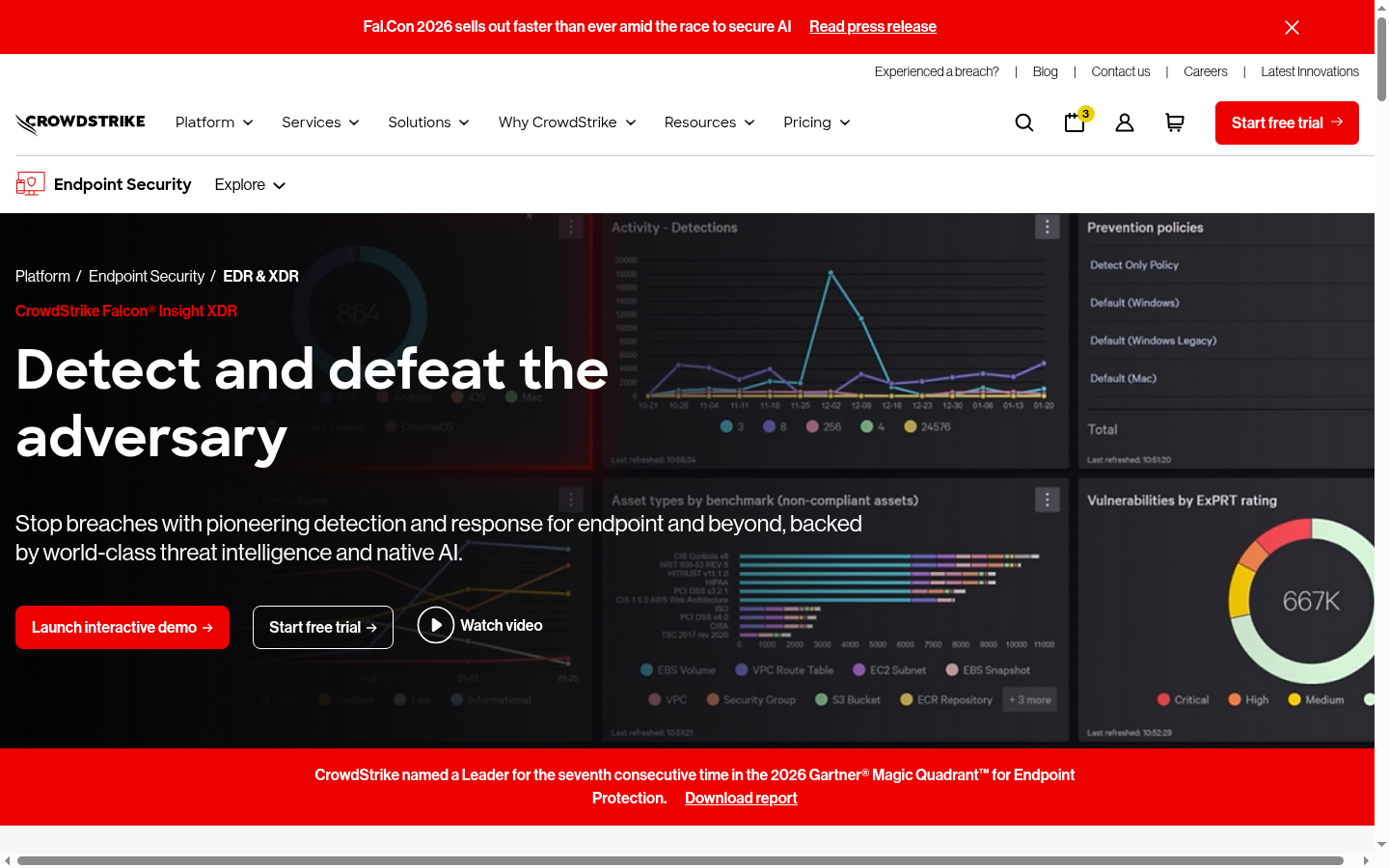
Falcon Insight XDR starts on the sensor, then extends with identity, cloud, mobile, and data-protection modules in the same console.
Native context is the product. Third-party ingest on the public docs is the extra. The public trial they advertise is not a full Insight trial.
Key features:
- EDR with MITRE ATT&CK mappings and Charlotte AI triage
- Real Time Response plus Falcon Fusion SOAR
- Native XDR context from Falcon modules
- Third-party ingest on the public docs in the same console
Why we like it:
When the job is still stop the host, and you want the other panes without standing up a second product, this is the packaged option.
Limits:
Commercial. A July 2024 outage is still the community’s first memory of kernel-mode sensors.
License or pricing: Commercial.
Microsoft Defender XDR
Best for stitching Microsoft endpoints, identity, mail, and SaaS
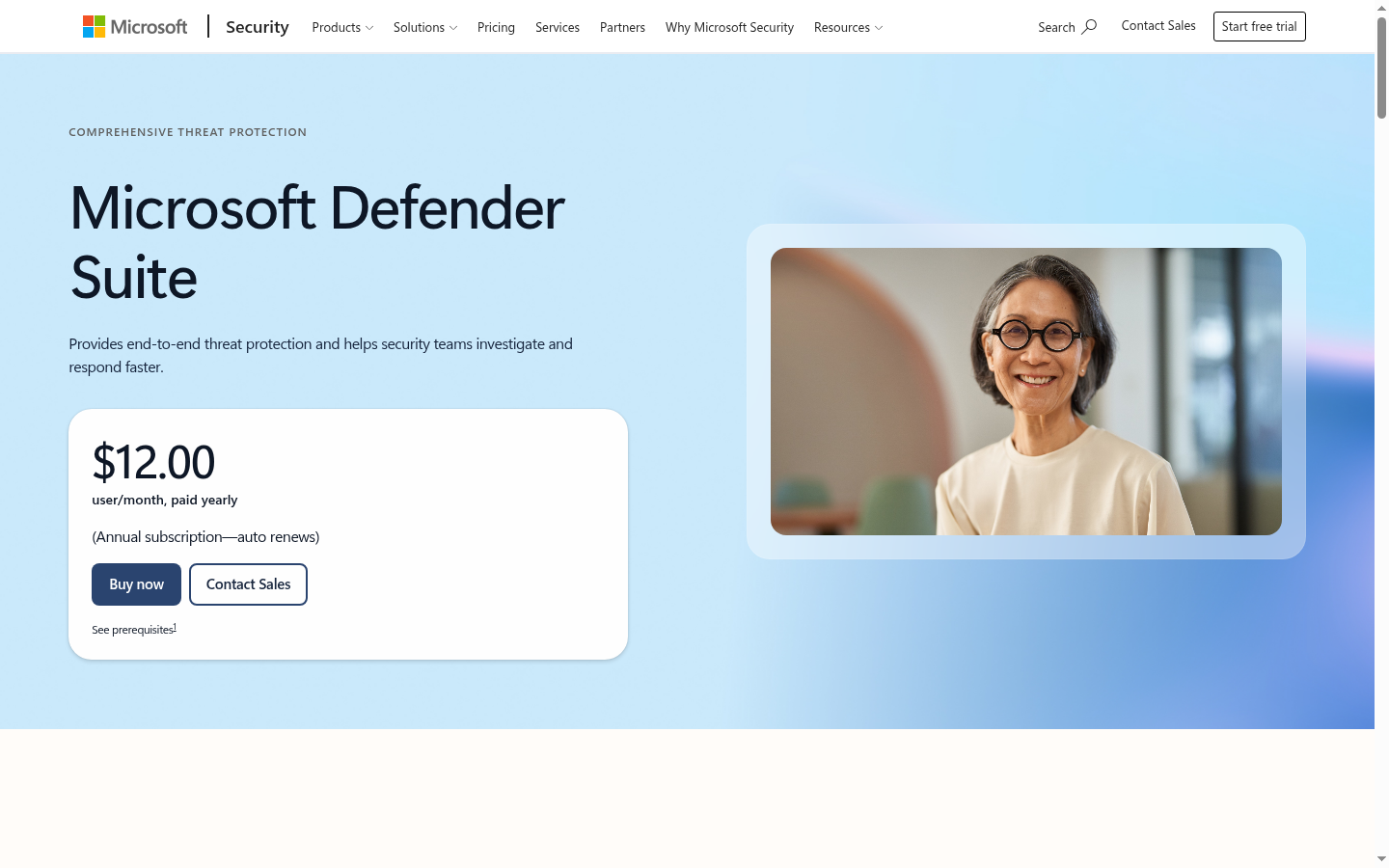
Defender XDR is one incident queue across the Microsoft workloads you licensed. The FAQ is blunt: it is not a standalone offering.
Correlation only fires for products you provisioned. That is the practical limit, and they write it on the overview page.
Key features:
- Combined incidents in the Microsoft Defender portal
- Attack disruption across licensed workloads
- Self-healing where the suite products support it
- Cross-product hunting on licensed Defender signals
Why we like it:
If the company already lives in M365 and Entra, a second XDR needs a reason you can say in one sentence.
Limits:
Consumer Defender does not get this. Servers are licensed separately.
License or pricing: Not standalone.
LimaCharlie
Best for API-first EDR you compose into XDR
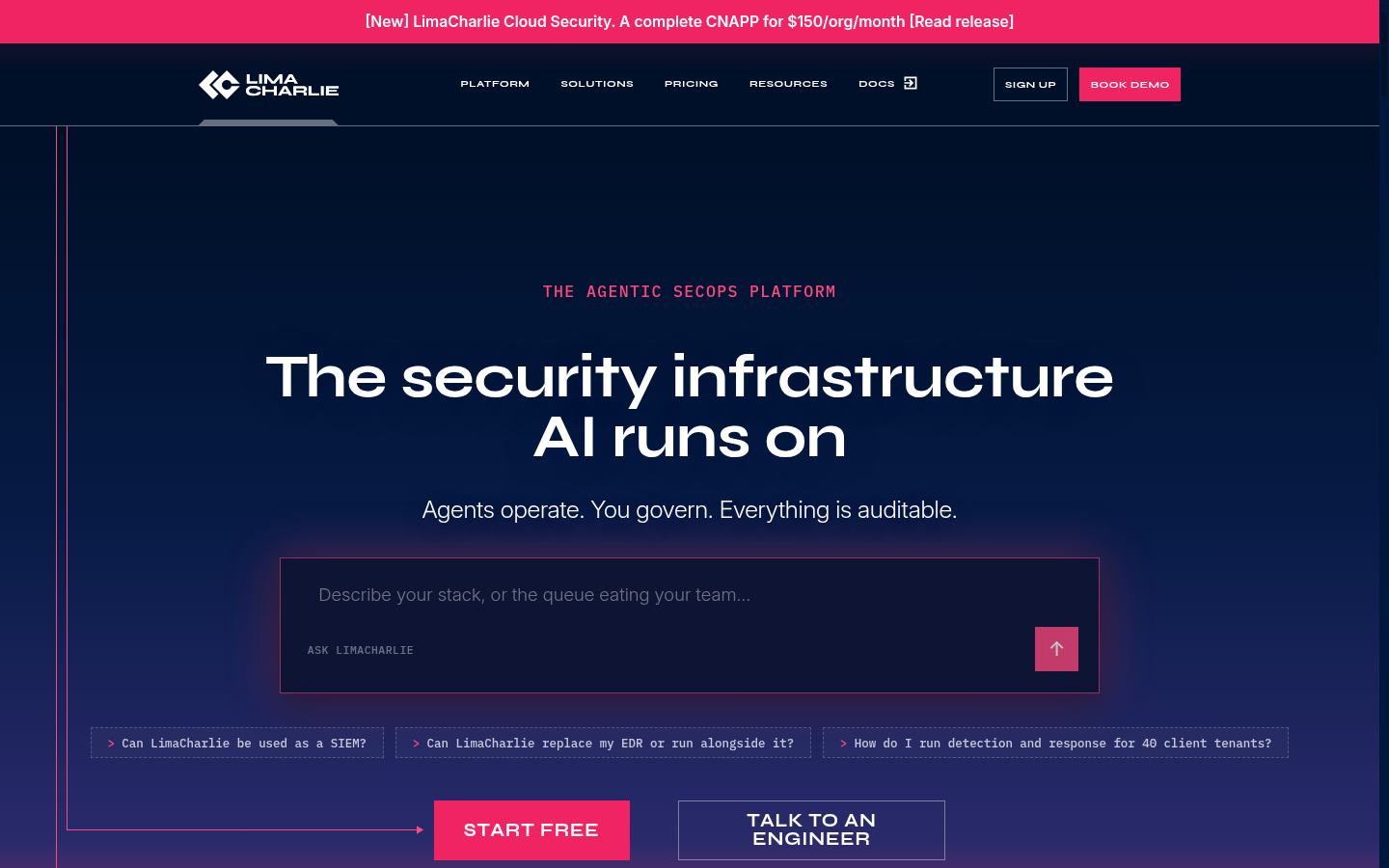
LimaCharlie is security infrastructure. Sensors, rules, LCQL, and outputs toward a SIEM you already run. You write the detections.
The homepage now sells queue automation on top of that infrastructure. The compose kit underneath is still the product.
Key features:
- Endpoint sensors plus detection and response rules
- Log adapters and SIEM outputs
- LCQL plus Go and Python SDKs
- Per-endpoint billing on the public docs, month to month
Why we like it:
When you want per-endpoint economics and detections you can read, this is the kit you assemble yourself.
Limits:
You write the rules. Automation is not a replacement for detections you never authored.
License or pricing: Commercial.
Velociraptor
Best for hunt and DFIR queries on the endpoint itself
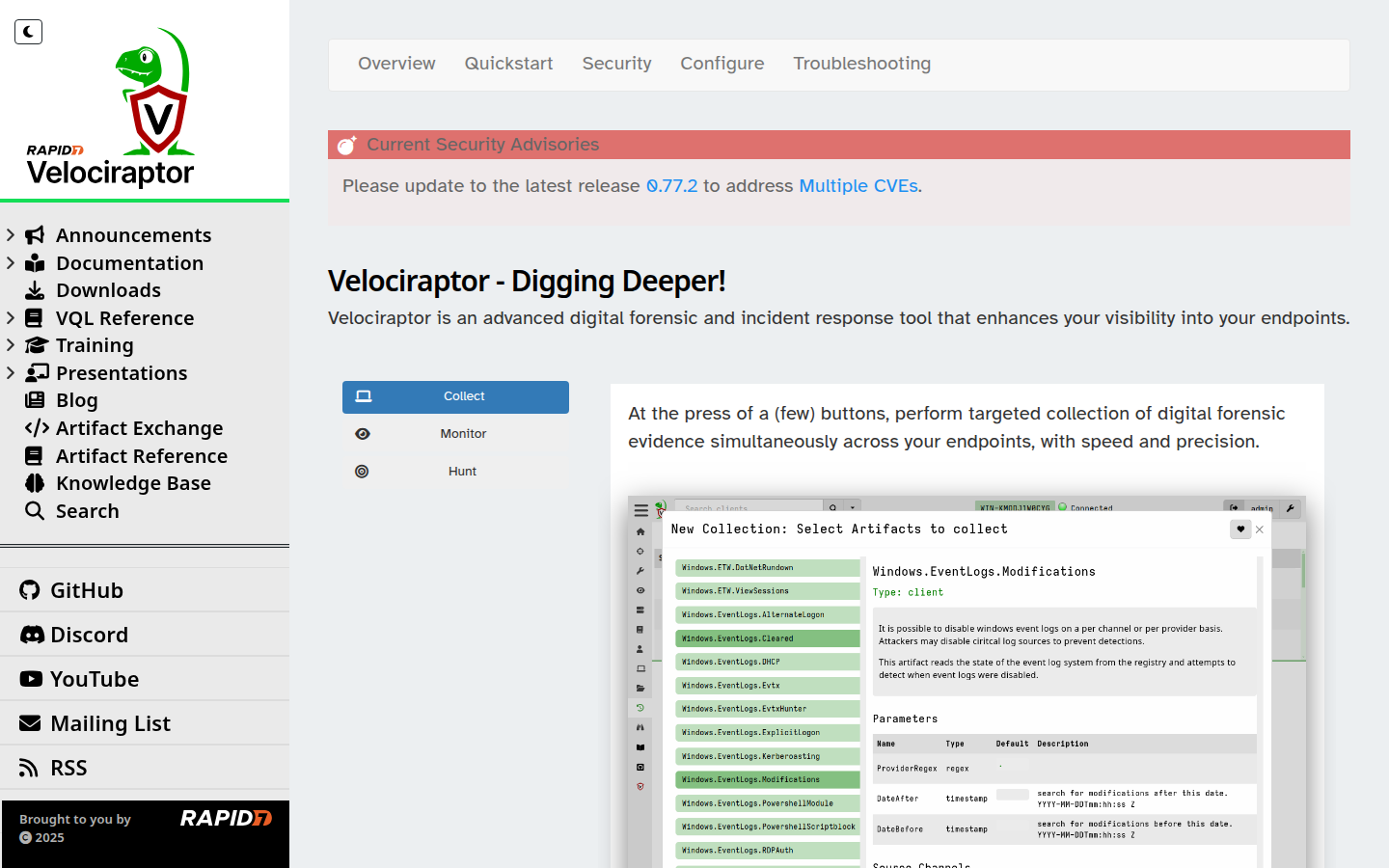
Velociraptor treats the endpoint as the source of truth. You push targeted VQL. You do not haul every artifact to a lake first.
Collect, monitor, and hunt are the three buttons. That is not a boxed XDR. AGPL-3.0.
Key features:
- VQL artifacts for collection, hunts, and live monitoring
- Client/server, offline collectors, and disk-image analysis
- Notebooks plus export to Zip, Splunk, or Elastic
- gRPC API for automation
Why we like it:
When the question is what happened on these hosts, an artifact you can adapt beats a console that never collected it.
Limits:
No native identity or mailbox stitch. You staff the server. Docs ask you to stay current for CVEs they name.
License or pricing: AGPL-3.0.
Fleet
Best for live osquery and device management you can read
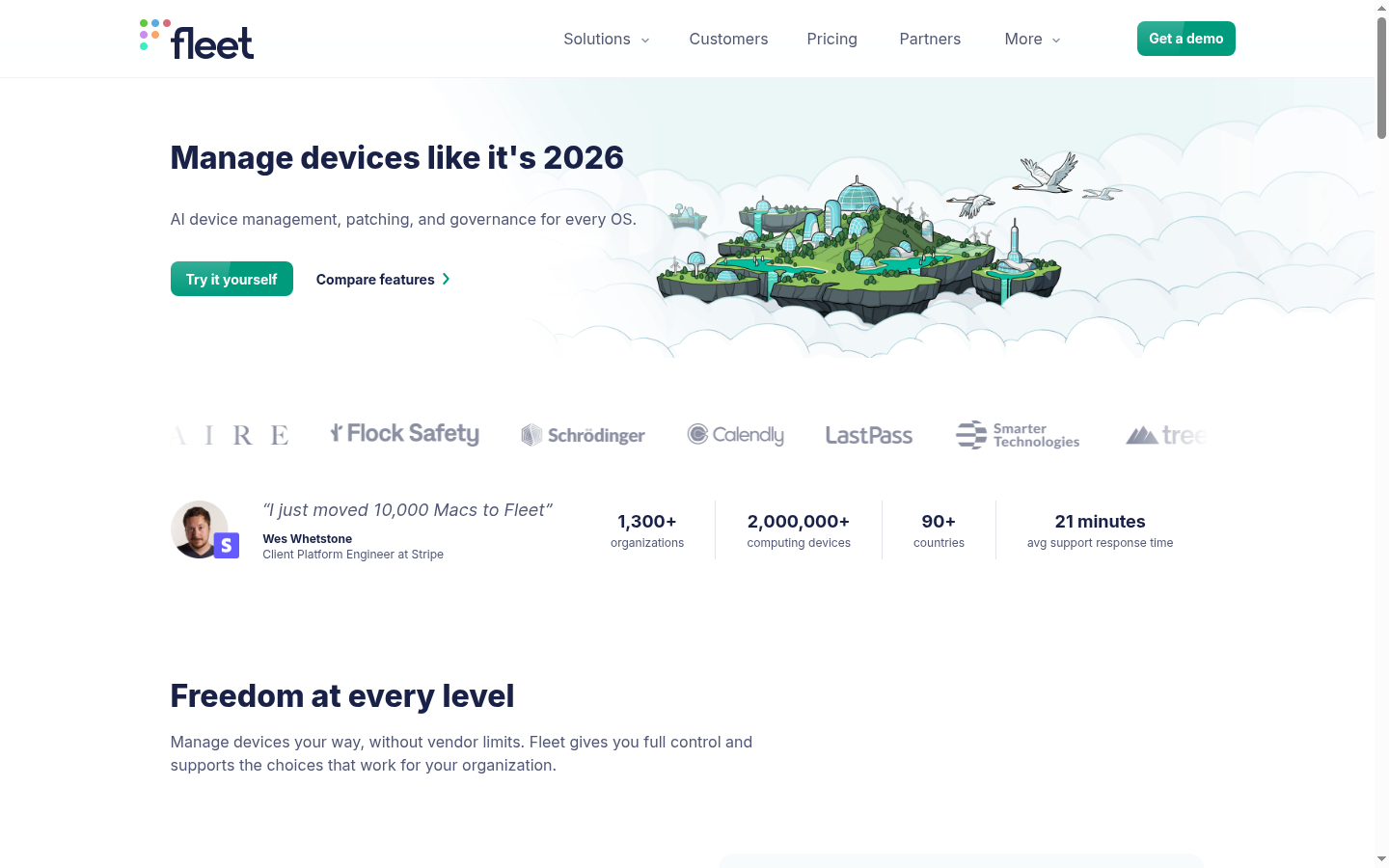
Fleet started as an osquery management server. Live SQL against the fleet is still the security-adjacent job. The homepage is MDM-first now.
You can self-host or let them host. Premium lists FIM and YARA. That is still not an XDR queue.
Key features:
- Live osquery reports and a single API
- Self-host or Fleet-hosted
- Premium lists FIM, YARA, and incident response
- MDM for the OS list they publish
Why we like it:
Fleet makes the most sense for teams that want live osquery access and control over the agent rather than a packaged XDR incident queue.
Limits:
Not an XDR incident queue. osquery works well for monitoring and less well as a packaged detection fabric.
License or pricing: MIT / Premium.
OpenEDR
Best for open Windows EDR telemetry you can inspect
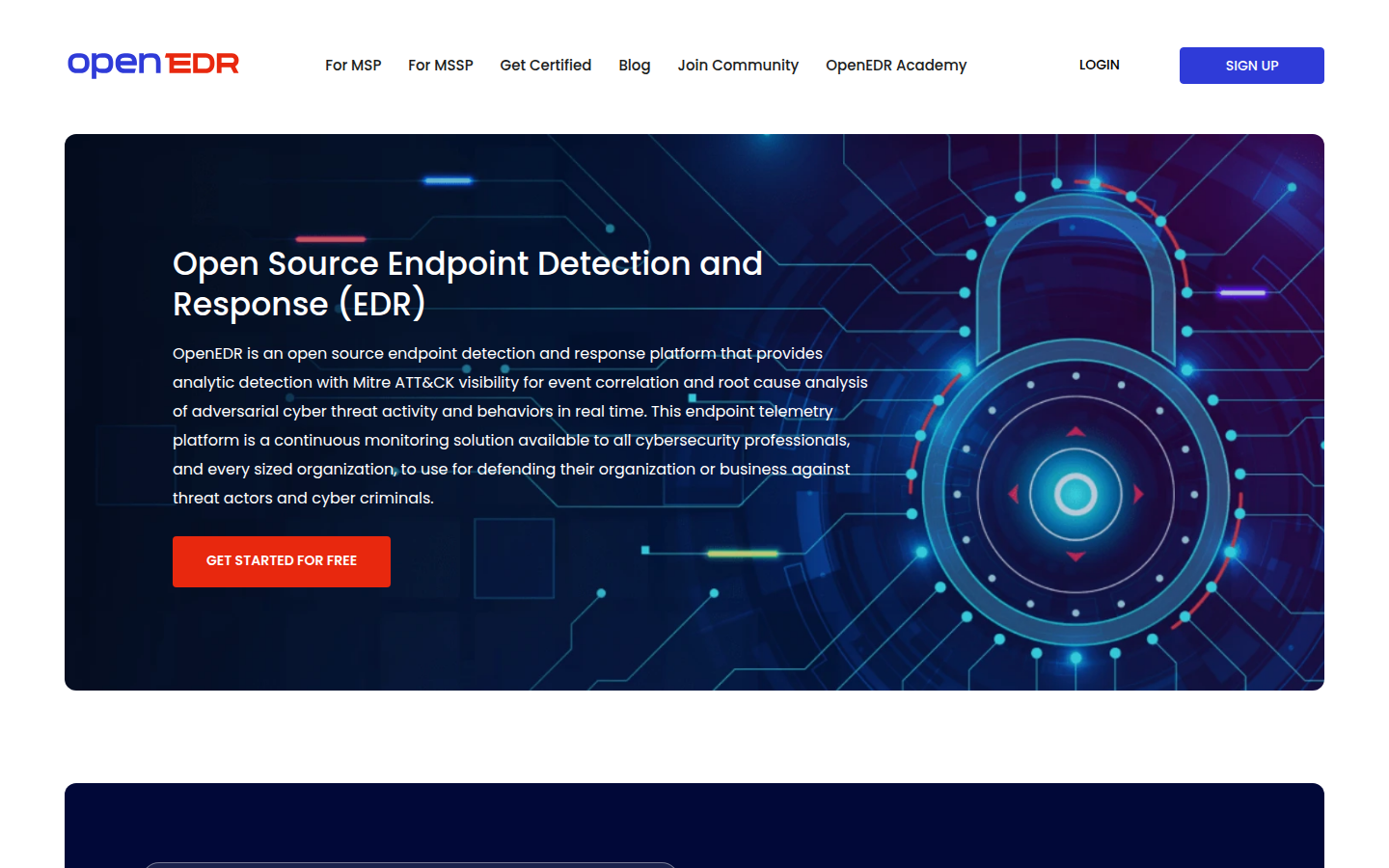
OpenEDR is a live open EDR project. The public repo describes a Windows agent that records telemetry locally and can ship it to Elasticsearch.
You bring the store and the detections. The homepage and GitHub disagree on macOS and Linux. We could not confirm a public non-Windows agent.
Key features:
- Windows process, file-system, network, and registry components they list
- Analytic detection framed against MITRE ATT&CK on the homepage
- Local telemetry with a path to Elasticsearch
- Xcitium MDR is a commercial add-on, not the CASL agent
Why we like it:
When you want an EDR agent you can read, and you will operate the rest, this is the open Windows row.
Limits:
Platform claims disagree across first-party pages. Commercial MDR is a different product.
License or pricing: CASL.
How to choose an XDR tool
Four questions before the quote. Names below are tools, not a scored bake-off.
| Critical question | Why it matters | What to evaluate | Red flag |
|---|---|---|---|
| Does one incident already include the host, the identity, and the mailbox? | XDR is a join, not a louder sensor. | CrowdStrike Falcon Insight XDR and Microsoft Defender XDR sell a packaged queue. LimaCharlie, Velociraptor, Fleet, and OpenEDR are parts. | Three consoles for one ticket. |
| Are we buying a packaged queue, or a sensor we will write detections for? | That is the staffing fork. | Packaged rows versus LimaCharlie rules, Velociraptor artifacts, Fleet osquery, OpenEDR telemetry. | Calling Fleet XDR. |
| Which SKU on the quote is actually XDR? | EDR plus a slide is still EDR. | Defender XDR is not standalone. Falcon Insight is a named SKU. | An agent with no identity stitch. |
| Can we inspect the detection? | A black box is a different product. | VQL, osquery, LCQL, or the open Windows agent on this list. | A kernel sensor you cannot read and cannot staff. |
LimaCharlie threads treat compose-it-yourself as the product. An open sensor is not a packaged XDR console.
Buy a packaged XDR if you need one vendor incident. Buy Fleet or Velociraptor if you need inspectable parts. Do not buy Fleet and call it XDR.
FAQs
What is the difference between EDR and XDR?
EDR watches the host. XDR is supposed to join that host story to identity, mail, and cloud so one incident already has the account. If you still jump queues, you bought telemetry, not XDR.
Is Microsoft Defender XDR a standalone product?
No. Microsoft’s own Suite FAQ says it is not a standalone offering. XDR capabilities come with eligible plans, and they correlate only the Microsoft products you licensed.
Can Velociraptor or Fleet replace an XDR platform?
They replace pieces. Velociraptor hunts on the endpoint with VQL. Fleet runs live osquery. Neither ships a cross-domain incident fabric that already joined Entra, mail, and the host.
Is this a scored bake-off?
No. Order is editorial.