Cloud Security
Best Cloud Security Platforms in 2026: CNAPP Compared
Combine exposure, identity, and data in the account. A patched CVE can still leave a public bucket an admin role can write.
In April 2023, Amazon S3 began enabling Block Public Access by default on every new bucket. That was a control-plane default, not a patched CVE on an image.
A closed CVE ticket and a green image scan can still sit next to a public object and a write role. That combination is one incident. Cloud security platforms exist to read exposure, identity, and data together, not to reprint another CVE feed.
The category used to mean a longer scanner report. It now splits three ways: a graph that joins those facts, a query layer you run against the live account, and runtime on a node you operate.
When the gap is only a recorder of account settings, the posture-only products on CSPM tools already cover that work. Buy a CNAPP when the miss is the join.
How we evaluated
We read first-party docs, source, licenses, and release notes, and we treat a marketing page as a claim, not as proof two products do the same work. We asked which layer the product actually is: agentless account graph, CLI checks, SQL on the live account, or runtime, and whether the docs name a check you can run on an account you own.
| Tool | Best for | What to check |
|---|---|---|
| Wiz | Toxic combinations on a multicloud graph | Commercial · agentless graph · multicloud |
| Prowler | Open-source CSPM you can run tonight | Apache-2.0 · posture catalog · you run it |
| Falco | Runtime threats on hosts and Kubernetes | Apache-2.0 · runtime · you operate the driver |
| Steampipe | SQL over live cloud APIs | AGPL-3.0 · SQL over APIs · you run it |
| Orca Security | Agentless SideScanning without a host agent | Commercial · agentless SideScanning · multicloud |
| Microsoft Defender for Cloud | Azure-home CNAPP that also covers AWS and GCP | Foundational free · paid graph · home-cloud first |
Wiz
Best for toxic combinations on a multicloud graph
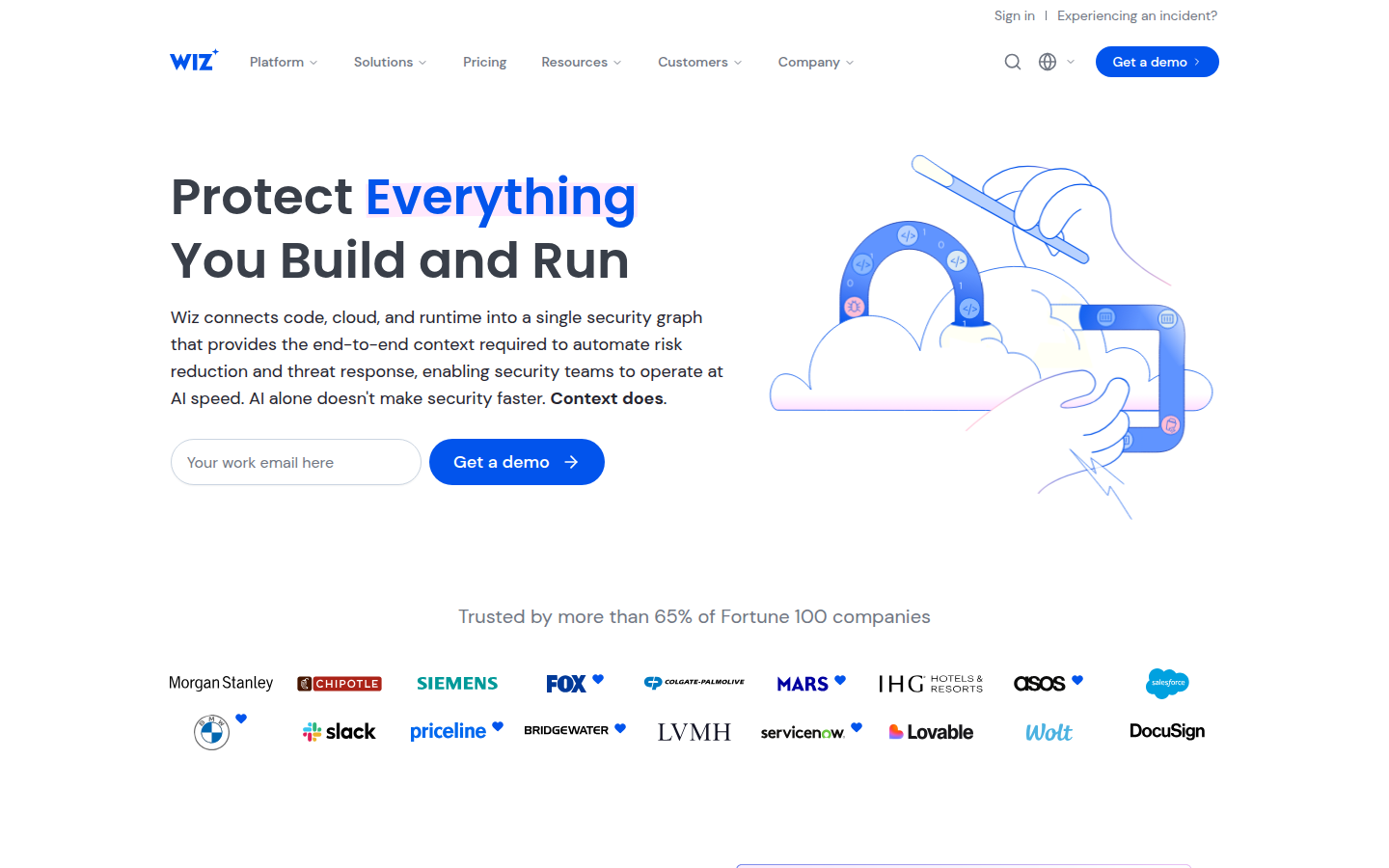
Wiz’s first-party pages call the product a CNAPP and a CSPM in one graph. Toxic combinations instead of a thousand isolated alerts. Agentless is the deploy story.
Use it when the job is show me the path. Runtime block still wants the sensor they sell as optional.
Key features:
- Agentless scan across AWS, Azure, GCP, and Kubernetes
- Toxic combinations raised as Wiz Issues
- Code-to-cloud context and attack-path modeling
- Optional eBPF runtime sensor plus cloud and SaaS log analysis
Why we like it:
A misconfigured machine is noise until it is also exposed and reachable. Their CSPM writing says that out loud.
Limits:
Sales-quoted. No public list on wiz.io. The graph is only as good as the APIs it can read.
License or pricing: Commercial.
Prowler
Best for open-source CSPM you can run tonight
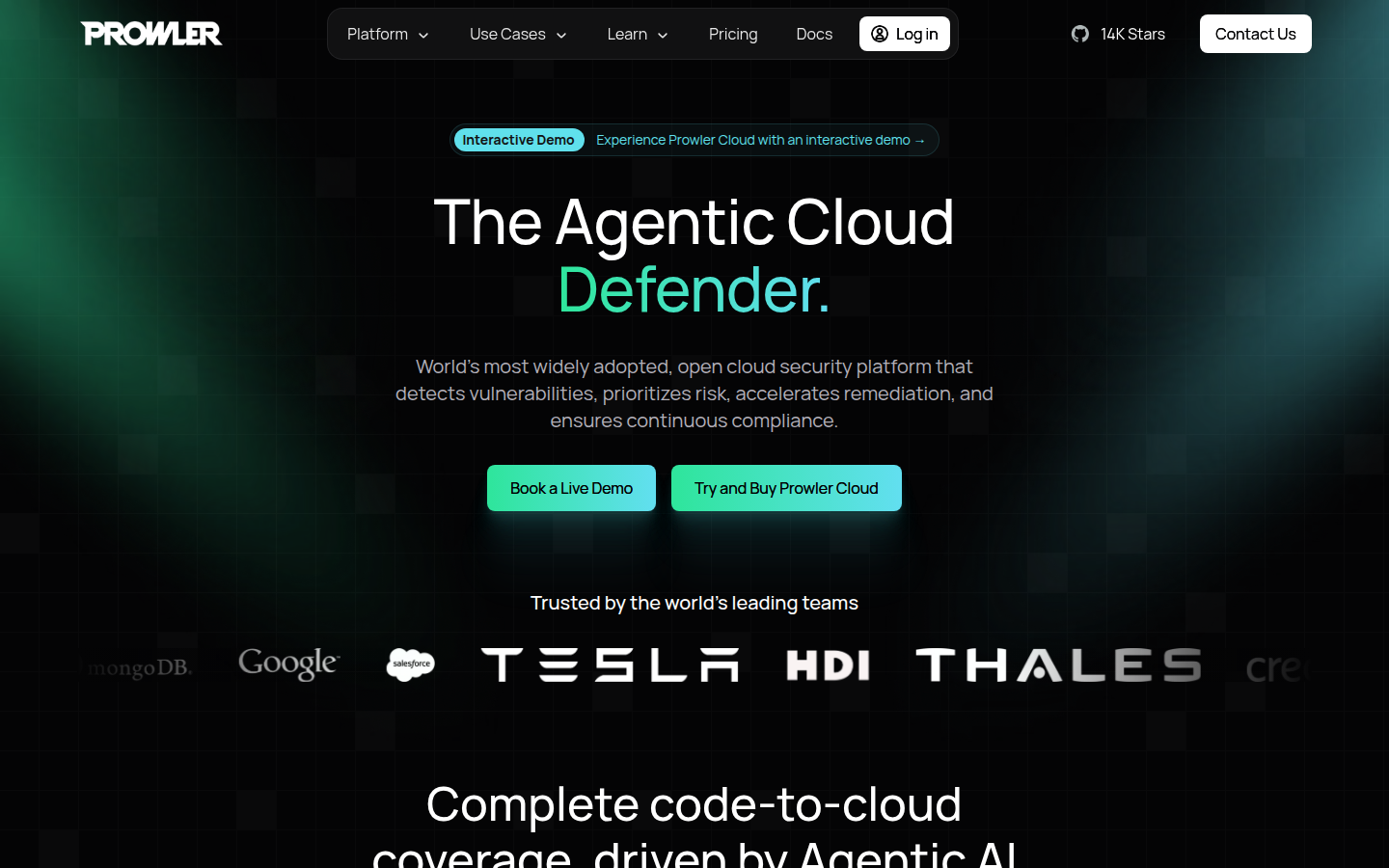
Prowler is the open cloud security platform teams reach for when they want CIS, NIST, and custom checks without a CNAPP contract.
CLI, local UI, and a Cloud SKU on the same check library. Coverage is uneven across clouds. Attack Paths are AWS-first in the README we read.
Key features:
- CLI, Local Server UI, and Prowler Cloud SaaS on the same check library
- Built-in controls: CIS, NIST, PCI-DSS, GDPR, HIPAA, SOC2, ISO 27001
- AWS Security Hub integration and a GitHub Action that can upload SARIF
- Attack Paths for AWS after a scan
Why we like it:
A posture report you can read, mute, and pipe is how you learn the account before the graph arrives.
Limits:
A check catalog is not a runtime detector and it is not a full CNAPP graph. The SaaS is a different product from the CLI.
License or pricing: Apache-2.0.
Falco
Best for runtime threats on hosts and Kubernetes
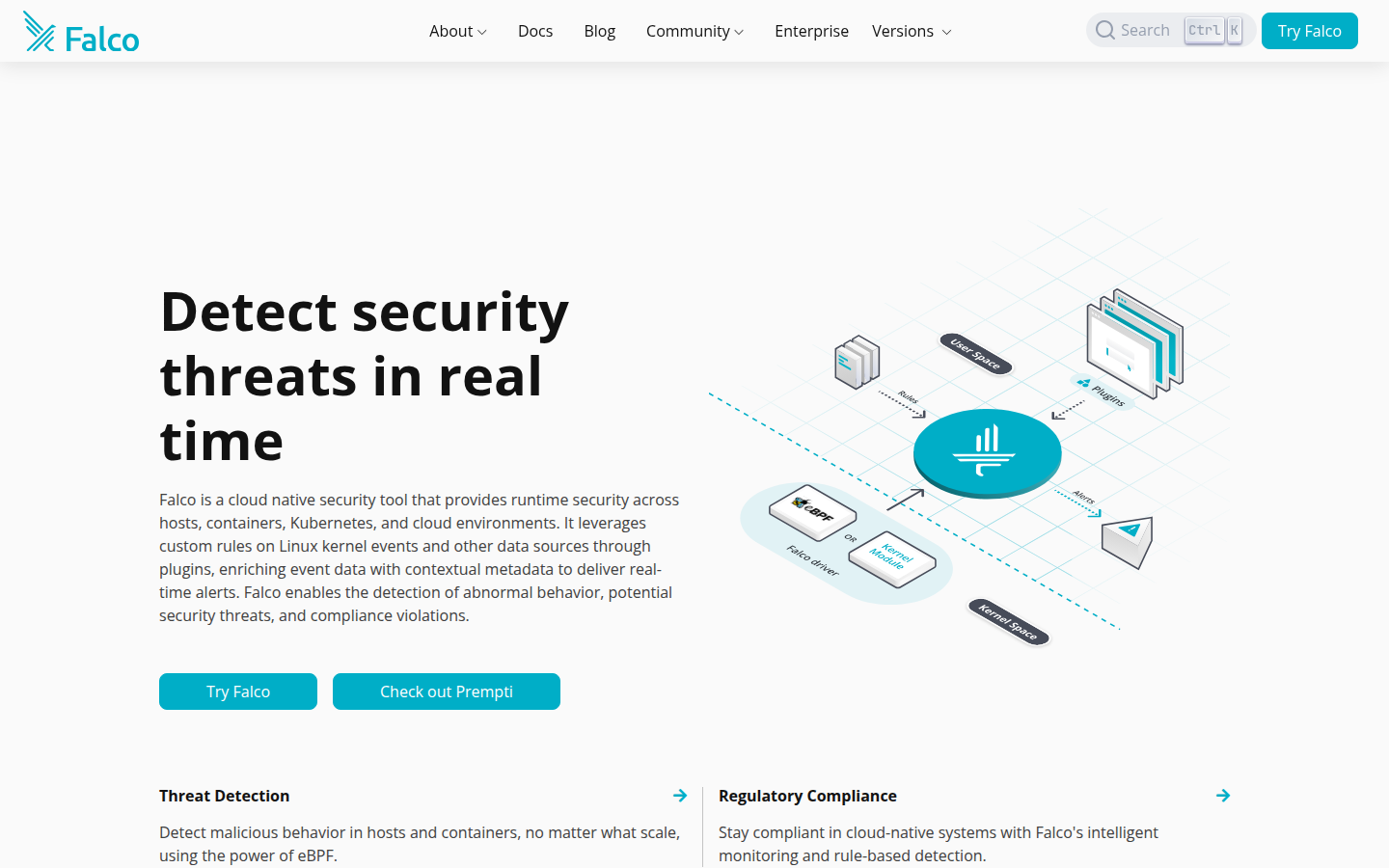
Falco is runtime security. Kernel events, container metadata, a rule, an alert. eBPF is the modern probe. It is a detector. It is not a graph.
A posture scan tells you the bucket was public yesterday. This tells you a shell just spawned in a container that should not have one.
Key features:
- Streaming detection on syscalls, with default rules you can tighten
- eBPF and kernel-module drivers; official Helm chart
- Plugins for cloud audit sources; JSON alerts to SIEMs and lakes
- CNCF graduated. Originally created by Sysdig
Why we like it:
Pair it with a CSPM. Do not ask a syscall detector to score an account.
Limits:
The driver is the tax. Rules without exceptions fire on your 3 a.m. automation. It does not page a toxic combination in IAM.
License or pricing: Apache-2.0.
Steampipe
Best for SQL over live cloud APIs
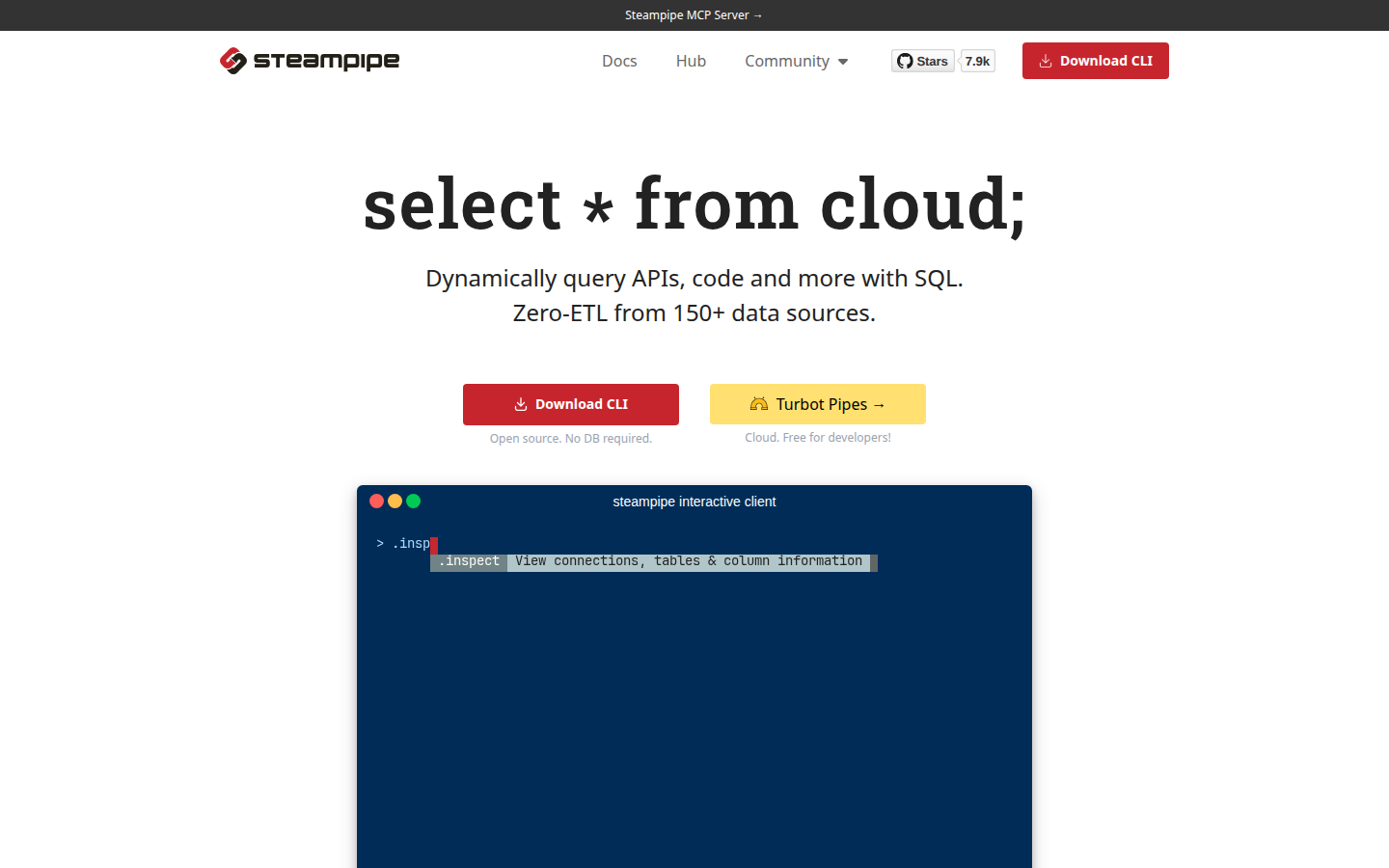
Steampipe maps cloud and SaaS APIs into Postgres tables you query live. Security mods on the Hub give you CIS-style benchmarks. You write the join.
When the CNAPP UI will not answer which buckets are public and writable by this role right now, this is the tool that will.
Key features:
- Single binary CLI with a bundled Postgres, plus FDW and SQLite extensions
- Plugin library for clouds, SaaS, and files
- Security, compliance, cost, and operations mods you can run as SQL
- Turbot Pipes for a hosted workspace; Powerpipe for dashboards
Why we like it:
The first-party demo is an open security group. That is the check you can run on an account you own.
Limits:
It is a query engine. It does not page you unless you wrap it. Hosted workspaces sit on commercial terms.
License or pricing: AGPL-3.0.
Orca Security
Best for agentless SideScanning without a host agent
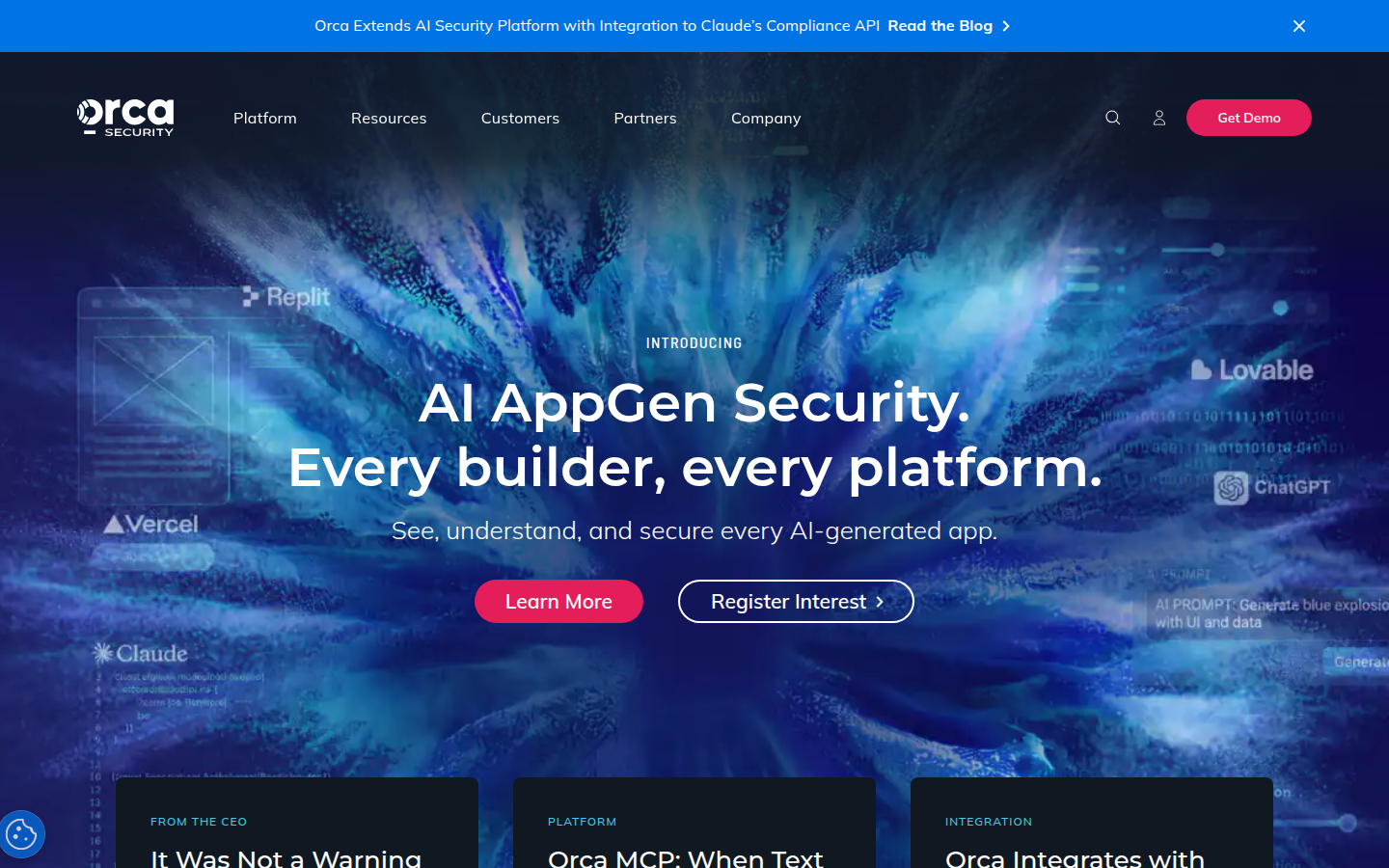
Orca calls itself a CNAPP. SideScanning reads runtime block storage out of band and scores risk without a packet on the workload network.
Reach for it when you want agentless depth and you do not already own the other graph. Snapshot timing is a known constraint.
Key features:
- Agentless SideScanning of VMs, containers, images, and serverless
- Unified data model that correlates misconfig, identity, data, and malware
- Attack-path analysis to crown-jewel resources
- Code scanning scored against live cloud context; optional runtime Sensor
Why we like it:
No agent, no network scan, no code in the guest is a real deploy story. Their SideScanning page is unusually specific.
Limits:
Not a streaming detector. The Sensor is a second deploy. No public price card.
License or pricing: Commercial.
Microsoft Defender for Cloud
Best for azure-home CNAPP that also covers AWS and GCP
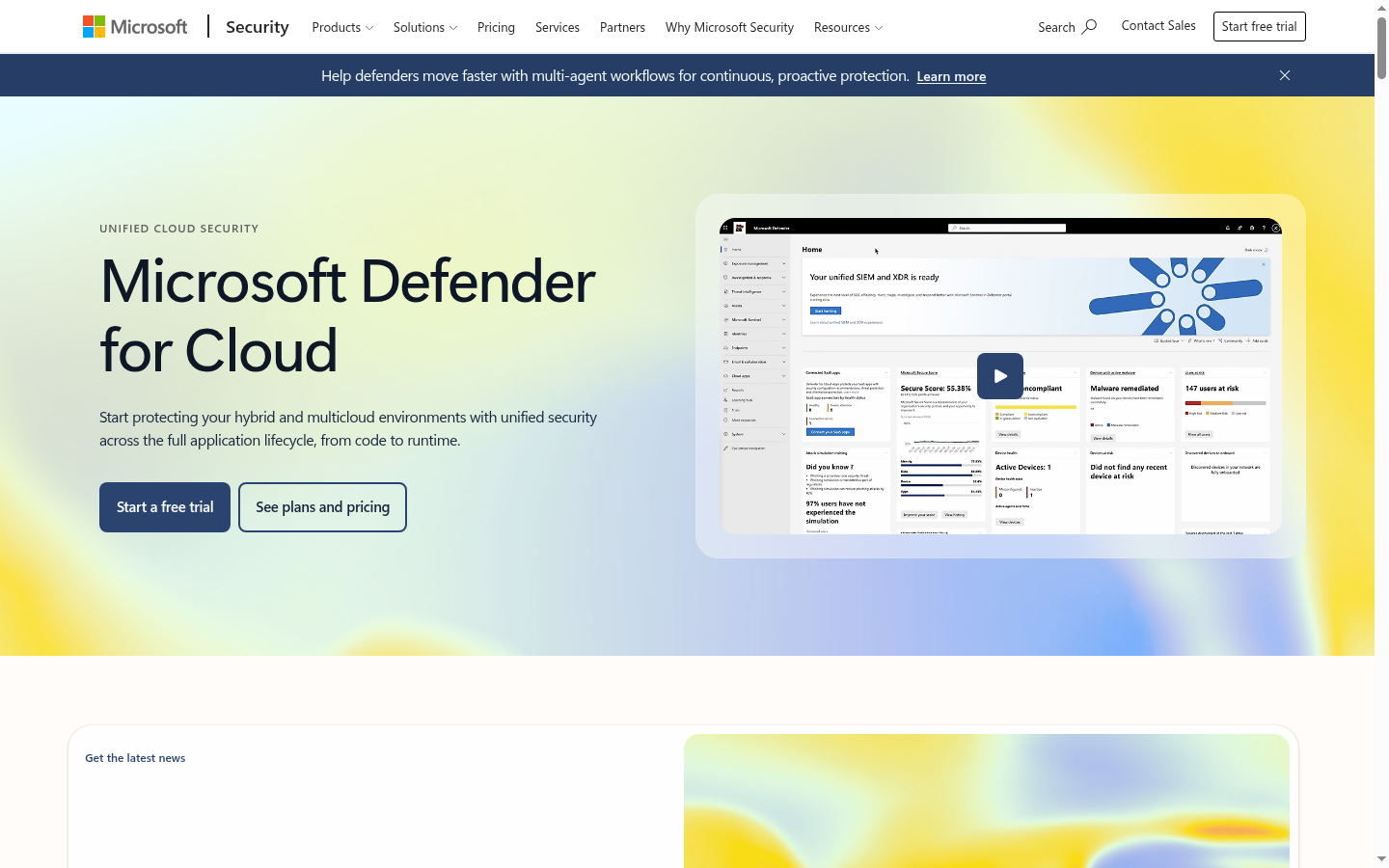
Defender for Cloud is Microsoft’s CNAPP: CSPM, DevOps security, and workload protection. Foundational CSPM is free. The interesting graph is on the paid plan.
If the bill already lives in Azure, start here before you buy a second graph. Home-cloud gravity is real.
Key features:
- Foundational CSPM: continuous assessment and Secure Score on Azure, AWS, and GCP
- Defender CSPM: agentless scanning, attack-path analysis, data-aware posture
- Workload plans for servers, containers, databases, storage, APIs, and AI services
- DevOps security across pipelines; findings land in the Defender portal
Why we like it:
The product page is the clean definition: CNAPP equals CSPM plus workload protection plus DevOps security.
Limits:
Workload protection is a menu of extra meters. Findings can lag after you fix a policy.
License or pricing: Foundational CSPM + paid plans.
How to choose a cloud security platform
Four questions before the quote. Names below are tools, not a scored bake-off.
| Critical question | Why it matters | What to evaluate | Red flag |
|---|---|---|---|
| Can we see the path from a public listener to a role we forgot, on an account we own? | The account is the product. | Wiz and Orca sell the graph. Defender for Cloud is the home-cloud graph. Prowler and Steampipe are checks you run. | A CVE list with no identity. |
| Is runtime included, optional, or a different product? | A snapshot is not a shell in a container. | Falco is the runtime detector on this list. Wiz and Orca sensors are optional. | Calling Falco a CNAPP. |
| Are we buying a multicloud graph, or the console on the bill we already pay? | Home-cloud gravity is real. | Defender for Cloud if the bill is Azure. Wiz or Orca if the graph must span clouds. | A second graph with no path you can name. |
| Can we run a check tonight without a contract? | Most teams do not buy a graph on day one. | Prowler CLI. Steampipe SQL. Falco on a node you operate. | Waiting on a trial to learn the account is public. |
Indie-grade cloud audit threads still name Prowler first. Steampipe shows up in the same comment as the SQL option.
Buy a CNAPP if you need the graph. Run Prowler tonight if you need a check you control. Do not call Falco a platform.
FAQs
Is a CNAPP the same as a CSPM?
No. Wiz’s own academy page is the first-party split we used. CSPM watches configuration and compliance. A CNAPP keeps that and adds workload, identity, data, and often runtime so it can prioritize toxic combinations. Posture-only is the CSPM list.
Why are Prowler, Falco, and Steampipe on a CNAPP list?
Because most teams do not buy a graph on day one. Prowler is the open posture catalog. Falco is the runtime half a CNAPP will later claim. Steampipe is how you write the toxic-combination join yourself.
Why isn’t Vega on this list?
Vega is not a CNAPP. It does not scan cloud accounts for toxic combinations or ship a CSPM graph. Putting it here would be a category error. If you want the federated post-SIEM option, open the SIEM alternatives list.
Is this a scored bake-off?
No. Order is editorial.