Security Operations
Best SIEM Alternatives in 2026: Open Source and Cloud Options
Six SIEM alternatives for teams whose ingest meter went red before the hunt.
Ingest was already the bill, so 1 source got dropped, and the next incident lived in the logs you stopped keeping. A cheaper copy of the same meter still cannot hunt a source it never saw.
Copy the data, then query. Or query where the data already lives. That choice is the product.
A pipe without detections is log management. SIEM is the query language and the coverage.
How we evaluated
We read first-party docs, source, licenses, and release notes, and we treat a marketing page as a claim, not as proof two products do the same work. For this category we cared about whether the product queries in place or ingests first, whether you operate it, and whether the docs name a query you can run on data you own.
| Tool | Best for | What to check |
|---|---|---|
| Vega | Querying data the SIEM never ingested | Query in place · commercial · founded 2024 |
| Wazuh | OSS SIEM and XDR you operate | GPLv2 · you operate it · agents and rules |
| Elastic Security | Search-native SIEM you can still self-host | ELv2 · search-native · you can self-host |
| Microsoft Sentinel | Microsoft-estate cloud SIEM | Azure consumption · ingest then hunt · Defender portal |
| Panther | Detection-as-code on a lake | Commercial · detections as code · lake or hosted |
| Security Onion | Hunt grid with NSM and host telemetry | You operate it · NSM plus host · free + ELv2 |
Vega
Best for querying data the SIEM never ingested
Vega sells a Security Analytics Mesh. You hunt, detect, and triage against data where it already lives. That is why they refuse the SIEM label.
You do not migrate a lake to try the query. You still need something that saw the endpoint. There is no public list price.
Key features:
- Queries sources in place, no ingest tax on their page
- Natural language, KQL, or MCP against an OCSF view
- Multi-cell notebooks they call rerunnable
- Object storage across the three major clouds
Why we like it:
When the pain is data the old console never ingested, a mesh that refuses to copy it is the architectural answer.
Limits:
Commercial. Young. Not an EDR and not a case desk.
License or pricing: Commercial. No public list price.
Wazuh
Best for OSS SIEM and XDR you operate
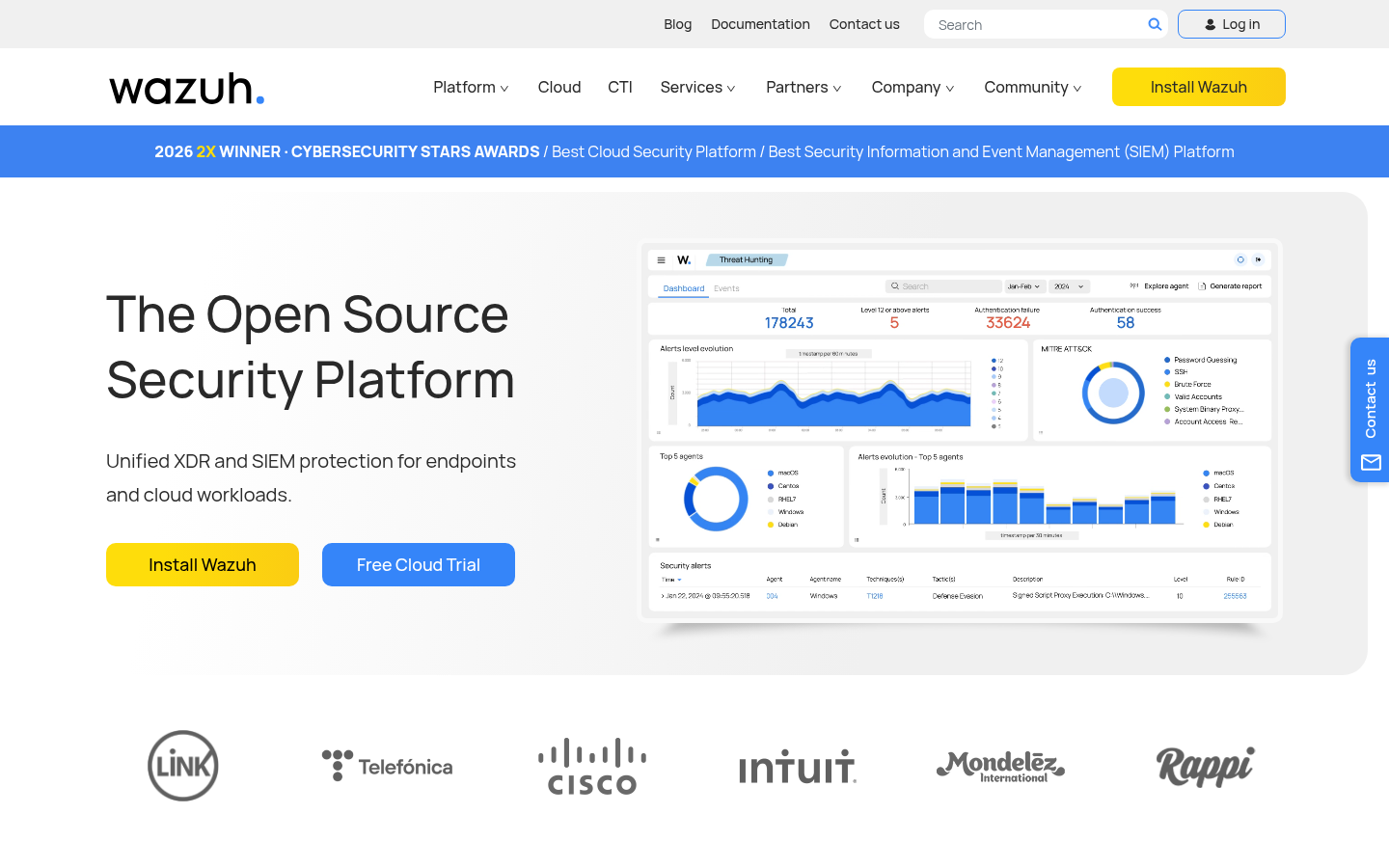
Wazuh is the open SIEM most teams mean when they say they will just run one. Agent, server, indexer, dashboard. Source is GPLv2.
You operate it. The unpaid work is rules and agents. Cloud exists if you do not want the cluster.
Key features:
- Agent on Linux, Windows, macOS, plus syslog and API collection
- Decoders and rules plus PCI, GDPR, CIS, HIPAA, and NIST views
- Active response on the device
- Wazuh Cloud if you do not want to run the cluster
Why we like it:
No license cost on the software you compile, if you can staff the cluster. That is a real alternative to an ingest invoice.
Limits:
You own parsers. Out-of-the-box rules are not why people buy a commercial SIEM.
License or pricing: GPLv2.
Elastic Security
Best for search-native SIEM you can still self-host
Elastic Security is the SIEM and XDR skin on Elasticsearch. Hosted, serverless, or self-managed, including air-gapped.
If the team already speaks that query language, you are not buying a second one. ELv2 is not OSI open source.
Key features:
- SIEM and XDR on one Elasticsearch bill
- Query archived data in place
- Public detection rules on GitHub, ECS and OCSF
- Cloud, on-prem, and air-gapped
Why we like it:
Frozen data you can still search is the lake move without leaving the stack you already run.
Limits:
Self-hosting a production SIEM is an engineering job. Security Onion exists in part because that job is unpleasant.
License or pricing: ELv2 / subscription.
Microsoft Sentinel
Best for microsoft-estate cloud SIEM
Sentinel is the hyperscaler SIEM. Ingest, a data lake, SOAR, and a copilot inside the Defender portal.
If the estate is already Entra and M365, the free tables they list are the leave motion. Non-Microsoft sources still hit the Azure bill.
Key features:
- Analytics tier and a cheaper data lake tier
- Connectors for Microsoft and third-party sources
- Free ingest on named Microsoft tables they list
- Lives in the Defender portal after the Azure-portal sunset they announced
Why we like it:
Naming the console you already pay for is the point of this shortlist. The purchase may be connectors, not a fourth SIEM.
Limits:
It is still an ingest SIEM.
License or pricing: Azure consumption.
Panther
Best for detection-as-code on a lake
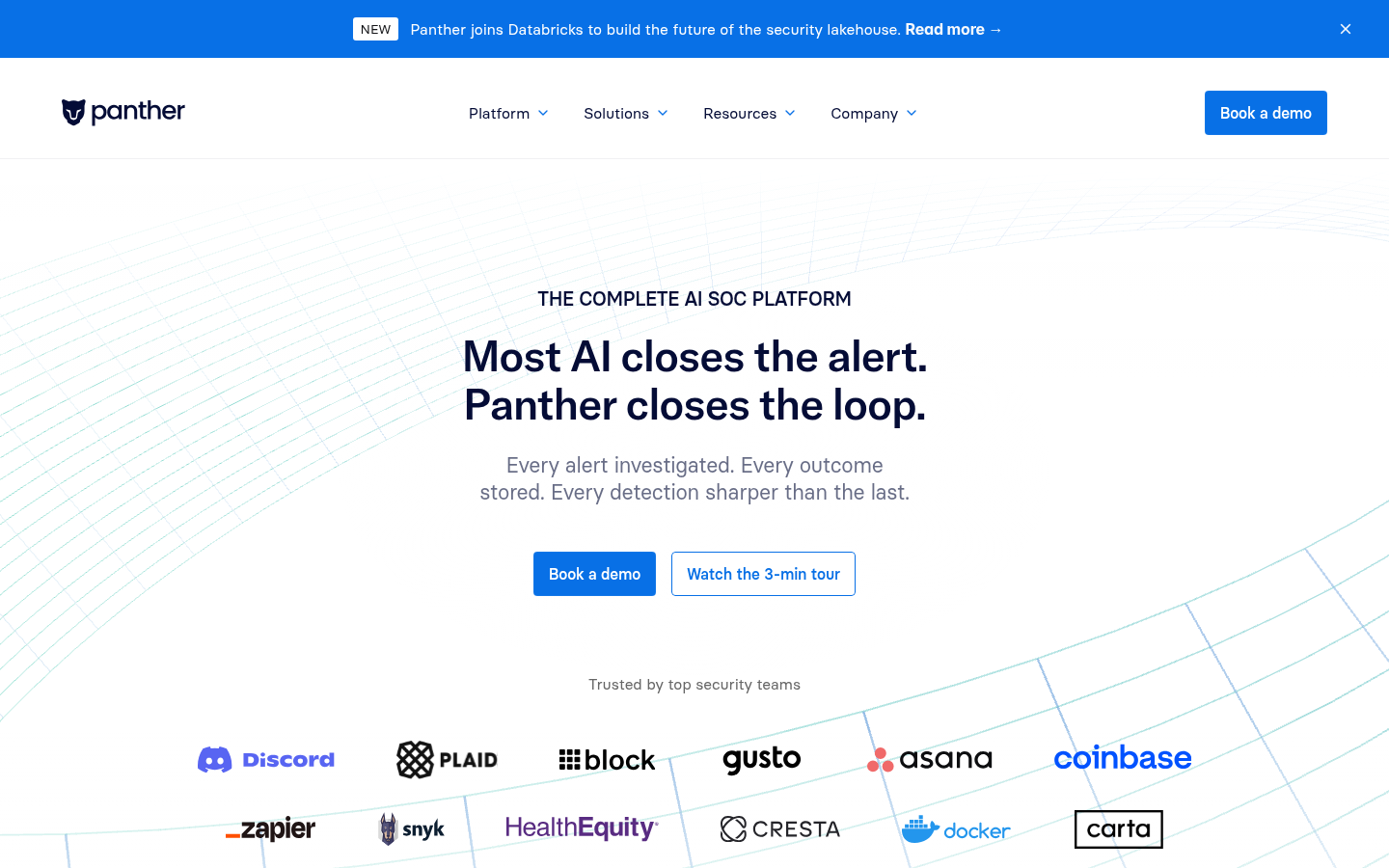
Panther is detections as code. Python rules in Git. A lake you can own, or a hosted ingest if you will not run a warehouse.
If the complaint is that the rule lives in a GUI nobody reviews, this is the counter. Connected mode assumes Snowflake or Databricks.
Key features:
- Python detections, unit tests, GitHub review
- Connected mode against Snowflake or Databricks you already run
- Hosted mode when you do not want a warehouse mandate
- Panther Analysis Tool and Sigma conversion
Why we like it:
A rule you can unit-test is a rule you can hand to the next shift. That is why Git-reviewed detections next to a lake beat a GUI rule nobody reviews.
Limits:
No public list price. Hosted mode is ingest again.
License or pricing: Commercial. No public list price.
Security Onion
Best for hunt grid with NSM and host telemetry
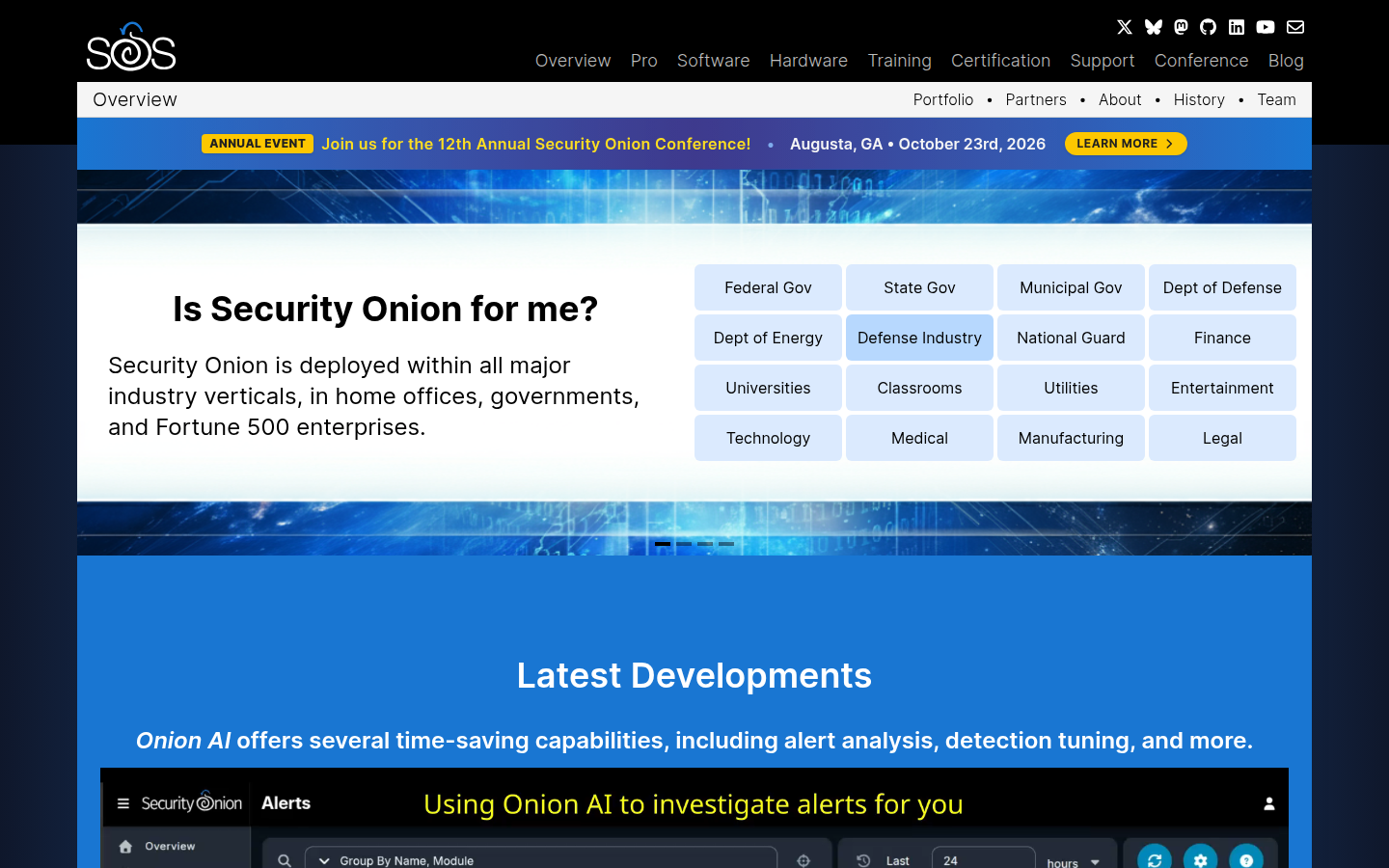
Security Onion is the hunt grid next to a SPAN port. Suricata, Zeek, Elastic Agent, osquery, and their own hunt and case UIs.
You operate it. Sensors want disk. Elastic components accept ELv2 at install. That is not a GPLv2 tree.
Key features:
- Signature detection and protocol metadata plus full PCAP
- Elastic Agent, live osquery, Fleet management
- Distributed grid from a setup wizard
- Appliances and Pro if you want the company to carry extras
Why we like it:
When the cloud SIEM never saw the packet, the grid that keeps PCAP is the practical option.
Limits:
You staff sensors. Pro and the AI extras are commercial conversations.
License or pricing: Free + ELv2.
How to choose a SIEM alternative
Four questions before the quote. Names below are tools, not a scored bake-off.
| Critical question | Why it matters | What to evaluate | Red flag |
|---|---|---|---|
| Can we query a source we never sent to the old meter? | Coverage is the product. | Vega and Panther query in place. Wazuh, Elastic Security, Sentinel, and Security Onion ingest first. | A cheaper copy of the same ingest bill. |
| Do we operate the cluster? | Staffing is part of the license. | Wazuh and Security Onion you operate. Sentinel and hosted Panther you do not. | An open SIEM with nobody to write rules. |
| Ingest-then-query, or query where it lives? | That split decides the bill more than a feature matrix. | Mesh and lake rows versus copy-first rows on this list. | Buying a lake and still paying to copy it. |
| Who reviews the detections? | A GUI rule nobody greps is a hope. | Panther detections as code. Elastic public rules. Wazuh decoders you own. | A console you cannot export. |
Wazuh threads treat the unpaid work as the real SIEM. A console you did not staff is still a hope.
Start with a mesh or lake if coverage is the gap. Start with the open stack if you already staff agents. If the estate is already one cloud, say that before you add a fourth console.
FAQs
Can I replace a legacy SIEM with one of these in a quarter?
Sometimes the console. Rarely the coverage. Parsers, detections, and the sources you never sent are the work. You cannot skip telemetry and still claim detections.
Does Vega replace Wazuh or Sentinel?
No. Vega queries data you already hold. Wazuh still needs an agent and a server. Sentinel still needs an Azure workspace and connectors.
Are Wazuh, Elastic Security, and Security Onion the same stack?
No. Wazuh is its own agent, server, indexer, and dashboard. Elastic Security is SIEM and XDR on Elasticsearch. Security Onion bundles Suricata, Zeek, Elastic Agent, and the Elastic stack with its own hunt and case UIs.
Is this a scored bake-off?
No. Order is editorial.