Platform security
Best Kubernetes Security Tools in 2026: 6 Options for Admission, Runtime and Scanning
Reject the object at admit time, then watch it at runtime. Last week’s scan with 0 owners will not stop the next privileged pod.
Expertise: Platform security · Level: Intermediate · 6 min read
The next deploy shipped the same privileged pod because last week’s scan had 0 owners. The scan the team already runs is green in the ticket queue. Nobody owns the ticket.
A warning after the object exists is not admission. Kubernetes security here is three moments: reject at admit time, watch syscalls after it runs, and scan the image or manifest before either of those.
In production the miss is a pod that requested hostPath, the scanner emailed a PDF, and the replica set stayed. The plan in git is a different gate. This shortlist is the cluster you already operate.
Admission controllers you run, runtime sensors, and scanners that never block are not substitutes. Choose the control that fails the object before it becomes a replica.
How we evaluated
We read first-party docs, source, licenses, and release notes, and we treat a marketing page as a claim, not as proof that two products do the same work.
We grouped by job: admit, detect at runtime, scan, benchmark, or open a CNAPP view. We also asked whether you operate the control, and whether the docs name a policy or rule you can apply on a cluster you own.
We read first-party docs, licenses, and release notes. Unless a write-up says otherwise, we did not run a paid tenant.
| Tool | Best for | What to check |
|---|---|---|
| Falco | Runtime rules on syscalls | Syscall and Kubernetes audit · Apache-2.0 · you operate the sensor |
| Kubescape | Cluster and YAML scanner you can CI | Cluster and YAML scan · Apache-2.0 · CI and in-cluster |
| Kyverno | Kubernetes-native admission policies | YAML policies · Apache-2.0 · validate and mutate |
| OPA Gatekeeper | Rego admission on the cluster | Rego constraints · Apache-2.0 · same language as OPA |
| Trivy Operator | In-cluster scan from the Trivy engine | In-cluster scan · Apache-2.0 · same engine as Trivy |
| Wiz (cluster view) | CNAPP view of the cluster you already bought | Cluster findings · commercial · same tenant as CSPM |
Falco
Best for runtime rules on syscalls
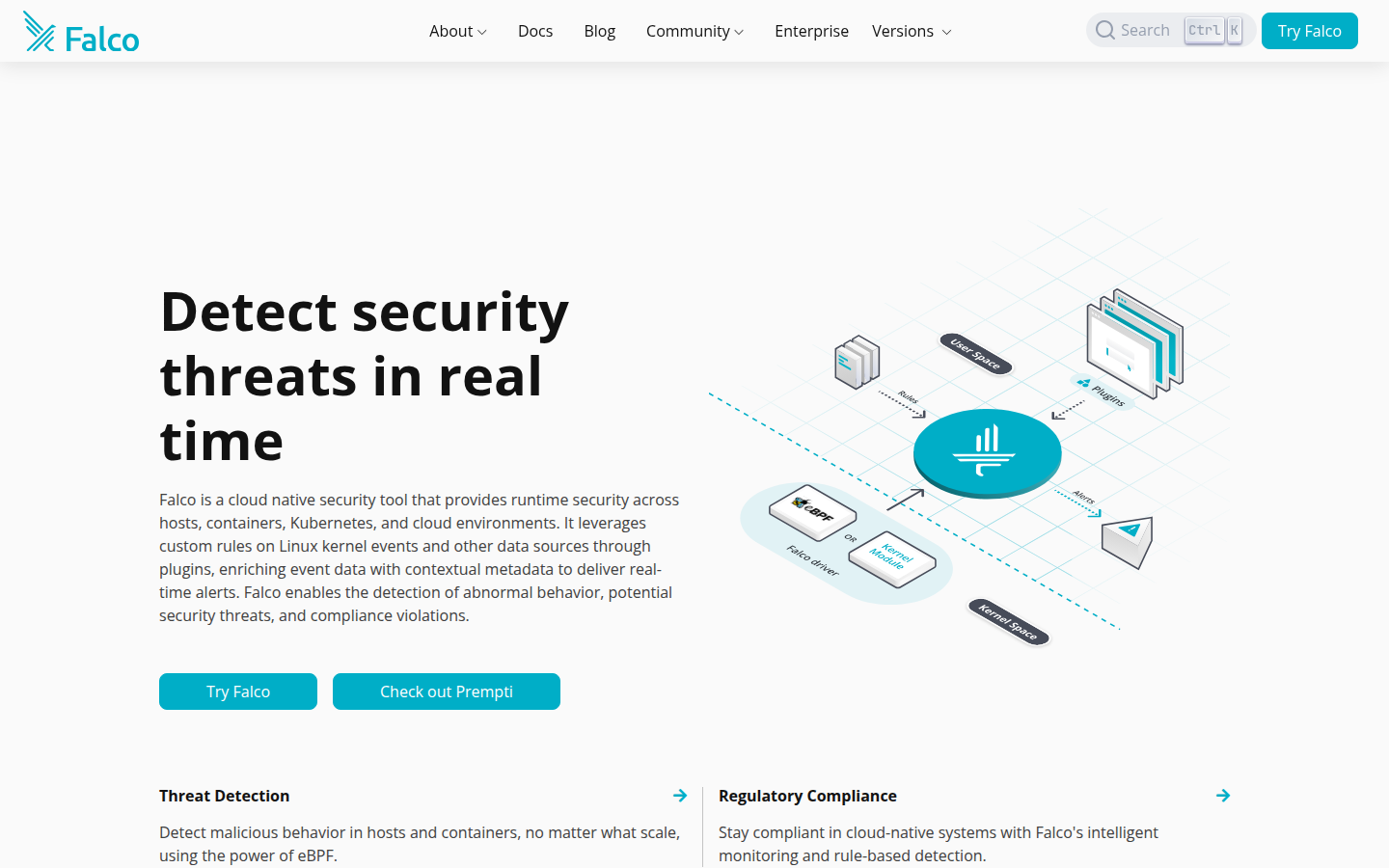
Falco is the runtime sensor. Rules are on the detection-as-code list. Here it is the DaemonSet.
A policy that only exists at admit time will miss the process that changed later. Noise is a tuning job. It is not a historical SIEM. The YAML rule job is detection as code.
Key features
- Syscall and K8s audit
- YAML rules
- Apache-2.0
- You operate it
Why we like it
Runtime on the node is how you see a pod that changed after admit.
Limits
Noise. Not a historical SIEM. The YAML rule job is detection as code.
Kubescape
Best for cluster and YAML scanner you can CI
Kubescape scans cluster and manifests against frameworks. ARMO opened it.
A scan you can run in the pull request is the admit-before-admit. A scan is not an admission controller. You still need Kyverno or Gatekeeper to reject.
Key features
- NSA and MITRE-style frameworks on the public docs
- CI and in-cluster
- Apache-2.0
- CLI
Why we like it
A framework scan in the pull request is how you catch the manifest before it reaches the API.
Limits
A scan is not admission. You still need a policy that denies.
Kyverno
Best for kubernetes-native admission policies
Kyverno policies look like Kubernetes YAML. Validate, mutate, generate. CNCF.
If the team already writes Kubernetes YAML, this is the policy they will finish. Cluster-scoped ops is still a privilege. A bad policy can block the cluster. Prove it on a cluster you own.
Key features
- YAML policies
- Validate and mutate
- Reports
- Apache-2.0
Why we like it
Policies that look like the objects you already write are the admission you will actually ship.
Limits
A bad policy can block the cluster. Prove it on a cluster you own. Cluster-scoped ops is still privilege.
OPA Gatekeeper
Best for rego admission on the cluster
Gatekeeper is OPA for admission. ConstraintTemplates are Rego. The authorization list already covers OPA for the app.
If Rego is already the org language, do not invent a second one for the cluster. Rego is easy to write badly. Constraint bugs fail closed or open depending on how you set it. Prove it on a cluster you own.
Key features
- Rego constraints
- Audit of existing objects
- Apache-2.0
- Same language as OPA
Why we like it
One language for the app and the cluster is why teams already running OPA start here.
Limits
Rego is easy to write badly. Fail-closed versus fail-open is a setting you must own. Prove it on a cluster you own.
Trivy Operator
Best for in-cluster scan from the Trivy engine
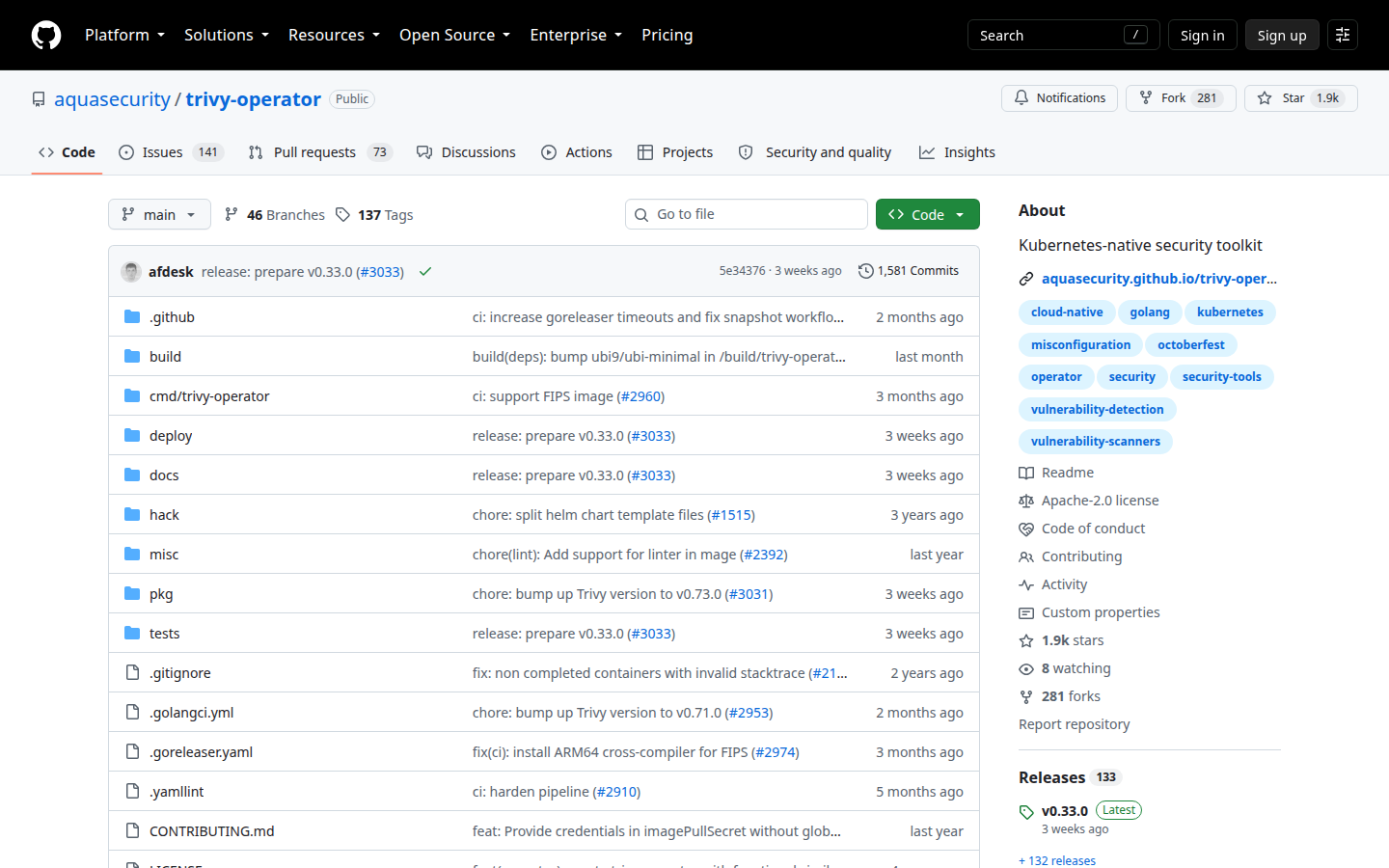
Trivy Operator runs Trivy inside the cluster. The SBOM list rows the CLI. This is the operator.
If CI already runs Trivy, the operator is the same finding on what actually runs. A custom resource is not admission. You still need a policy to block.
Key features
- Vulnerability and config CRDs
- Apache-2.0
- In-cluster
- Same engine as Trivy
Why we like it
Scanning what actually runs, with the engine CI already trusts, is the in-cluster row.
Limits
A custom resource is not admission. You still need a policy to block.
Wiz (cluster view)
Best for CNAPP view of the cluster you already bought
Wiz appears on cloud and DSPM lists. Here it is the cluster graph if you already bought it.
A familiar commercial option. Do not buy Wiz twice. The account graph is on the cloud security platforms list. It is not an admission controller you write. Overlap is declared.
Key features
- Agentless snapshots on the public docs
- K8s findings
- Commercial
- Same tenant
Why we like it
The cluster pane on a graph you already pay for is the no-second-CNAPP row.
Limits
Commercial. Not an admission controller you write. Overlap declared.
What we left out
- Tetragon. Teams want eBPF runtime next to the syscall sensor they already know. Falco already covers the open runtime job, and the detection-as-code list owns the rule files.
- kube-bench. People want a CIS benchmark they can run as a job. Kubescape already covers cluster and YAML scanning against published frameworks.
Falco threads are blunt about noise and eBPF. Admission is still required. Runtime is still a different door.
Questions before you buy
If a first-party page cannot answer these, keep shopping.
- Will this policy reject the privileged pod, or only warn after it runs?
- Is the job admission, runtime, in-cluster scan, or a CNAPP view we already pay for?
- On which cluster do we prove a deny before we install this in production?
Reject the object, or you are only filing tickets. IaC fails the file. Cloud sees the account.
FAQs
Does a scanner replace admission?
No. A scan warns. Admission rejects. Different door.
Is this the cloud platforms list?
No. Cloud platforms covers the account CNAPP. Kubernetes security covers the cluster you operate.
Why is Falco on two lists?
Rules are detection as code. The DaemonSet is platform. We link both.
Is this a scored bake-off?
No. Order is editorial. No escape recipes.