API Security
Best API Security Tools in 2026: 6 Options for Testing and Protecting APIs
Six API security tools for linting and fuzzing the contract you shipped.
Expertise: API Security · Level: Intermediate · 6 min read
Most API teams already have tests. They know the expected request, send it, and check that the API returns the expected response.
The problem is that attackers and broken clients do not stick to those examples.
They send missing fields, oversized values, unexpected types, requests in the wrong order, and combinations nobody added to the Postman collection. An API can pass every happy-path test and still behave badly as soon as the request moves outside what the team expected. OWASP API1:2023 Broken Object Level Authorization is that same miss: an authenticated call that still returns another user’s object.
That is where API security testing becomes useful. Some tools inspect the OpenAPI specification itself and catch problems before anything is deployed. Others use that specification to generate unexpected requests against a running API. More advanced tools can even test sequences, such as creating an object, modifying it, and requesting it again under different conditions.
Those are different jobs. Specification linting, fuzzing, and stateful sequences are the split. Pick the control that covers the gaps your existing tests leave behind.
How we evaluated
We read first-party docs, source, licenses, and release notes, and we treat a marketing page as a claim, not as proof that two products do the same work.
We cared about whether the tool reads the OpenAPI you ship, whether it lints or fuzzes, whether the run is stateful, and whether the docs name a command you can run on an API you own. Postman missed because a collection is not a negative fuzzer. Unless a write-up says otherwise, we did not run a paid tenant.
| Tool | Best for | What to check |
|---|---|---|
| CATS | Negative OpenAPI tests with no test code | Apache-2.0 · negative fuzz · no test code |
| Schemathesis | Property-based OpenAPI and GraphQL fuzz | MIT · property-based · stateful optional |
| RESTler | Stateful sequences across a cloud API | MIT · stateful sequences · you operate it |
| vacuum | Fast Spectral-compatible spec lint | MIT · lint the file · Spectral-compatible |
| Spectral | The ruleset format the rest of the lint world copies | Apache-2.0 · rules you inherit · the file |
| OWASP ZAP | A proxy scan after you import the spec | Apache-2.0 · proxy you already run · import the spec |
CATS
Best for negative OpenAPI tests with no test code
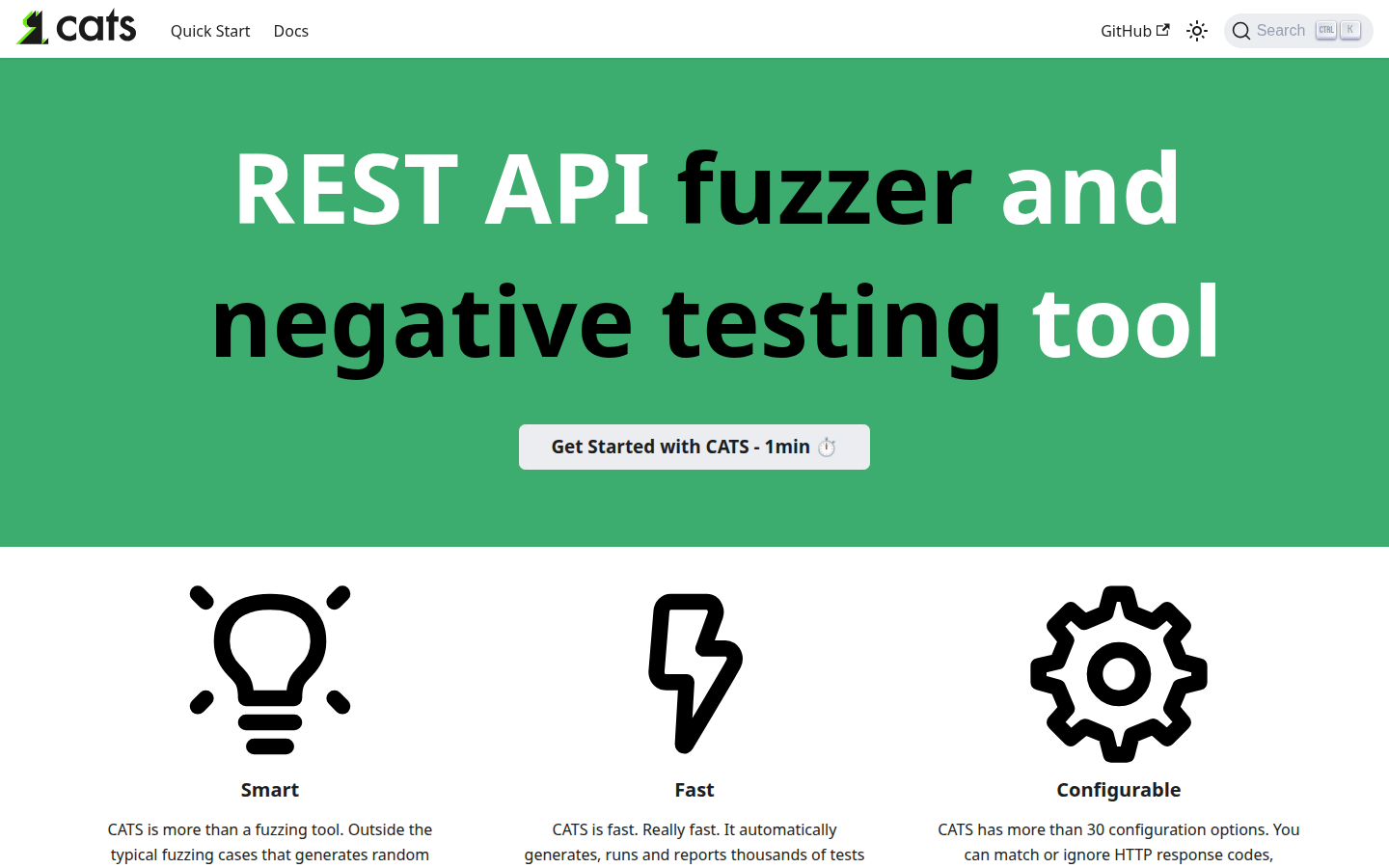
CATS is a REST API fuzzer and negative testing tool for OpenAPI endpoints. You point it at a spec and a live base URL you own. No test code for the first run.
Tests are self-healing when the spec moves. Apache-2.0. You operate it. It is not an authorization review.
Key features
- OpenAPI-driven generation. No handwritten test class for the first run
- Negative and boundary fuzzers
- Java compiled to a native CLI with GraalVM
- Self-healing reports when the spec moves
Why we like it
If the pain is we only ever POST the sample body, this is the first command worth running on a new surface.
Limits
A 200 on a resource the caller should not see still needs the object-level check. We did not run it against a third-party host.
Schemathesis
Best for property-based OpenAPI and GraphQL fuzz
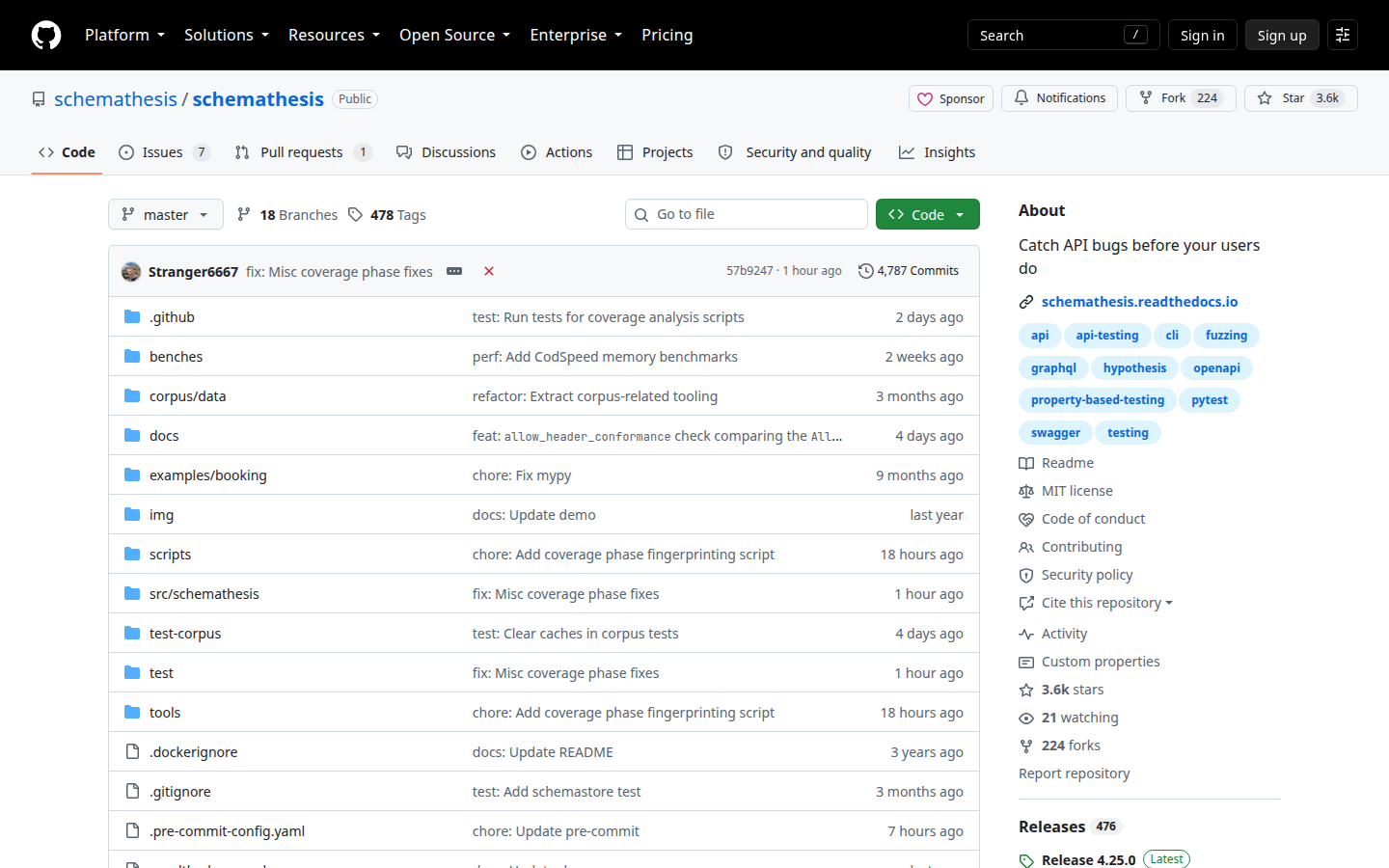
Schemathesis generates inputs from your OpenAPI or GraphQL schema, adapts to responses, and can chain operations into workflows. It sits on Hypothesis.
If the team already writes Python tests, this is the fuzzer that lives next to them. gRPC is a requested gap.
Key features
- uvx schemathesis run against an OpenAPI URL
- pytest integration with schema.parametrize
- Stateful mode via schema.as_state_machine
- GitHub Action and Allure / JUnit reports
Why we like it
A schema that becomes a test you can keep is how the happy example stops being the suite.
Limits
A Python-shaped tool is a tax if the repo is only Go. GraphQL and OpenAPI are the documented surfaces.
RESTler
Best for stateful sequences across a cloud API
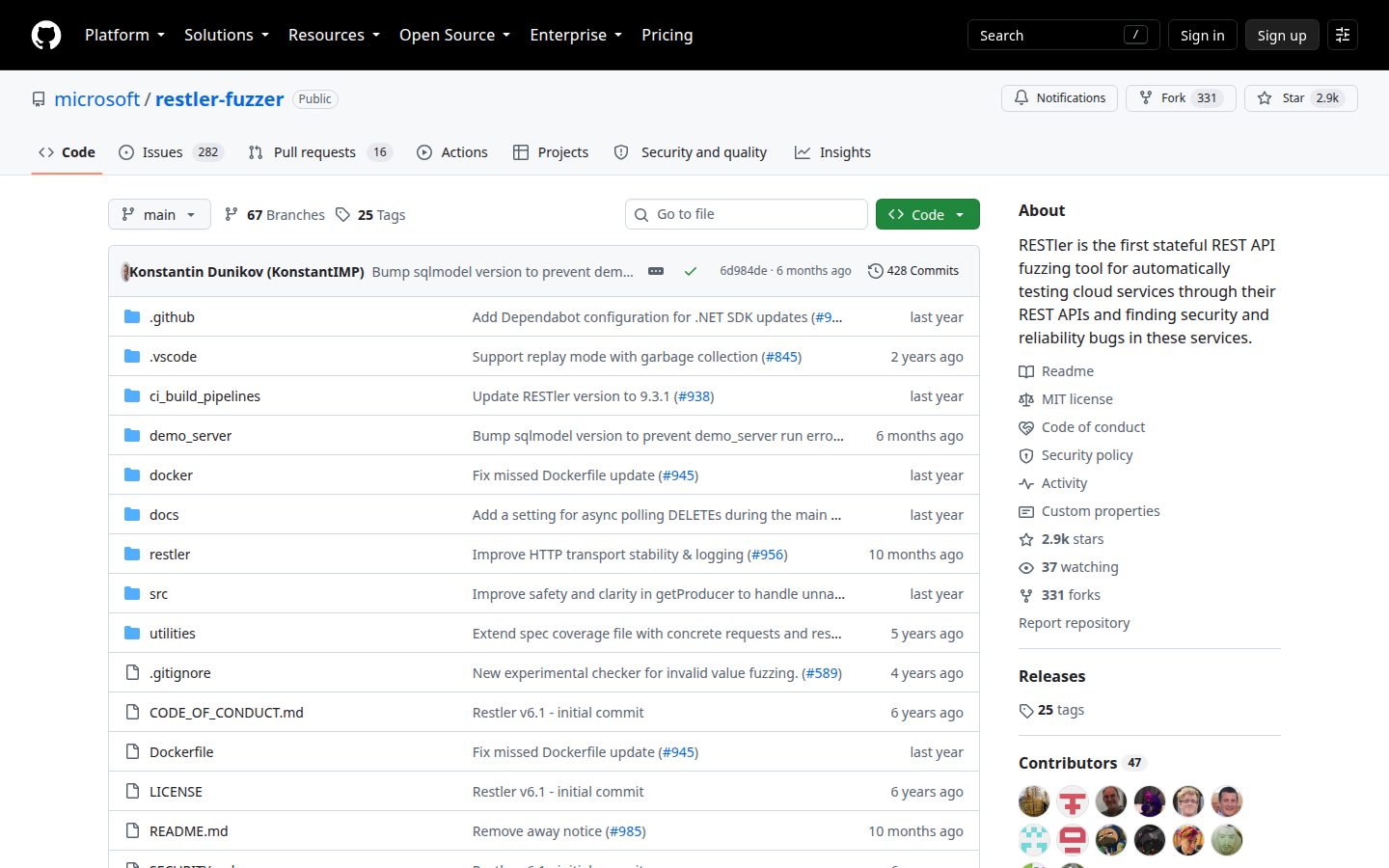
RESTler reads an OpenAPI definition, infers producer-consumer dependencies, and executes sequences a single-request fuzzer never reaches.
Compile, Test, Fuzz-lean, then Fuzz, in that order. Their own Fuzz warning is the one that matters.
Key features
- Compile, Test, Fuzz-lean, then Fuzz, in that order
- Dependency inference so a GET does not fire before the POST that creates the id
- Checkers for 500s and for logic bugs such as leaks
- Replay logs. Docker and local.NET 8 builds
Why we like it
If a bug only appears after create → mutate → fetch, the ability to test stateful sequences is what matters.
Limits
Aggressive search can leak resources or degrade a poorly implemented service. Run Test first on an environment you own and can wipe.
vacuum
Best for fast Spectral-compatible spec lint
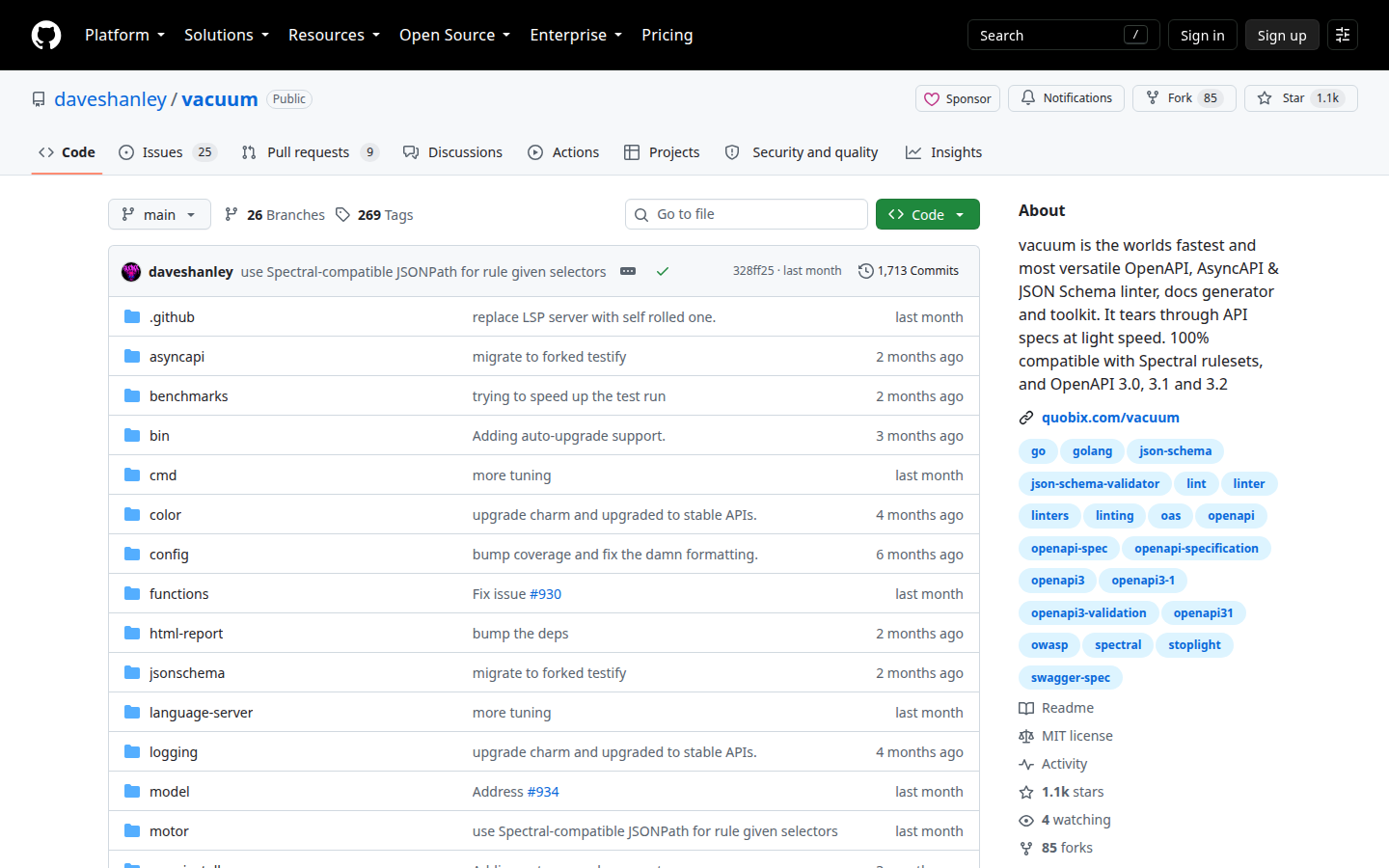
vacuum is an OpenAPI, AsyncAPI, and JSON Schema linter. The README calls it fully compatible with existing Spectral rulesets.
It lints the file. It does not send a request. A clean run is not a clean API.
Key features
- Spectral ruleset compatibility
- OpenAPI 3.0, 3.1, and 3.2 on the banner
- Homebrew, npm, curl installer, and Docker paths they publish
- amd64 and arm64 Docker images
Why we like it
Fuzzing a spec that already fails lint is how teams burn a night. This is the preflight.
Limits
Pair it with a fuzzer on a host you own. Use it to catch specification problems before spending time fuzzing the live API.
Spectral
Best for the ruleset format the rest of the lint world copies
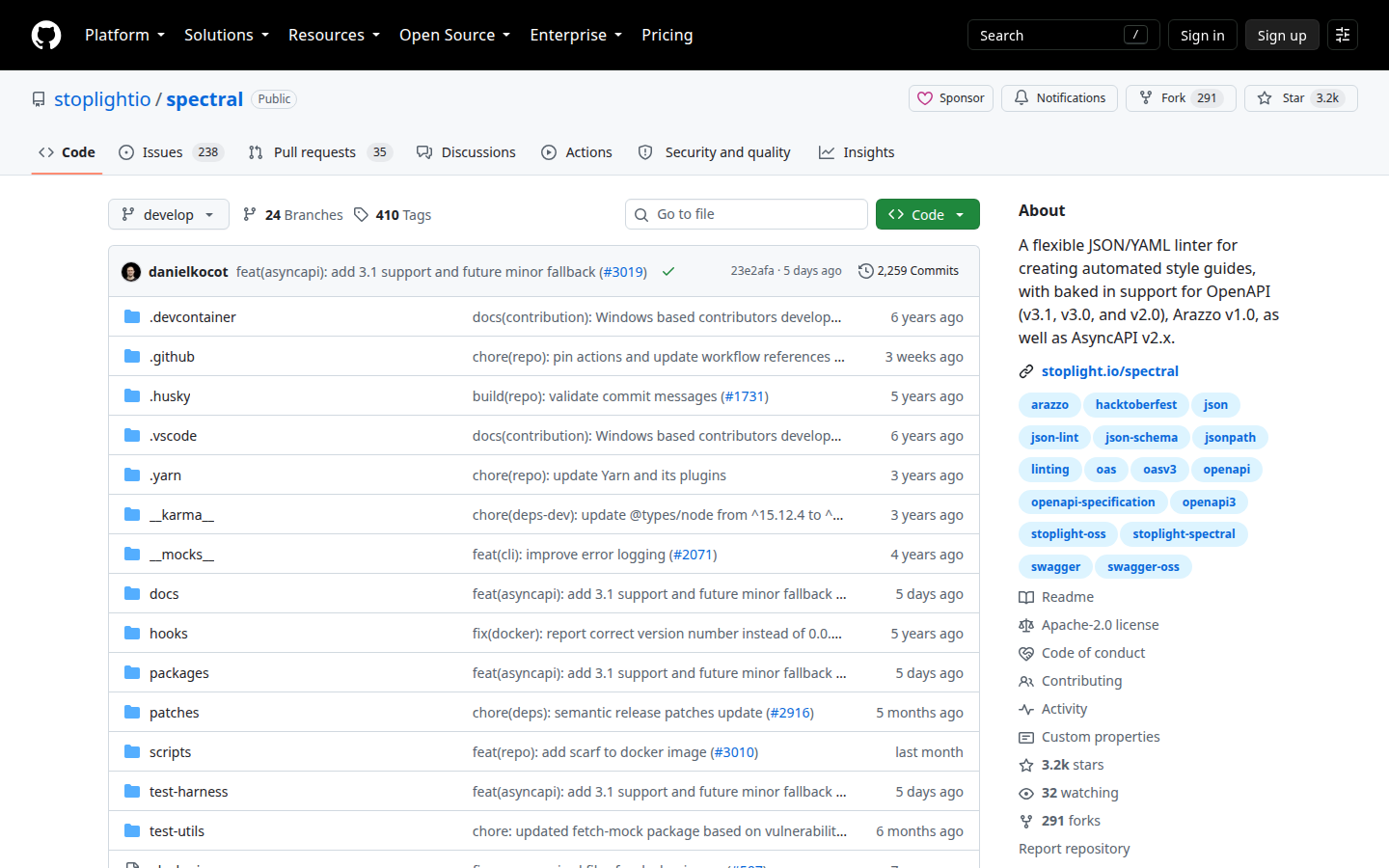
Spectral is the OpenAPI and JSON linter whose ruleset format the faster linters copy. If your org already has a house file, this is the source of that file.
Keep the ruleset even if another binary runs in CI. A house style is the only lint that survives a tool swap.
Key features
- Custom rulesets you can share across services
- CLI and library shapes CI snippets already assume
- JSON Schema and OpenAPI documents
- The compatibility target for faster linters
Why we like it
The format CI snippets already assume. That is why it stays on a list next to a faster clone.
Limits
It is a linter. Do not treat a green badge as authorization coverage.
OWASP ZAP
Best for a proxy scan after you import the spec
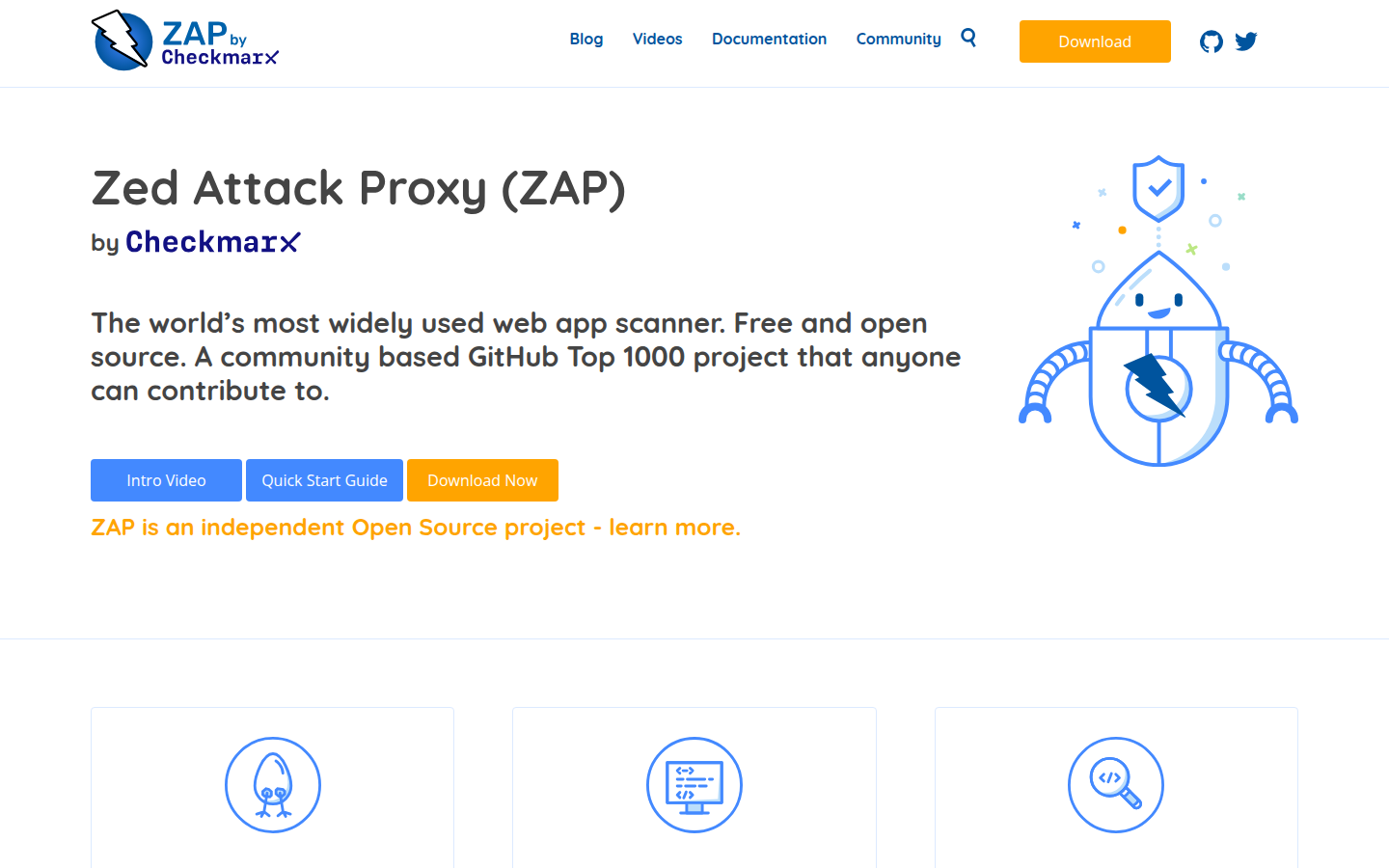
ZAP is the familiar open-source web application scanner and intercepting proxy. You import an OpenAPI definition, then spider and scan a host you own.
An imported spec does not make it a property-based fuzzer. It will not chain create-then-get the way a stateful tool does.
Key features
- OpenAPI import so the scan follows the contract
- Automation framework and packaged scans for CI
- Passive and active scan policies
- A desktop and a daemon
Why we like it
A linter and a fuzzer do not replace a proxy that already sees the session cookie. This is that proxy. TLS termination still sits on API gateways.
Limits
Use it as the scan you already run, not as the only contract test. It is not a sanitizer and it is not object-level authz.
What we left out
- Postman. Every team already has a collection. A happy-path collection failed the negative-values check.
- Salt / Noname-class runtime. Salt, Noname, and similar runtime platforms focus on discovering and monitoring APIs in production. This comparison is specifically about specification linting and active testing.
Questions before you buy
Ask these before the quote. A product that cannot answer them is selling a different control.
- Does the tool read the OpenAPI we actually ship, or only the example in CI?
- Are we linting the file, fuzzing a host we own, or both?
- What happens if Fuzz mode leaks resources on a poorly implemented service?
Lint the file, then send a value the example never used. Bound GraphQL separately. Put a key on the path at the gateway.
FAQs
Can I skip the linter if I already fuzz?
No. A fuzz run on a spec that already fails lint wastes the night. vacuum or Spectral is the preflight. CATS, Schemathesis, or RESTler is the request. They are two doors.
Does Schemathesis replace CATS?
No. Schemathesis is Hypothesis in Python, including stateful workflows. CATS is a no-code negative fuzzer with a native CLI. You can run both on a host you own. You cannot skip object-level authorization because either one returned a 500.
Is RESTler safe on production?
Not in Fuzz mode. Their README says aggressive search can leak resources or degrade a poorly implemented service. Use Test, then Fuzz-lean, on an environment you own and can wipe.
Is this a scored bake-off?
No. Order is editorial. We did not run these against a third-party host.