Oligo vs Sweet Security: Runtime AppSec vs Runtime CNAPP
Choose Oligo when application and library runtime exploitability plus exploit blocking are the product. Choose Sweet when Runtime CNAPP across cloud and AI is the product.
Runtime stopped being an optional sensor add-on. When exploit windows shrank and AI workloads joined production, buyers stopped accepting static SCA piles and periodic posture snapshots as the whole answer. The shortlist shifted to vendors that prove what executes and what to stop while the system stays up.
Oligo and Sweet both sell into that shift. Between these two, Oligo productizes application and library runtime security: code-execution observability, prioritization of vulnerabilities that actually load and run, and technique-based exploit blocking across apps, cloud workloads, and AI. Sweet productizes Runtime CNAPP plus AI security: runtime context across cloud workloads, identity, APIs, detection and response, posture, and agent behavior.
Shared “runtime” language does not mean one interchangeable job. Related AppSec tooling lives under Application Security; broader cloud platform shortlists live under cloud security platforms.
| Job | Runtime AppSec / CADR: code-execution observability, prioritize loaded and executed vulns, block exploit techniques | Runtime CNAPP + AI security: runtime context, detection and response, vuln and posture, identity, API, and agents |
|---|---|---|
| How risk is scored | Execution proof on functions loaded into memory; technique patterns for blocking | Runtime behavioral context plus LLM-driven anomaly and attack-path style prioritization across cloud and AI |
| Deploy | eBPF runtime sensor on Linux workloads, hosts, and containers; no classic per-language RASP rewrite | eBPF runtime sensors across cloud workloads plus CNAPP coverage for posture, identity, API, and AI |
| What fails CI | Not a classic PR SAST gate; runtime proof that shrinks which CVEs must drive patch and release queues | Not a classic PR SAST gate; runtime CNAPP findings and policies that feed SecOps and cloud remediation queues |
| License/pricing | Sales-quoted demo / quote; no public self-serve dollar table (checked 5 Sep 2026) | Sales-quoted demo / risk assessment; no public self-serve dollar table (checked 5 Sep 2026) |
| Who operates it | AppSec and platform owners for production app and library risk plus exploit blocking | Cloud security, SecOps, and platform owners for Runtime CNAPP and AI security |
Recent launches reinforce the split rather than erase it. On 14 April 2026 Oligo shipped Runtime Exploit Blocking, technique-based syscall blocking inside the application without killing containers. On 12 November 2025 Sweet announced a $75M Series B alongside its unified Runtime CNAPP for cloud and AI, bringing total funding to about $120M.
The comment is about the CNAPP-versus-SCA boundary, not Oligo or Sweet by name. It still helps frame why runtime buyers get pulled between AppSec exploitability tools and broader cloud runtime platforms — the fork this pair sits on.
We reviewed first-party documentation, funding notices, product pages, and live community threads. We did not test the products in paid production environments, so this is not a hands-on benchmark.
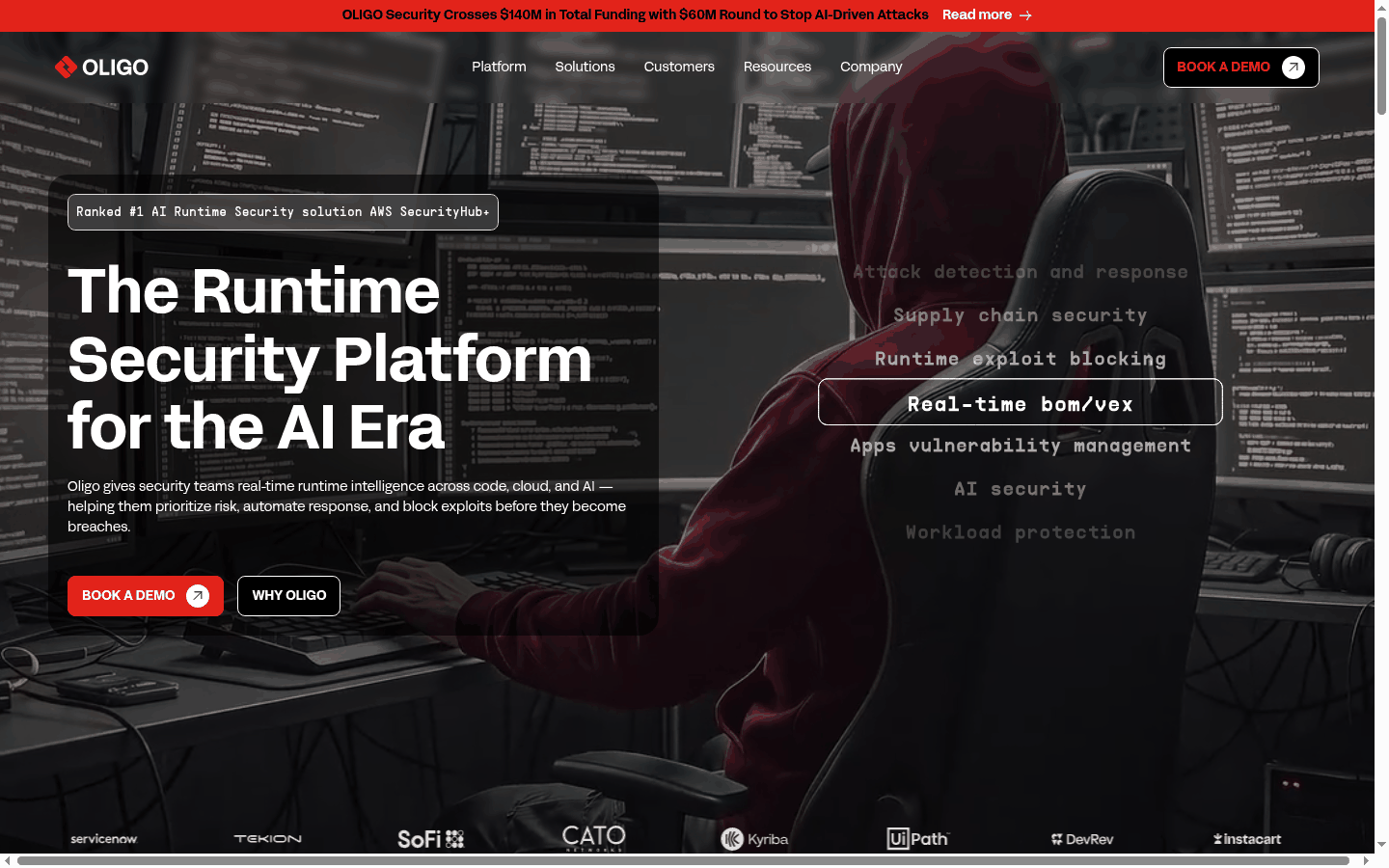
Oligo Security
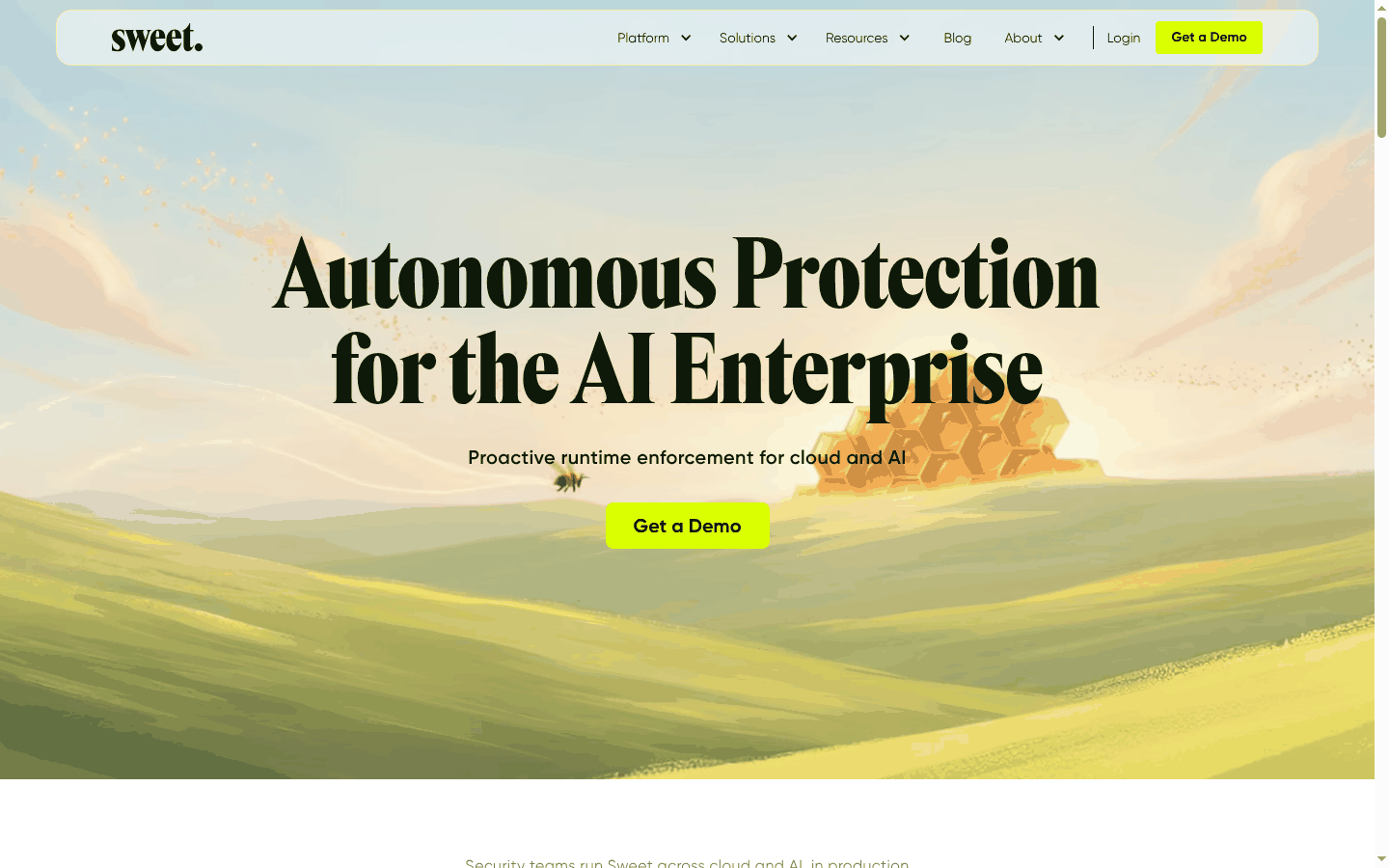
Sweet Security
Editions and pricing
Neither vendor publishes a self-serve dollar meter a spreadsheet can finish without sales. Capital scale sits a notch above the usual mid-stage compare band: Oligo is at about $140M total after an August 2026 $60M round, Sweet at about $120M after the November 2025 Series B. Both are well funded and independent. Neither sits inside a hyperscaler suite, so roadmap and long-term support depend on each company staying independent.
| Owner (2026) | Independent. Runtime security for apps, cloud, and AI | Independent. Runtime CNAPP and AI security |
|---|---|---|
| How you buy it now | Request a demo / sales quote. No public Starter or Teams dollar table on first-party site (checked 5 Sep 2026) | Request a demo or risk assessment. No public self-serve dollar table on first-party site (checked 5 Sep 2026) |
| Public price table | None. Quote-gated | None. Quote-gated |
| Funding signal | About $140M total, including a $60M round in August 2026. Well funded and still independent, not a mega-vendor suite | About $120M total, including a $75M Series B (Nov 2025, Evolution Equity). Also well funded and still independent |
If procurement needs a published monthly license or workload meter before the first call, both will stall that spreadsheet until a quote lands.
Application runtime exploitability
| Primary surface | Functions and libraries executing in production memory; syscall correlation for exploit techniques | Runtime vuln and posture findings inside a broader cloud and AI CNAPP, not a dedicated AppSec exploit-blocking product |
|---|---|---|
| Prioritization shape | Distinguish packages on disk from code loaded and executed; shrink CVE queues with execution proof | Prioritize with runtime context across workloads and attack paths; noise reduction framed as CNAPP/SecOps signal quality |
| Blocking / response | Runtime Exploit Blocking: technique-based syscall blocks without killing the container or process | Detection and response with runtime enforcement and guardrails across cloud workloads and AI agents |
| What teams argue about | Whether execution proof and technique blocks cover enough of the CVE backlog without a wider CNAPP | Whether CNAPP runtime vuln views replace AppSec-grade function and library exploitability |
Between these two, that unused-path pain maps to Oligo’s product story: prove which vulnerable functions execute, then block exploit techniques without treating every package-on-disk CVE as equal work.
Cloud and AI runtime scope
| Primary surface | Apps, workloads, hosts, and AI through a runtime AppSec and CADR lens | Unified Runtime CNAPP across applications, workloads, infrastructure, identity, APIs, and AI agents |
|---|---|---|
| Investigation shape | Process and function-level forensics for exploit attempts and anomalous execution | Runtime detection, investigation, and response with LLM-assisted noise reduction across multi-step cloud and AI attacks |
| AI angle | Runtime AI security for models, frameworks, and agents as executing code and egress risk | AI Security Platform: discover agents and models, AI-DR, posture, and runtime guardrails on agent actions |
| What teams argue about | Whether AppSec runtime coverage is enough when cloud identity and API investigation also need an owner | Whether Runtime CNAPP depth replaces the need for dedicated application exploit blocking |
Between these two, do not buy “covers AI” or “uses eBPF” as a unique checkbox. Buy the operating surface: Oligo for AppSec-shaped execution proof and blocking, or Sweet for the broader cloud and AI runtime control layer.
Where they overlap
Both sell runtime security on eBPF sensors. Both talk cloud workloads and AI. Both show up when an RFP says “runtime” after static scanners failed the prioritization test. Overlap is category timing, not a shared primary control layer. Treating them as interchangeable duplicates spend without covering both jobs.
When to use both
Running both works when the jobs stay separate: Oligo for application and library exploitability plus precise exploit blocking, Sweet for Runtime CNAPP across cloud workloads, identity, API, and AI agents. That is complementary coverage, not two copies of the same tool.
Skip Sweet for this pair if AppSec needs execution-level exploit blocking and cloud CNAPP is already covered elsewhere. Skip Oligo for this pair if the buying committee standardized on a Runtime CNAPP for cloud and AI investigation and AppSec already has another path for library exploitability.
Decide the job first. If the product must prove which app and library code executes and block exploit techniques without taking the process down, that is Oligo. If the product must run Runtime CNAPP across cloud and AI with detection, posture, identity, and API context, that is Sweet. Only then open the quotes.
FAQs
Are Oligo and Sweet the same runtime product?
No. Both use runtime and eBPF language, but between these two Oligo leads with application and library exploitability plus exploit blocking, and Sweet leads with Runtime CNAPP across cloud and AI.
Do either publish list prices?
No public self-serve dollar tables on first-party sites checked 5 Sep 2026. Both are sales-quoted demo paths.
How funded are they?
Oligo is at about $140M total after an August 2026 $60M round. Sweet is at about $120M total after a November 2025 $75M Series B. Both are well funded and independent. Neither sits inside a hyperscaler suite, so roadmap and long-term support depend on each company staying independent.
Is this a scored bake-off?
No. Order is editorial.