Armis vs Axonius: Which One Owns Your Asset Inventory Truth?
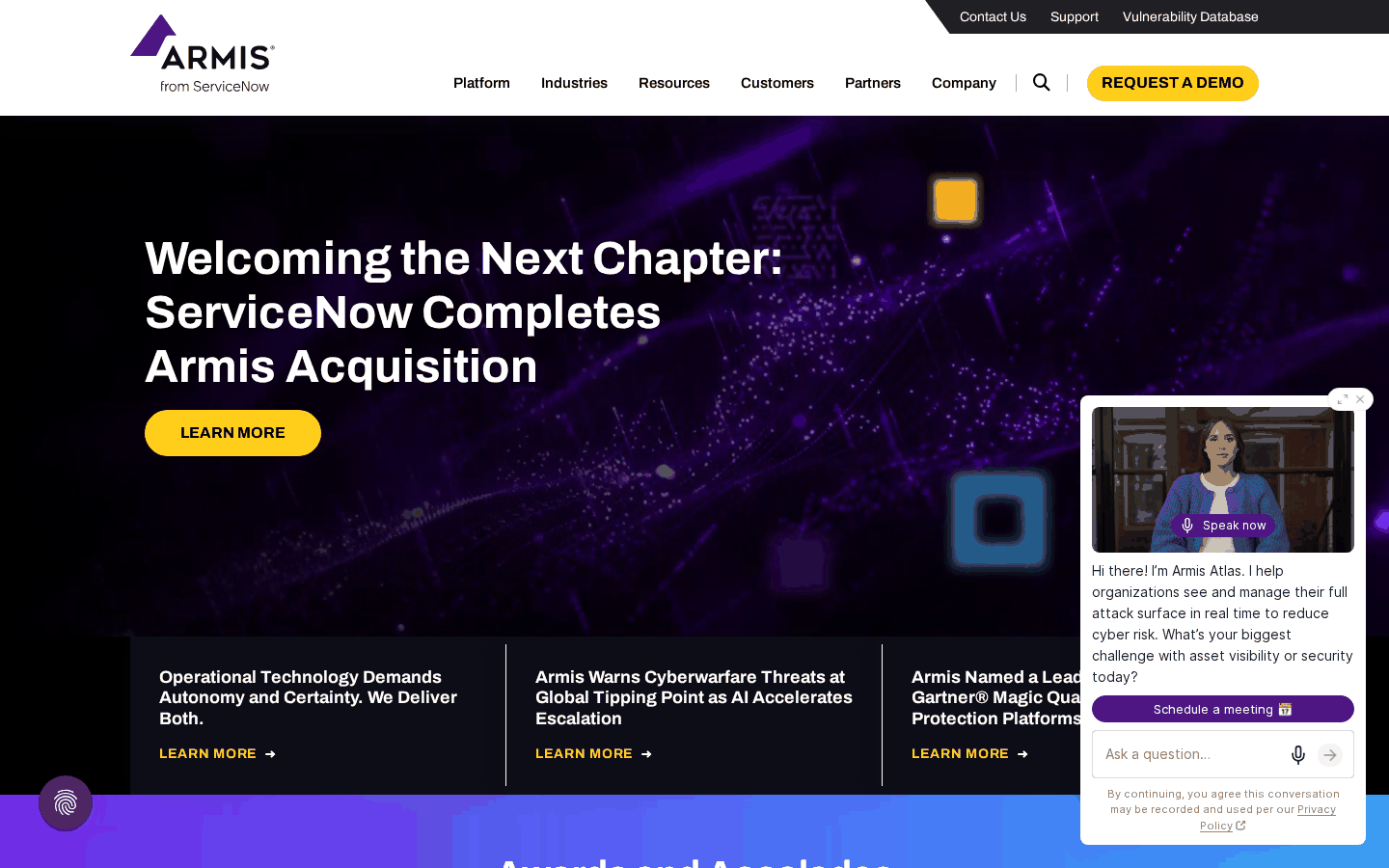
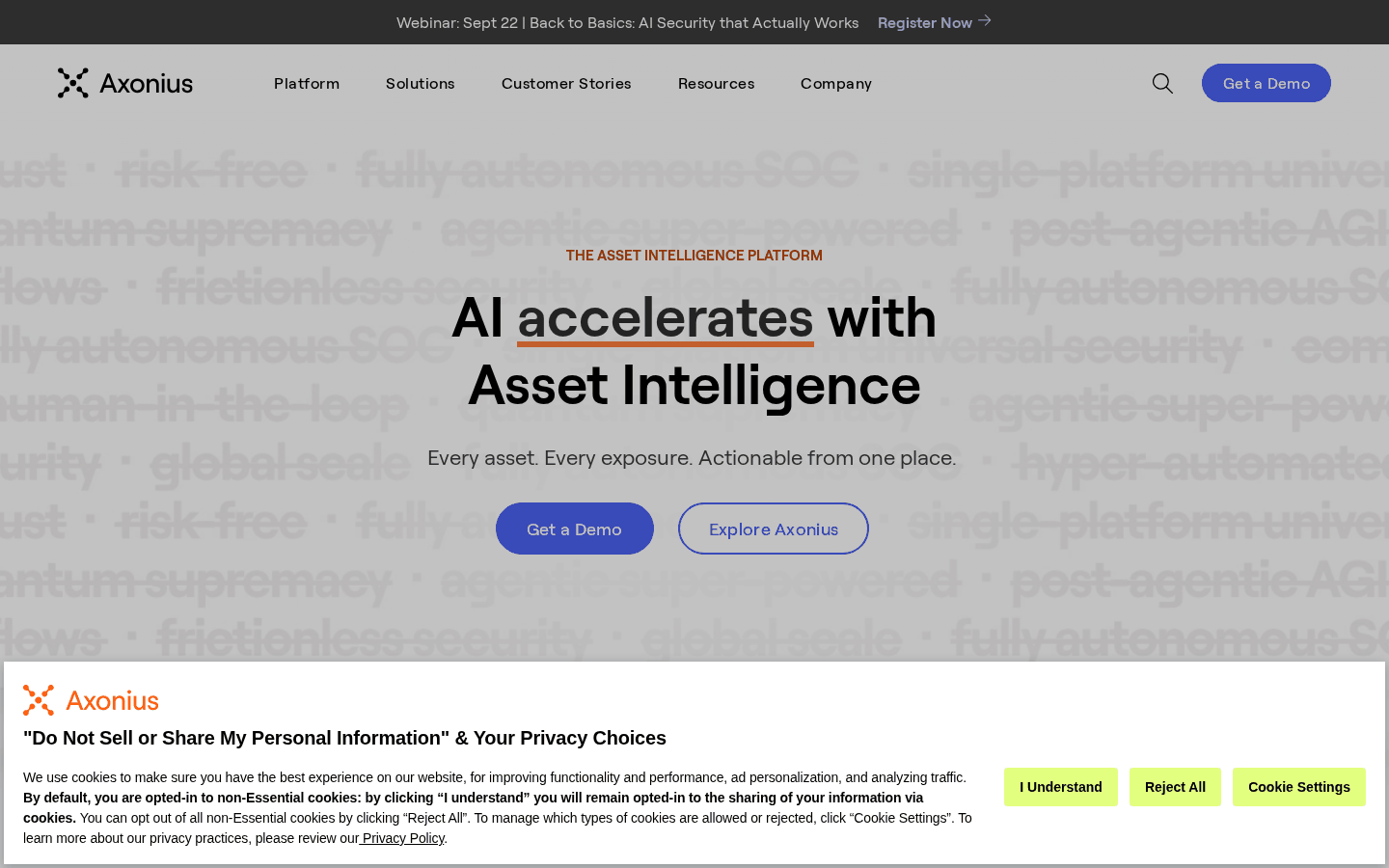
Choose Armis when agentless sensing of connected cyber assets (especially OT, IoT, and medical) is the product. Choose Axonius when aggregator CAASM across your existing tools is the product.
Three inventory exports still disagree every Monday before the change window. Security pulls one list, IT pulls another from the CMDB, and OT brings controllers and sensors that never took an agent. The painful weekly loop is reconciling which hostname is real, not shopping for another dashboard.
Between these two, the cost of getting the choice wrong is paying for two truths that still disagree. Armis productizes agentless cyber-asset sensing and exposure across IT, OT, IoT, and medical devices that scanners and EDR often miss. Axonius productizes aggregator CAASM: normalize, dedupe, and query inventory across the tools you already run through a large adapter network.
Related reading: internet-facing discovery shortlists live under attack surface management tools. More side-by-side pages live under Compare.
| Job | Agentless cyber-asset sensing and exposure across IT, OT, IoT, and medical devices | Aggregator CAASM: normalize and query inventory across cyber assets, software, SaaS, identities, and exposures |
|---|---|---|
| How a bad day closes | Discover and classify unknown connected devices, prioritize exposure, route remediation (including VIPR Pro) | Query correlated inventory for coverage gaps and policy failures, then enforce through adapters and ticketing |
| Operator morning unit | Devices seen on the wire that still lack owner, control coverage, or risk context | Queries that show which assets miss a control, an adapter source, or an owner across tools of record |
| Deploy | SaaS, on-prem, and hybrid options (important for OT/air-gapped sites) | SaaS Asset Cloud with gateway paths for internal adapters |
| License/pricing | Enterprise quote; AWS Marketplace Centrix Standard minimum $3,250/mo (checked 9 Sep 2026) | Custom enterprise quote; no public self-serve dollar SKU (checked 9 Sep 2026) |
| Who operates it | SecOps, OT security, and cyber exposure owners who need device truth on the network | CAASM and IT+Sec asset owners who reconcile tools of record every week |
Recent first-party launches keep the centers visible. Armis deepens finding-to-fix ownership with Centrix VIPR Pro. On 22 April 2025 Axonius announced Axonius Exposures to prioritize security findings against the same asset intelligence pipeline.
That is the weekly loop in plain language. A CAASM buy only pays off if it shrinks those searches instead of adding a fourth export.
We reviewed first-party documentation, public marketplace listings, product announcements, and live community threads. We did not test the products in paid production environments, so this is not a hands-on benchmark.
Armis
Axonius
Editions and pricing
Neither product is a self-serve mid-market ladder with five published tiers. Expect sales-led packaging sized to asset volume, modules, and deployment constraints.
| How you buy it now | Sales + AWS Marketplace private offers; Centrix modules for asset management, OT/IoT, VIPR, and related exposure lanes | Sales-led Asset Cloud modules (Cyber Assets, Software, SaaS, Identities, Exposures) |
|---|---|---|
| Public units | AWS Marketplace lists an Armis Platform / Centrix Standard minimum of $3,250/mo; enterprise scope is still a private offer (checked 9 Sep 2026) | No public self-serve dollar SKU on axonius.com (checked 9 Sep 2026) |
| What paid unlocks | Broader asset classes, OT/on-prem options, prioritization and remediation workflows, and ServiceNow-aligned packaging after the Apr 2026 acquisition closed | More adapters and modules, enforcement actions, and exposures/context layers on top of the core inventory pipeline |
| Buyer friction | Module and site/asset scope drive the quote above the marketplace floor | Asset count, module mix, and adapter rollout drive professional services and support choices |
ServiceNow completed its acquisition of Armis in April 2026 and states Centrix remains available as a standalone solution while integration with the ServiceNow AI Platform deepens. Treat that as packaging and roadmap context for buyers who already standardize on ServiceNow, not as a substitute for the sensing-versus-aggregation job split.
Agentless sensing for OT, IoT, and unmanaged devices
| Primary signal | Agentless discovery and classification of connected assets, including unmanaged OT, IoT, and medical devices | Inventory assembled from adapters to tools that already know (or should know) the asset |
|---|---|---|
| Where it shines | Plants, hospitals, and mixed networks where agents and scanners leave large blind spots | Hybrid enterprises that already run many IT and security systems of record and need one queryable model |
| Risk close | Exposure and vulnerability prioritization tied to the sensed asset profile; VIPR Pro routes remediation ownership | Coverage-gap and policy queries against correlated assets; Exposures prioritizes findings with asset context |
| What teams argue about | Whether wire-level sensing is required before any aggregator can be trusted | Whether adapters alone see devices that never appear in an existing tool |
Between these two, that unmanaged-device reality is why Armis leads with sensing. Axonius can still surface unmanaged gaps when an adapter or comparison shows absence, but its commercial center is correlating sources you already operate.
Adapter aggregation and inventory queries
| Primary output | Unified sensed inventory plus exposure context across connected asset classes | Deduped asset model fed by 1,200+ adapters, with queries and enforcement actions |
|---|---|---|
| Operator unit | Device and exposure queues grounded in network-observed assets | Saved queries and enforcement that prove which assets miss a control or source |
| Weekly loop | Shrinks unknown-device and OT/IoT blind spots before the spreadsheet fight | Shrinks cross-tool disagreement when CMDB, EDR, cloud, and IAM already disagree |
| What teams argue about | Whether sensing plus VIPR replaces a dedicated aggregator for IT tool sprawl | Whether adapter coverage and query ownership are enough without deep OT sensing |
Buy Axonius for this pair when the Monday pain is reconciling ten systems of record that already partially know the asset. Buy Armis when the Monday pain is devices that never showed up in those systems at all.
Where they overlap
Both sell cyber asset inventory language, exposure prioritization modules, and a path into ticketing or ITSM workflows. Both target enterprises that are tired of spreadsheet reconciliation. Overlap is vocabulary and the desire for one trusted inventory, not identical acquisition methods. Buying both as interchangeable CAASM buys without a sensing-versus-aggregation split duplicates spend and still leaves ownership unclear.
When to use both
Some teams keep Armis for OT/IoT and unmanaged device truth while using Axonius to correlate IT tools of record and drive coverage queries. Keep a single owner for which system wins when the two inventories conflict.
Skip Armis for this pair if the urgent win is adapter-fed CAASM across cloud, endpoint, identity, and SaaS systems you already run, and unmanaged OT is not the weekly fire. Skip Axonius for this pair if the buying committee needs agentless sensing on industrial or clinical networks first and aggregator queries can wait.
Decide the job first. If the product must sense connected cyber assets on the wire, especially OT, IoT, and medical, that is Armis. If the product must aggregate and query inventory across your existing tools, that is Axonius. Only then open the sales or marketplace path.
FAQs
Are Armis and Axonius the same CAASM product?
No. Both talk about cyber asset inventory, but between these two Armis leads with agentless sensing and exposure across connected devices (including OT/IoT/medical), and Axonius leads with aggregator CAASM across adapters to tools of record.
Do either publish list prices?
Partially for Armis: AWS Marketplace lists a Centrix Standard minimum of $3,250/mo, with enterprise scope still via private offer (checked 9 Sep 2026). Axonius does not publish a self-serve dollar SKU on its site (checked 9 Sep 2026).
Can teams run both?
Yes, when sensing unmanaged/OT devices and aggregating IT tools of record are both weekly jobs. Assign one system as the conflict winner so two inventories do not reopen the Monday spreadsheet.
Is this a scored bake-off?
No. Order is editorial.