Upwind vs Sweet Security for Cloud Runtime CNAPP
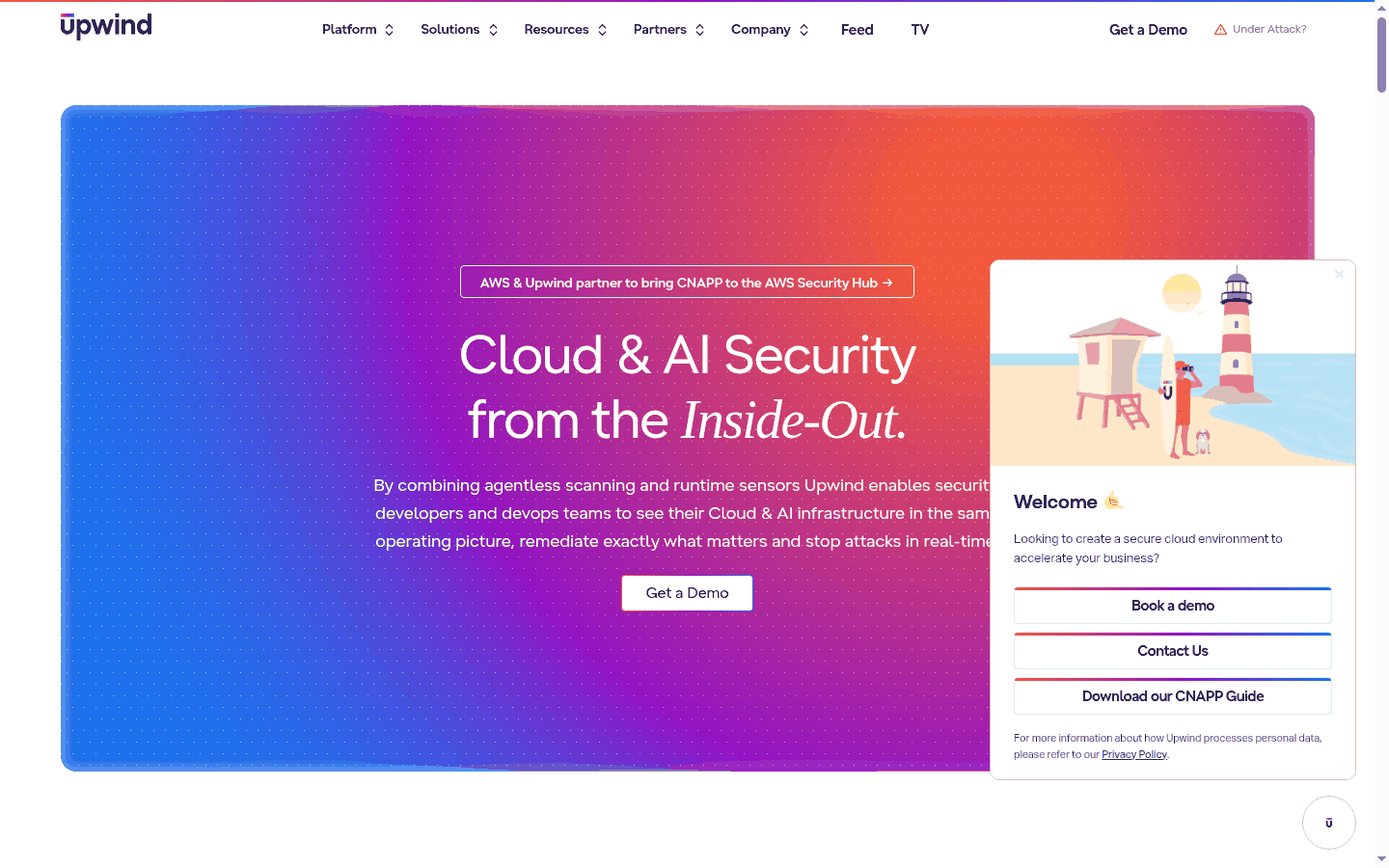
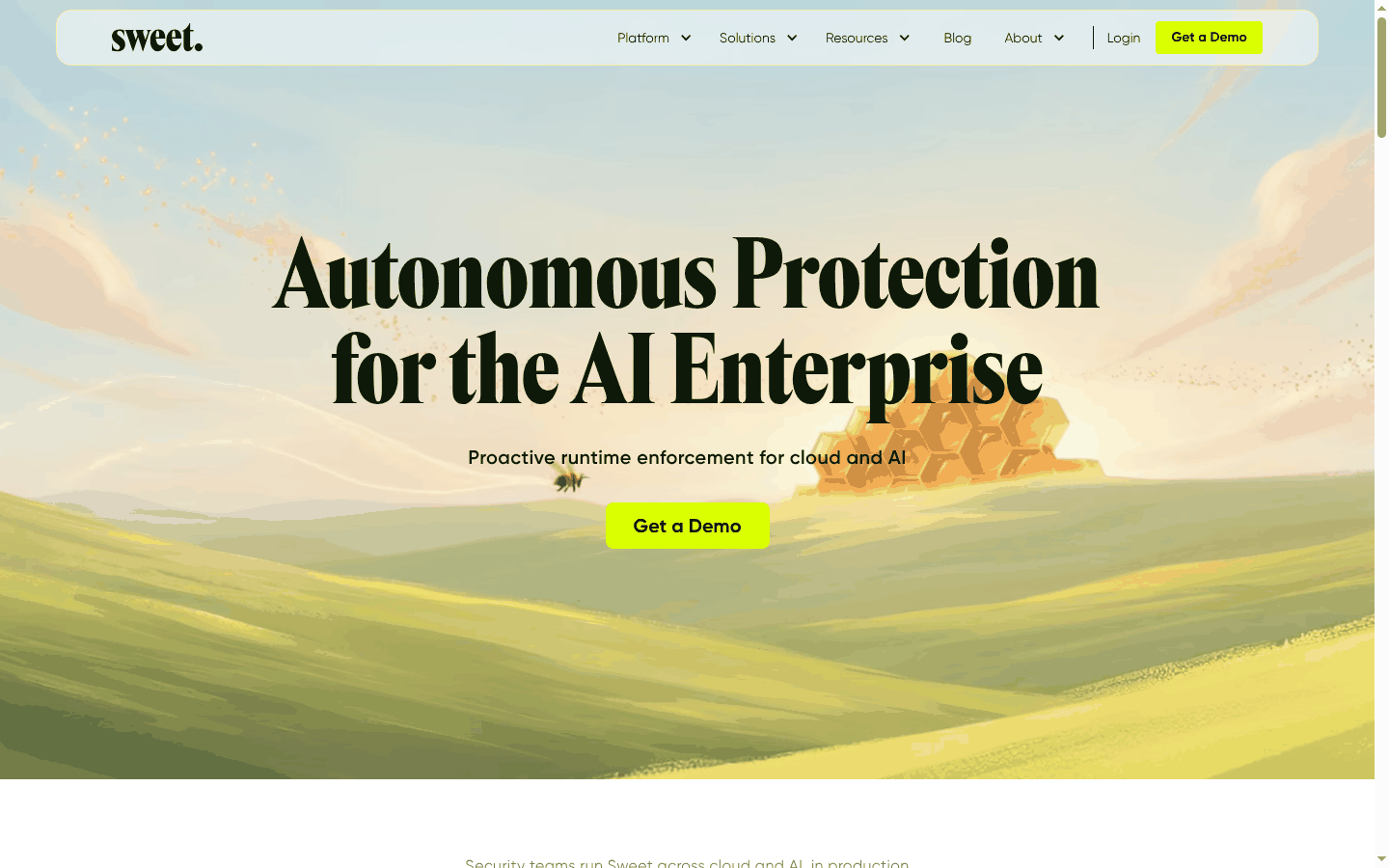
Choose Upwind when you need an Inside-Out Cloud and AI CNAPP that pairs agentless scanning with runtime sensors, live inventory, and the AI Agentic Pack in one console. Choose Sweet Security when you need proactive runtime enforcement: Sweet Attack path proof, Learning Loop remediation, and blocking for cloud workloads and AI agents.
Monday cloud triage still fails in two familiar ways. Agentless posture dumps thousands of findings without live process, API, or identity context. Runtime alerts fire without a trustworthy inventory of what else is running. Operators then bounce between consoles while the same workload stays exposed.
Between these two the centers differ. Upwind productizes Inside-Out Cloud and AI security: agentless scanning plus runtime sensors, live inventory, high-signal exposures, and real-time protection, with the AI Security Platform and AI Agentic Pack generally available in May 2026. Sweet productizes proactive runtime enforcement for cloud and AI through the Learning Loop (Attack, Fix, Defend), with Sweet Attack launched 13 May 2026 to prove exploitable paths on runtime context. Both ride eBPF-class runtime. Both talk AI. For application runtime exploitability versus Sweet see Oligo vs Sweet Security. Broader CNAPP shortlists live under cloud security platforms. More pairs under Compare.
| Job | Runtime-first Cloud and AI CNAPP: agentless posture plus runtime sensors, live inventory, detection/response, AI Agentic Pack | Proactive runtime enforcement for cloud and AI: Learning Loop Attack / Fix / Defend, Sweet Attack path proof, blocking |
|---|---|---|
| How a bad day closes | Correlate runtime and cloud activity, prioritize reachable exposure, investigate with Blue / remediate with Green under Choppy coordination | Validate an exploitable path with Sweet Attack, remediate with Fix, block or contain with Defend / response playbooks |
| Operator morning unit | Live inventory drift, high-signal exposures, runtime detections, agent-pack tasks | Verified attack paths, runtime guardrail candidates, open response actions |
| Deploy | Agentless connectors plus runtime sensors / tracers on VMs, containers, serverless | eBPF runtime sensors across cloud workloads plus CNAPP connectors for posture, identity, API, AI |
| License/pricing | Demo / sales quote; no public dollar SKU (checked 13 Sep 2026) | Demo / sales quote; no public dollar SKU (checked 13 Sep 2026) |
| Who operates it | CloudSec / SecOps / platform consolidating CNAPP and AI security into one console | CloudSec / SecOps prioritizing runtime-proven paths and enforcement over alert volume |
Both vendors in this pair compete in that runtime-leaning CNAPP conversation. The split is consolidation of agentless plus runtime with agentic ops (Upwind) versus enforcement-first Attack / Fix / Defend loops (Sweet).
We reviewed first-party documentation, pricing pages, product announcements, and live community threads. We did not test the products in paid production environments, so this is not a hands-on benchmark. This page does not include exploit proofs of concept.
Upwind
Sweet Security
Editions and pricing
Both are demo-led. Upwind markets one platform SKU that includes AI Security. Sweet markets runtime CNAPP plus AI enforcement modules on quote.
| Packaging story | Cloud and AI under one runtime fabric; AI Security described as part of the platform SKU on the May 2026 launch | Runtime CNAPP plus Learning Loop modules; Sweet Attack GA to customers on the May 2026 launch |
|---|---|---|
| How you buy it now | Get a demo / enterprise quote | Demo / risk assessment path |
| Public units | No public dollar SKU (checked 13 Sep 2026) | No public dollar SKU (checked 13 Sep 2026) |
| What the invoice covers | Agentless plus sensor coverage, CNAPP modules in scope, AI Agentic Pack access per quote | Runtime sensors, Attack / Fix / Defend capabilities, AI blocking / response features per quote |
| Self-serve start | Demo | Demo |
Price the operating model. Consolidation into one Cloud and AI console points at Upwind. Enforcement-first path proof and blocking points at Sweet.
Agentless plus runtime CNAPP coverage
| Primary surface | Agentless discovery plus runtime sensors for live inventory, exposure, CDR, API, identity, and AI workloads in one picture | Runtime-first CNAPP with strong enforcement and AI modules; agentless breadth is not the marketing center |
|---|---|---|
| AI add-on shape | View / Protect / Validate AI Security on the same fabric; Blue, Green, Red, Choppy agents | AI agent discovery, AI-DR style controls, Agentic AI Blocking; Sweet Attack uses runtime context for cloud and AI paths |
| Operator workflow | Inventory and exposure first, then runtime detect and agentic investigate/remediate | Prove the path, fix it, defend with guardrails and response from the same loop |
| What teams argue about | Whether one Upwind SKU replaces separate CSPM, CWPP, and AI tools without gaps | Whether Sweet’s runtime depth covers posture breadth the committee expects from a full CNAPP RFP |
If the painful queue is fragmented cloud and AI findings across agentless and runtime tools, Upwind is the clearer hire between these two.
Runtime enforcement and attack-path proof
| Primary surface | Real-time protection and AI-DR style detections; Red agent validates exploitable paths inside the Agentic Pack | Sweet Attack continuously validates exploitable chains on live runtime topology, then Fix and Defend close them |
|---|---|---|
| Enforcement shape | Detect, investigate, and remediate with people and agents; confirm blocking depth in the POC | Runtime blocking and containment marketed as a product center, including rogue agent blocking |
| Evidence style | Runtime forensics correlated with cloud activity and inventory | Audit-ready attack-path reports with runtime conditions that made a path work |
| What teams argue about | Whether agentic remediation replaces an enforcement-first Learning Loop | Whether Attack / Fix / Defend replaces the need for a broad agentless CNAPP inventory |
If the painful queue is proving and stopping exploitable runtime paths before the next alert storm, Sweet is the clearer hire between these two.
Where they overlap
Both sell runtime cloud security with AI coverage. Both use eBPF-class sensors. Both launched major AI runtime features in May 2026. Overlap is category language and sensor technology. It is not the same weekly queue: consolidating agentless plus runtime CNAPP operations versus enforcement-first attack-path proof and blocking.
When to use both
Running both is rarely the first design. Prefer one primary hire. A split can appear when AppSec or cloud SecOps already standardized on Sweet enforcement while a platform team still needs Upwind-class inventory consolidation, or the reverse. That is unusual and expensive.
Skip Sweet for this pair if the funded job is one Cloud and AI CNAPP console with agentless plus runtime and agentic ops. Skip Upwind for this pair if the funded job is runtime-proven attack paths and blocking with a Learning Loop, and posture breadth is already owned elsewhere.
Decide the weekly queue first. If the product must unify agentless posture with runtime sensors for Cloud and AI, that is Upwind. If the product must prove and enforce runtime attack paths for cloud and AI, that is Sweet Security. Only then open the quotes.
FAQs
Are Upwind and Sweet Security the same Runtime CNAPP?
No. Between these two, Upwind leads with an Inside-Out Cloud and AI CNAPP that pairs agentless scanning with runtime sensors and an AI Agentic Pack. Sweet leads with proactive runtime enforcement, Sweet Attack path proof, and Learning Loop remediation and blocking.
How is this different from Oligo vs Sweet?
Oligo vs Sweet is application runtime exploitability and exploit blocking versus Sweet’s Runtime CNAPP. This page compares two cloud-runtime CNAPP-leaning platforms: Upwind and Sweet.
Does either publish list prices?
Neither published a public dollar SKU on first-party pages checked 13 Sep 2026. Both are demo and sales quoted.
Do both use eBPF?
Both market runtime sensors with eBPF-class visibility. Sensor packaging and the surrounding CNAPP or enforcement modules still differ; confirm in a proof of concept.
Is this a scored bake-off?
No. Order is editorial.