GitGuardian vs TruffleHog: Which One Fits Your Secrets Program?
Choose GitGuardian when you need a commercial secrets platform with internal and public monitoring, incident remediation, and NHI governance. Choose TruffleHog when you need OSS verification-first history hunting and CI secret scanning (with Enterprise if you want that engine as a continuous dashboard).
Mis-hiring a "secret scanner" is expensive in both directions. Buy a commercial monitoring platform when the open pain is a one-off history dig or a CI gate, and you pay for seats, playbooks, and public-monitoring coverage you never staff. Stick with OSS alone when the open pain is continuous incident triage, company-linked public GitHub alerts, and NHI ownership, and the queue never empties because nobody owns remediations outside the PR that failed.
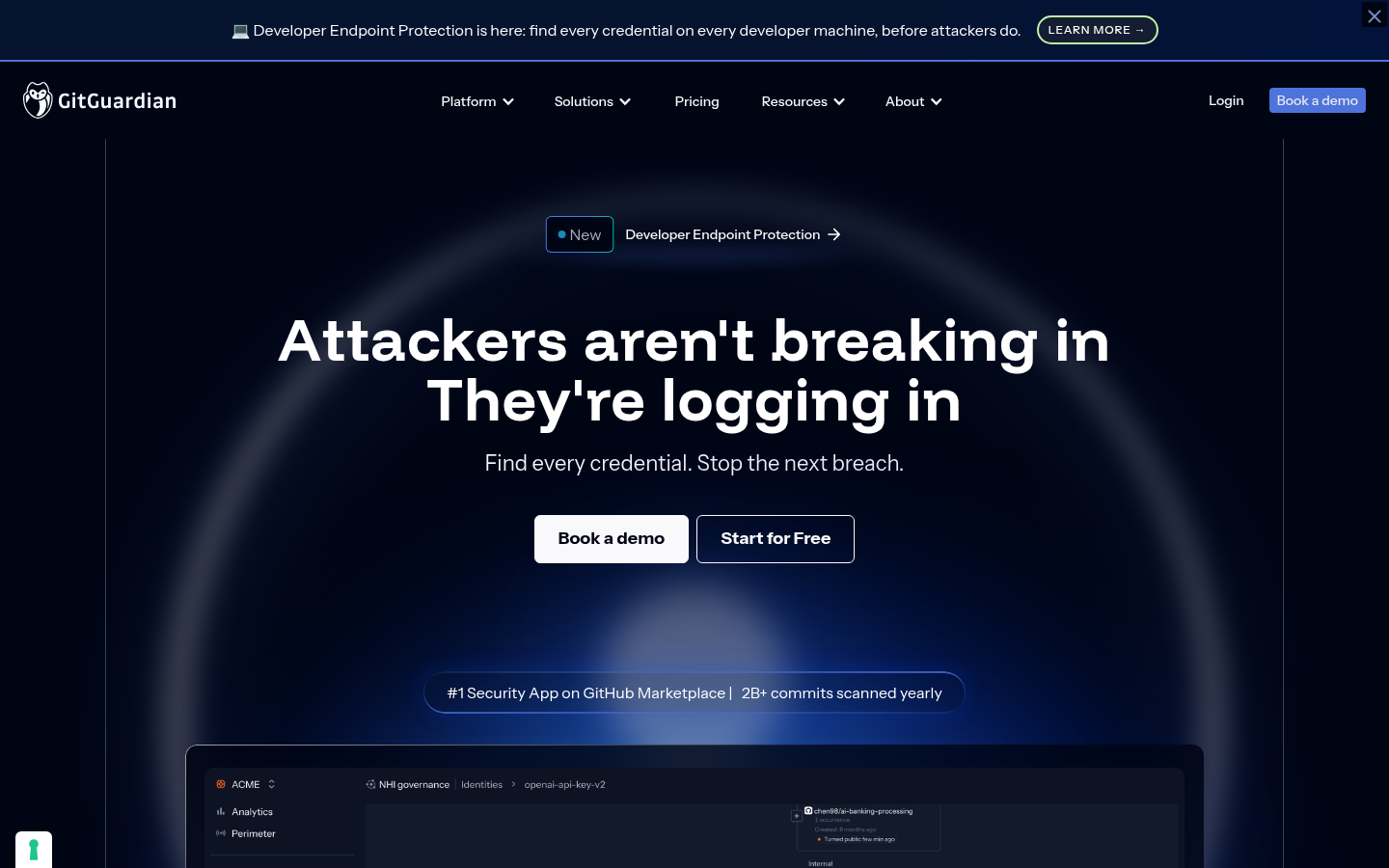
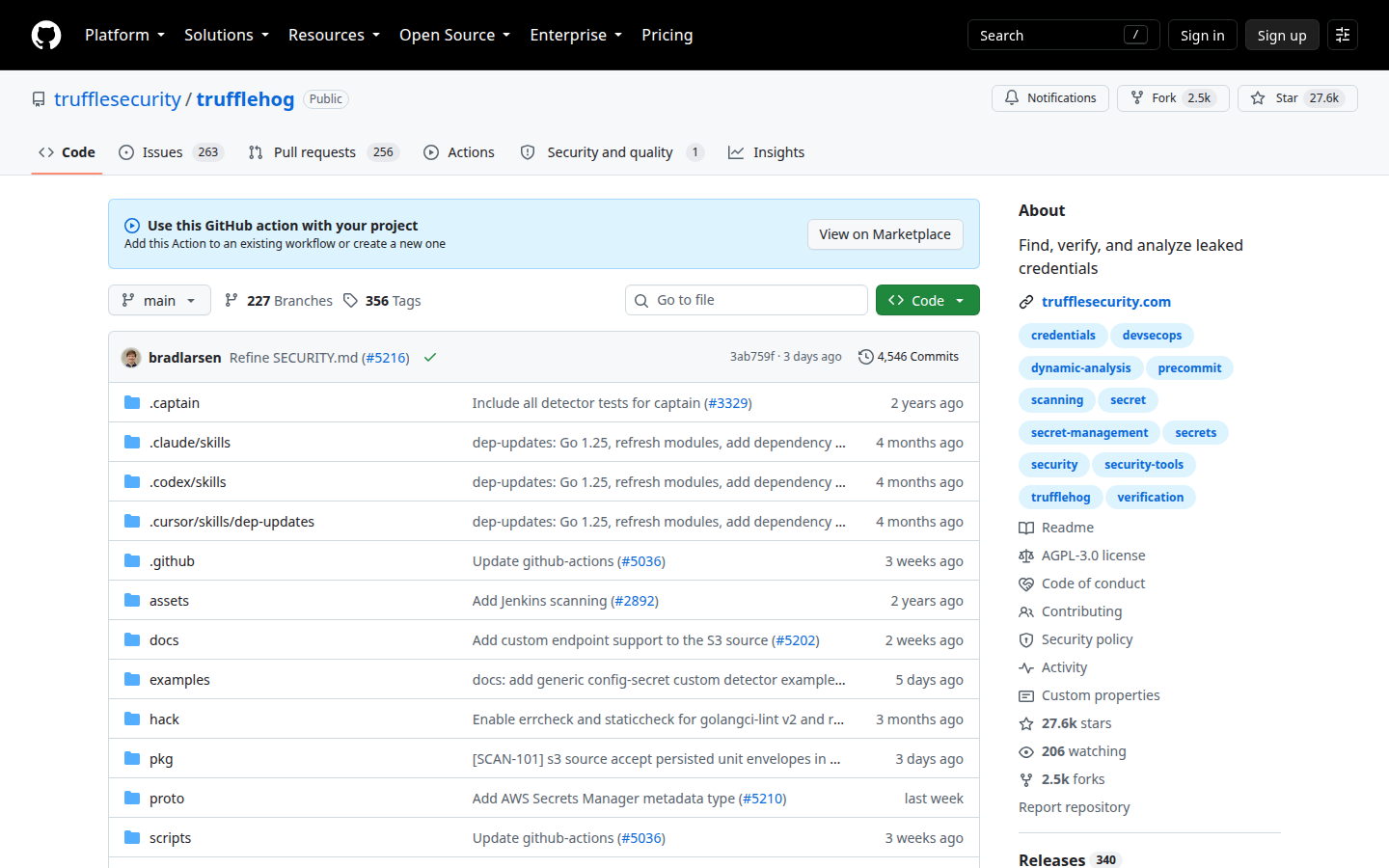
Between these two, GitGuardian productizes the commercial secrets platform and monitoring program: Internal and Public Secrets Monitoring, incident remediation, NHI Governance, and Developer Endpoint Protection on ggshield. TruffleHog productizes verification-first OSS history hunting and CI/pre-commit scanning; TruffleHog Enterprise extends that same engine with continuous multi-source dashboards and Analyze context. The centers still differ.
For the wider shortlist of scanners and platforms, see secrets scanning tools. The compare index is at Compare.
| Job | Commercial secrets platform: internal and public monitoring, incident remediation, NHI governance | OSS verification-first history hunting and CI secret scanning; Enterprise adds continuous dashboards on that engine |
|---|---|---|
| How a bad day closes | Incident dashboard with validity checks, playbooks, public-GitHub alerts, endpoint findings routed to owners | Verified findings in CLI/CI/history scans; Enterprise adds multi-source monitoring, re-verification, and Analyze blast-radius context |
| CI fail | ggshield and VCS integrations can block secrets on PR / pre-commit; platform owns the incident after detection | TruffleHog Action, pre-commit, and pre-receive hooks fail builds on verified secrets; OSS-first gate |
| Deploy | SaaS (US/EU hosting) or self-hosted Enterprise; ggshield in hooks, CI, and MDM for endpoints | OSS CLI anywhere; Enterprise with Truffle-hosted or customer-hosted scanners |
| License/pricing | Starter Free $0 (up to 25 devs); Growth and Enterprise quote-based (checked 9 Sep 2026) | OSS free (AGPL-3.0); Enterprise Contact us, no public dollar SKU (checked 9 Sep 2026) |
| Who operates it | AppSec / SecOps owning the secrets incident and NHI program | AppSec / platform eng owning CI gates and history hunts; Enterprise SecOps for continuous multi-source coverage |
That public-monitor reflex is the monitoring job, not a one-shot CLI dig. Operators who need the opposite Monday (deep history, verify live keys, fail CI) reach for TruffleHog’s OSS engine first.
We reviewed first-party documentation, pricing pages, product announcements, and live community threads. We did not test the products in paid production environments, so this is not a hands-on benchmark. This page does not include exploit proofs of concept.
GitGuardian
TruffleHog
Editions and pricing
GitGuardian publishes a Free Starter line and routes Growth and Enterprise to sales. TruffleHog publishes free OSS and routes Enterprise to Contact us. Do not treat Starter license caps as TruffleHog OSS license terms; the units are different programs.
| How you buy it now | Starter Free $0 always; Growth and Enterprise "Let’s Talk" / Custom on the pricing page (checked 9 Sep 2026) | Open-source FREE; Enterprise Contact us (checked 9 Sep 2026) |
|---|---|---|
| Public units | Starter: up to 25 devs, unlimited real-time scanning, up to 500 historical detections, 10K API calls/month; Growth adds capacity and limited Public monitoring; Enterprise unlocks unlimited Public monitoring, NHI Governance, self-hosted | OSS: unlimited local/CI use under AGPL-3.0; Enterprise: continuous monitoring, 20+ integrations, SSO/RBAC; Analyze and Forager as add-ons |
| Add-ons that change the invoice | Developer Endpoint Protection per endpoint/year; Premium Care on Enterprise | TruffleHog Analyze (SaaS / cloud) and Forager on Enterprise quotes |
| What the invoice covers | Platform seats for Internal/Public monitoring, remediation workflows, optional endpoint and NHI modules | OSS: your compute only; Enterprise: scanner deployment, dashboard, support, optional Analyze/Forager |
If procurement needs a published $0 start for a small internal program, GitGuardian Starter and TruffleHog OSS are both public free entry points with different caps and licenses. If procurement needs continuous org-wide monitoring with a vendor CSM, both Growth/Enterprise (GitGuardian) and TruffleHog Enterprise are quote paths.
Commercial secrets monitoring and incident program
| Program center | Internal Secrets Monitoring plus Public Secrets Monitoring, incident lifecycle, remediation playbooks, NHI Governance | OSS is not a multi-tenant incident platform; Enterprise adds continuous monitoring dashboards and collaboration on the same detection engine |
|---|---|---|
| Public GitHub coverage | Public Secrets Monitoring for company-linked public activity (limited on Growth, unlimited on Enterprise) | OSS/Forager-style hunts and research workflows; Enterprise Forager is an add-on for vast public datasets |
| Beyond the repo | CI/CD, containers, collaboration tools, and Developer Endpoint Protection on machines via ggshield | OSS scans git, Docker, filesystems, S3, GCS, CI; Enterprise adds 20+ SDLC sources (Jira, Slack, Confluence, and more) |
| What teams argue about | Whether Growth seats plus Public monitoring replace a pile of CLI jobs and spreadsheets | Whether Enterprise is required once OSS CI gates exist, or whether OSS alone leaves incident ownership empty |
GitGuardian’s June 2026 Developer Endpoint Protection launch extends that program from shared systems onto developer machines through ggshield, still inside the same commercial platform story. Between these two, buy GitGuardian when the painful queue is monitoring and closing incidents across those surfaces.
OSS history hunting, verification, and CI gates
| Primary surface | ggshield and platform scanning support hooks and CI; center remains the commercial monitoring program | OSS CLI and Actions for deep git history, multi-branch scans, Docker/filesystem/cloud object hunts with verification |
|---|---|---|
| Verification posture | Validity and presence checks inside the platform incident workflow | Programmatic verification against provider APIs for 800+ detector types; Analyze add-ons enrich blast radius on Enterprise |
| Operator morning unit | Open incidents, public alerts, endpoint fleet coverage | Failed CI jobs, local scan reports, Enterprise dashboard queues when licensed |
| What teams argue about | Whether platform CI hooks are enough without a standalone OSS hunter for deep history | Whether AGPL OSS plus Actions cover the gate, or Enterprise is needed for continuous multi-source ops |
That reputation is why TruffleHog shows up when the job is dig history, verify live credentials, and fail CI without waiting on a platform rollout. TruffleHog’s August 2026 AWS Analyze writeup shows how Enterprise extends the same verification story with IAM blast-radius context after a key is found. Between these two, buy TruffleHog for the hunting and CI gate; add Enterprise when continuous multi-source ops on that engine is the open queue.
Where they overlap
Both detect hardcoded credentials, verify whether findings look live, and can run in developer workflows. Community threads treat both names as tools that should catch leaked keys in the wild. Overlap is detection vocabulary and adjacent CI hooks, not identical program centers. Treating them as one interchangeable "secret scanner" line item usually under-funds either continuous monitoring/NHI ownership or deep history/CI hunting.
When to use both
Running both can work when jobs stay separate: TruffleHog OSS (or Enterprise scanners) for history hunts and hard CI gates, GitGuardian for the commercial monitoring, public-alert, remediation, and NHI program. Keep ownership clear so verified CI noise and platform incidents do not share one undifferentiated backlog.
Skip GitGuardian for this pair if the only open pain is a deep history dig or a CI gate and nobody will staff an incident console. Skip TruffleHog for this pair if the buying committee already standardized on GitGuardian’s ggshield gates and the open queue is monitoring and NHI governance, not a second scanner brand.
Decide the job first. If the product must run commercial secrets monitoring with incident remediation and NHI governance, that is GitGuardian. If the product must dig history and fail CI on verified secrets with an OSS engine (or Enterprise continuous coverage on that engine), that is TruffleHog. Only then book the demos.
FAQs
Are GitGuardian and TruffleHog the same secret scanner?
No. Between these two, GitGuardian leads with a commercial secrets platform and monitoring program. TruffleHog leads with OSS verification-first history hunting and CI scanning, with Enterprise as a continuous extension of that engine. Both can detect secrets; the centers differ.
What public prices should buyers note?
As of 9 Sep 2026, GitGuardian publishes Starter Free at $0 (up to 25 developers, with historical detection caps) and quote-based Growth/Enterprise plans. TruffleHog publishes free OSS and quote-based Enterprise with no public dollar SKU.
Is TruffleHog open source?
Yes. TruffleHog OSS is available under AGPL-3.0 as a Go CLI and related automation (Actions, hooks). Truffle Security also sells TruffleHog Enterprise as a commercial product on the same detection approach.
Does this page include exploit how-tos?
No. SecureCoding compare pages do not publish exploit proofs of concept or attack construction steps.
Is this a scored bake-off?
No. Order is editorial.