Glow vs CrowdStrike: controlling what runs on the endpoint or detecting what it does
Glow’s AI agents for software inventory, allow-or-remove policy, and shadow AI cleanup, beside the Falcon sensor’s antivirus, EDR, and Exposure Management AI Discovery.
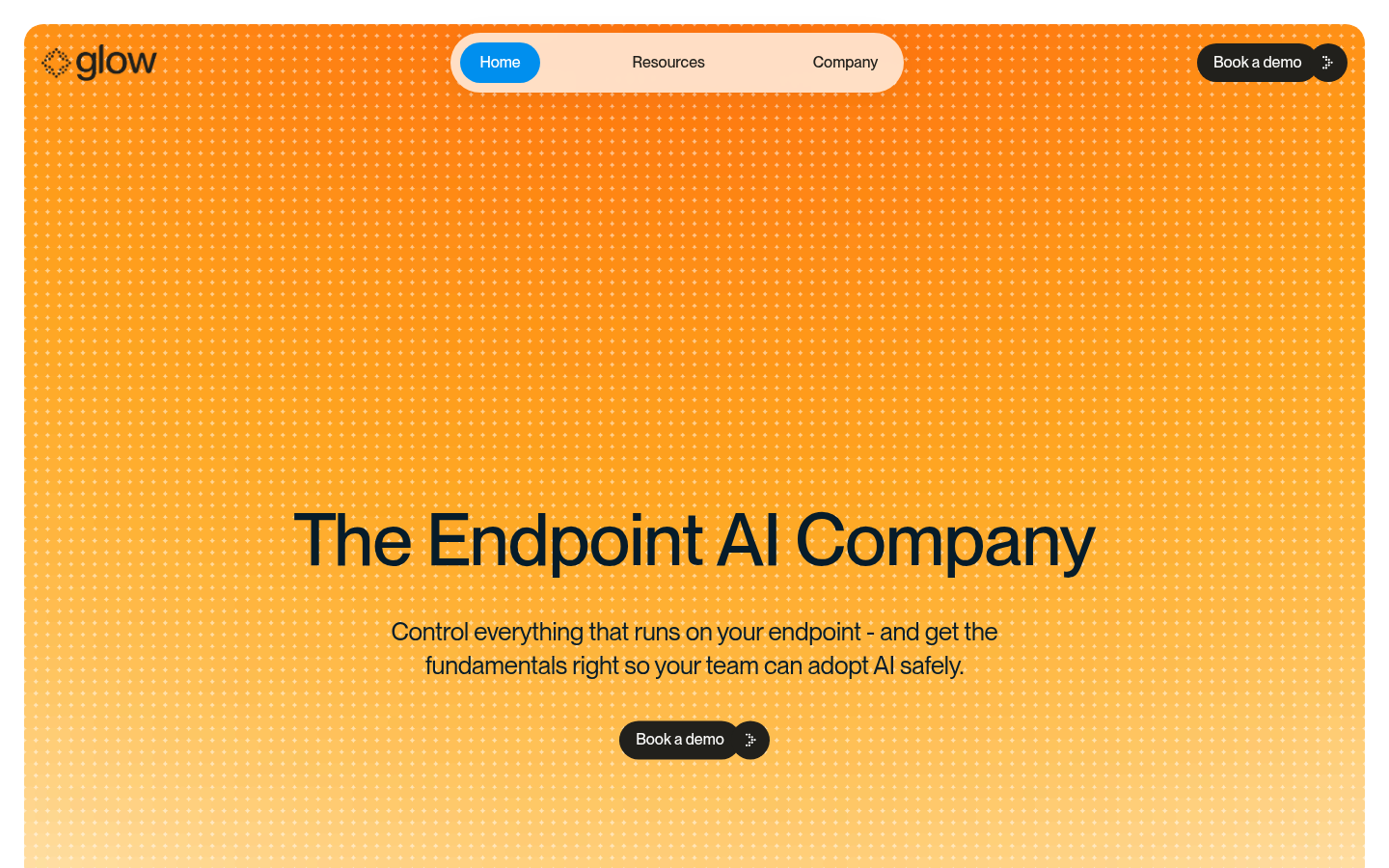
Glow’s homepage claims the average organization runs more than 12,000 unique pieces of software, and that 67% of it is invisible to existing tools. Those are vendor figures, not an independent study, but the problem they describe is familiar: coding agents, MCP servers, and IDE extensions land on laptops faster than anyone can review them.
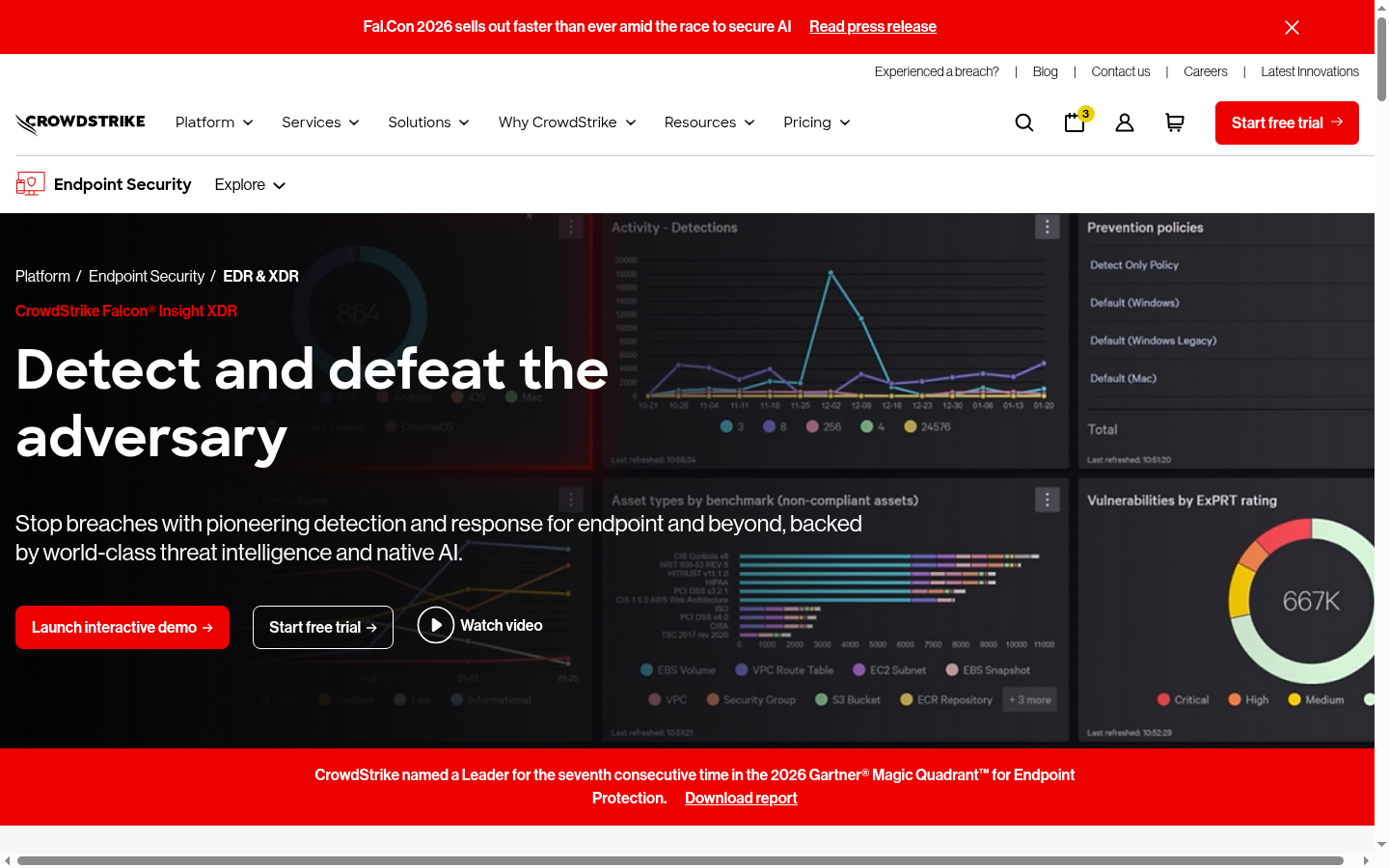
Glow came out of stealth in July 2026 and sells control over what runs on a device: a continuously reconciled software inventory, policies that decide what is allowed or removed, and AI agents that remediate within guardrails the team sets. CrowdStrike sells the Falcon sensor, built to detect and stop malicious behavior, and now adds AI Discovery in Falcon Exposure Management to inventory AI apps, agents, LLM runtimes, MCP servers, and IDE extensions. Glow’s capabilities are stated on launch material and its site. Treat them as stated, not independently demonstrated.
Buy Glow when the main gap is ungoverned software and AI tooling on employee devices and the goal is to remove it before it runs. Buy CrowdStrike when the team needs antivirus, EDR, and response on every device, with AI inventory added to the same sensor.
Overview
| Primary use case | Endpoint software control: a living inventory of devices, people, and software, policies that allow or remove software and AI tools, and autonomous remediation | Endpoint protection and detection: next-gen antivirus, EDR, threat hunting, and exposure management on the Falcon sensor |
|---|---|---|
| Day-to-day workflow | Review what Glow’s agents discovered and reconciled, set policy in natural language, and let prevention agents fix and block issues within the guardrails you set | Triage Falcon detections, contain hosts with Real Time Response, and review exposure findings, including AI components found by AI Discovery |
| Main buying consideration | No public pricing. Sold through a demo and sales quote | Falcon Go USD 59.99, Pro USD 99.99, Enterprise USD 184.99 per device per year billed annually, or USD 7.99, 14.99, and 19.99 per device per month billed monthly. Falcon Go is capped at 100 devices. Falcon for IT and Exposure Management are add-ons |
We reviewed Glow’s homepage and July 2026 launch announcement, plus CrowdStrike’s pricing page, the Falcon Exposure Management page, and CrowdStrike’s shadow AI announcement, on 14 Oct 2026. We did not run either product.
Glow
CrowdStrike
Editions and pricing
Only one side publishes a price. CrowdStrike lists bundles online. Glow sells by demo, and its launch material describes customers in healthcare, retail, and financial services without naming a tier.
| How it is sold | One platform covering asset intelligence, software control, and safe AI adoption, sold by sales quote | Falcon Go, Pro, and Enterprise bundles online, plus Falcon Complete MDR, Falcon Flex, and add-on modules by quote |
|---|---|---|
| Public price | Not published | USD 59.99, 99.99, and 184.99 per device per year for Go, Pro, and Enterprise on annual billing |
| Trial | Not confirmed in public documentation. The site offers a demo | 15-day free trial of Falcon Prevent, Device Control, and Express Support |
Software and AI inventory
Both now inventory AI tooling on endpoints. They differ in what the inventory feeds: Glow’s feeds a policy engine that removes software, CrowdStrike’s feeds exposure prioritization.
| What gets inventoried | Every endpoint and every layer of software, which Glow says it researches, reconciles, and validates continuously | AI apps and agents, LLM runtimes, MCP servers, IDE extensions, and AI packages through AI Discovery, plus browser extensions in Exposure Management |
|---|---|---|
| Licensing for AI inventory | Part of the Glow platform. Edition boundaries are not confirmed in public documentation | AI Discovery requires the Falcon for IT add-on |
| Context added | Risk analyzed against the customer’s own policies by Glow’s context and reasoning engine | Privilege level, connectivity, and proximity to critical assets, plus who installed the AI component and how it is configured |
Prevention and response
Both describe prevention. Glow means stopping software from entering or staying on a device. CrowdStrike means stopping malicious behavior when it runs.
| Prevention model | Allow-or-remove decisions on software and AI tools, enforced by prevention agents so issues do not come back | Next-gen antivirus and behavioral detection that block malware and ransomware, with Device Control for removable media |
|---|---|---|
| Response | Autonomous remediation within guardrails the security team sets | Real Time Response containment, Falcon Fusion SOAR workflows, and Falcon Complete MDR by quote |
| Malware and EDR coverage | Not confirmed in public documentation | Included in Falcon bundles, with EDR in Falcon Enterprise |
Choose Glow when shadow AI, unmanaged developer tools, and software sprawl are the documented problem and you want policy that removes them. Choose CrowdStrike when antivirus, EDR, and response have to be covered first, and add Falcon for IT if AI inventory should sit on the same sensor. Teams already on Falcon can evaluate Glow as an added control layer.
FAQs
Does Glow replace an EDR?
Its public material describes software control, inventory, and AI governance, not malware detection or EDR. Ask Glow directly before you plan to remove an existing endpoint agent.
Which operating systems does CrowdStrike Falcon support?
Windows, macOS, and Linux, with mobile device protection for Android and iOS listed in the Falcon bundles.
Can CrowdStrike find shadow AI on endpoints?
Yes. AI Discovery in Falcon Exposure Management finds AI apps, agents, LLM runtimes, MCP servers, and IDE extensions on endpoints. It requires the Falcon for IT add-on.