Mend vs Black Duck: Which SCA Fits Fix Workflows vs Deep OSS Compliance?
Choose Mend when modern SCA remediation and Renovate-style fix ownership are the product. Choose Black Duck when binary, snippet, and deep license-obligation governance matter more.
The wrong assumption on this keyword is that Mend and Black Duck are the same enterprise SCA SKU with different logos. Procurement often RFPs them as peers because both inventory open-source risk and both talk about licenses and SBOMs.
Between these two, the centers diverge. Mend productizes modern AppSec SCA: reachability-aware findings, PR license policy, and continuous dependency update PRs through Mend Renovate. Black Duck SCA productizes deep OSS governance: dependency plus binary and snippet detection, Black Duck Security Advisories, and license-obligation workflows aimed at compliance-heavy estates.
If the painful weekly job is shipping upgrades and cutting reachable CVE noise, Mend is the stronger fit on this page. If the painful weekly job is undeclared components in binaries or snippets plus obligation tracking, Black Duck is the stronger fit. Related: developer-first SCA versus Mend governance is Snyk vs Mend. Broader shortlists live under Application Security.
| Job | Modern SCA remediation plus Renovate-style continuous fix ownership | Deep OSS inventory and license/compliance governance, including binary and snippet detection |
|---|---|---|
| How a risk closes | Reachability and policy findings feed remediation; Renovate opens dependency update PRs with Merge Confidence on Enterprise | BOM findings with BDSA-backed guidance and policy; binary or snippet matches when those scanners are licensed |
| CI fail | Repo security and license checks; policies can block license or dependency violations before merge | Policy management plus Detect and CI integrations that fail builds on configured security or license rules |
| Deploy | Mend AppSec SaaS; Renovate Community or Enterprise (SaaS or self-hosted) | Black Duck SCA (often self-hosted) and sales-led SaaS options such as Polaris packaging |
| License/pricing | AppSec up to $1,000/dev/yr; Renovate Enterprise up to $250/dev/yr; AI up to $300/dev/yr (checked 9 Sep 2026) | Quote-only; no public list price on the product page (checked 9 Sep 2026) |
| Who operates it | AppSec and platform eng owning OSS policy and update PRs | AppSec plus legal/compliance owning BOM accuracy, obligations, and notices |
Public packaging keeps the split visible. Mend publishes “up to” annual ceilings on the Mend pricing page. Black Duck keeps SCA commercial details behind contact sales on the Black Duck SCA product page, where Standard Edition and the deeper edition with binary, snippet, and obligation features are documented.
We reviewed first-party documentation, public pricing pages, product announcements, and live community threads. We did not test the products in paid production environments, so this is not a hands-on benchmark.
Mend
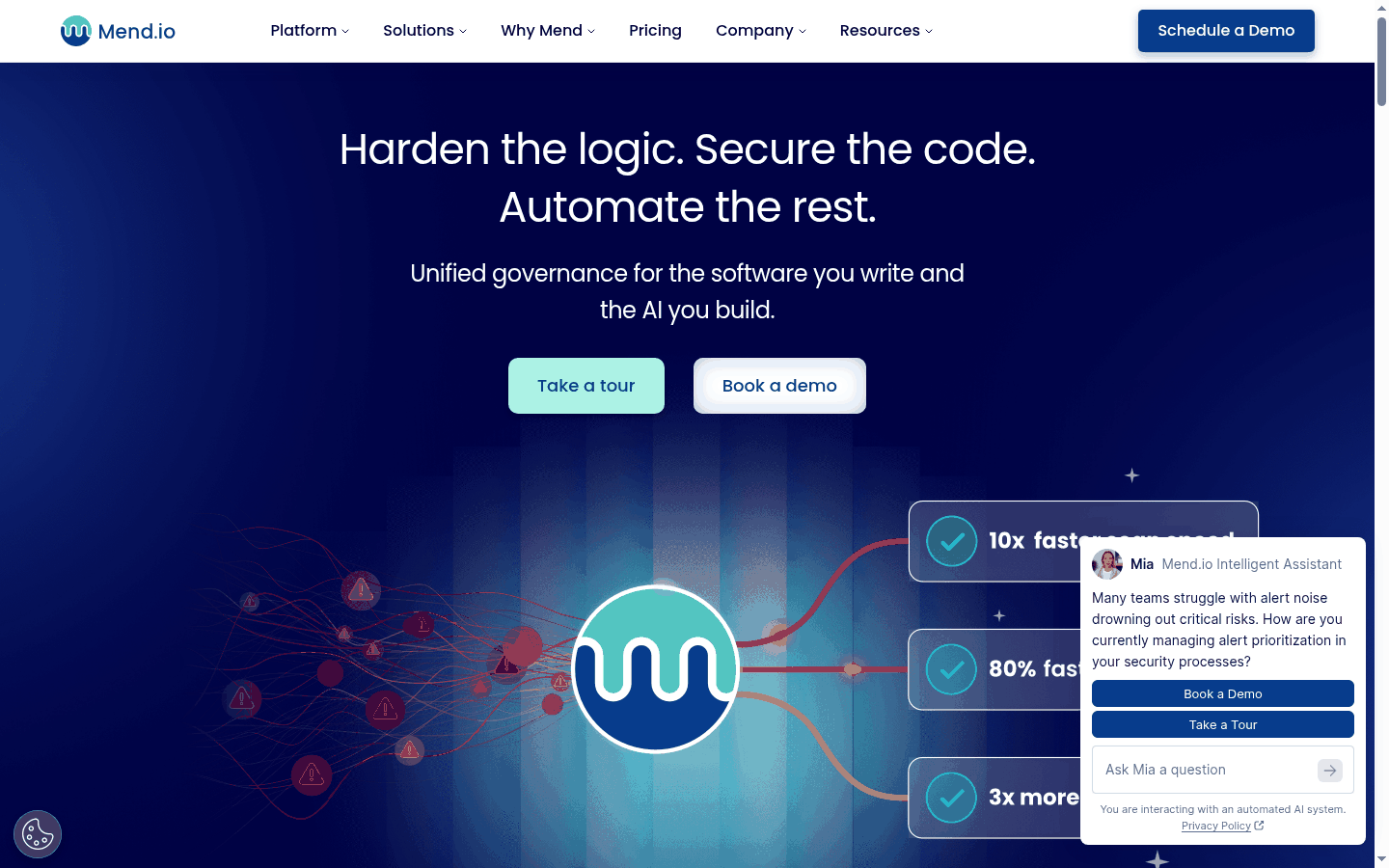
Black Duck
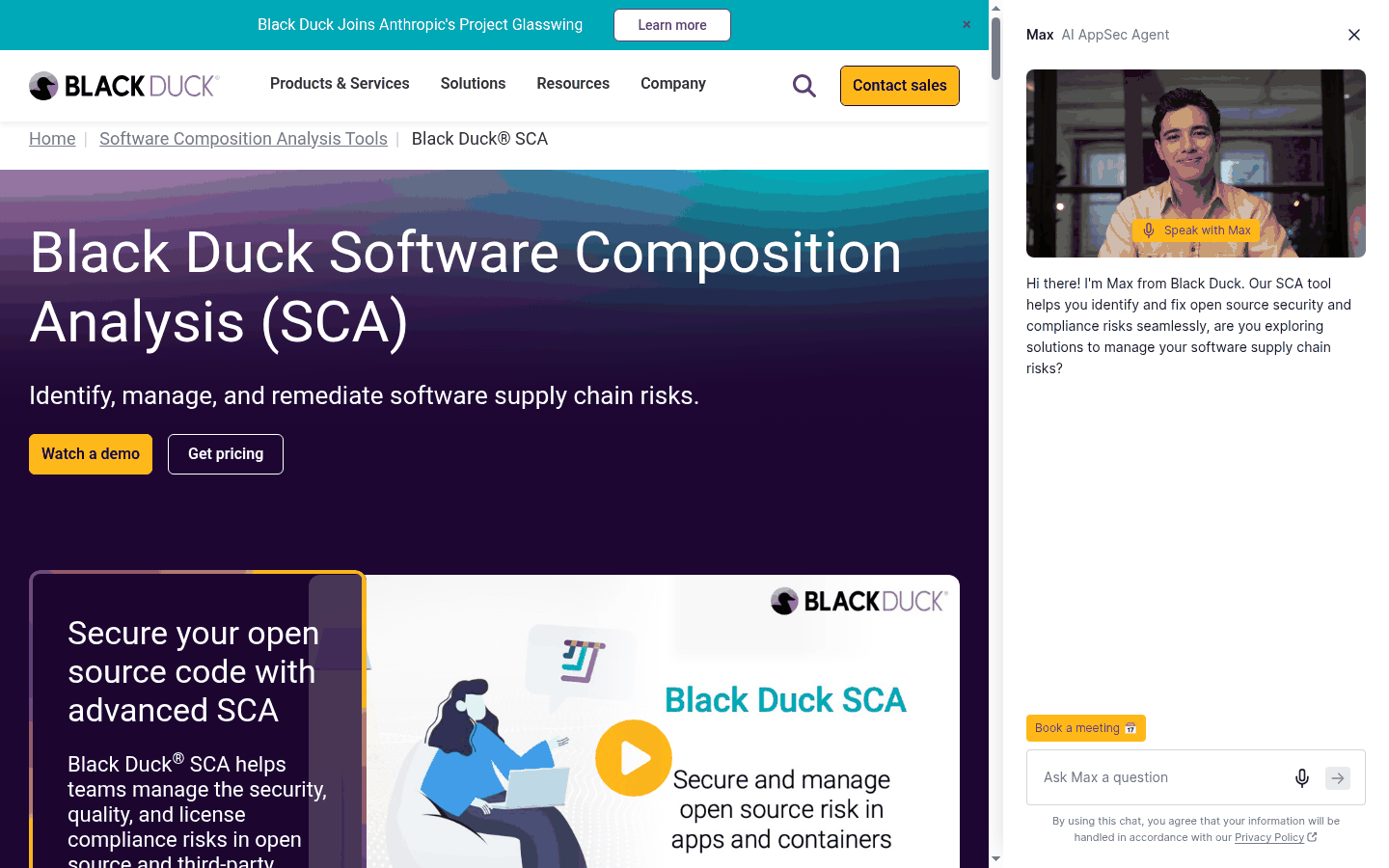
Editions and pricing
Mend sells contact-sales packaging with published ceilings: Mend AppSec (includes SCA), Mend Renovate Enterprise, and Mend AI. Black Duck SCA documents a Standard Edition for developer/DevOps open-source policy work and a deeper edition that adds snippet detection, binary and firmware analysis, AI model risk insight, and fuller license-obligation tracking. Neither is a self-serve free SCA checkout on these pages.
| How you buy it now | Published “up to” ceilings; sales-led packaging for AppSec, AI, and Renovate Enterprise (checked 9 Sep 2026) | Contact sales; Standard Edition versus deeper SCA edition with binary/snippet/obligation features (checked 9 Sep 2026) |
|---|---|---|
| Public units | AppSec up to $1,000 per contributing developer per year; Renovate Enterprise up to $250; AI up to $300 | No public dollar list; quotes scale with projects, modules, and deployment |
| What paid unlocks | Mend SCA / SAST / containers under AppSec; Renovate Enterprise Merge Confidence and scale; Mend AI as add-on or standalone | Unlimited scans and SBOM workflows on Standard; binary, snippet, AI model insight, and deeper license obligations on the higher edition |
| Contributor / user model | Contributing Developer defined as UI users plus engineers who write or modify scanned code | Enterprise project and license packaging negotiated with sales (not a public developer ladder) |
That is the Mend pricing story in practice: you can run Renovate Community automation without buying the full AppSec suite, while enterprise webhook scale and Merge Confidence sit on Renovate Enterprise. Black Duck’s story is module depth for compliance desks, not a published Free or Team rung.
What fails CI
| Gate shape | Repo security and license checks; policies can fail builds on license or dependency findings | Custom security and license policies with automatic enforcement in SDLC integrations |
|---|---|---|
| What developers see | Policy violations and SCA findings in checks and comments; Renovate opens separate update PRs | BOM and policy results from Detect or CI hooks; remediation guidance tied to BDSA and KnowledgeBase data |
| Noise story | Reachability plus CVSS 4.0 and EPSS marketed to shrink unreachable CVE noise | Broad detection (including containers and binaries) can surface large BOMs unless scan scope is deliberate |
| What teams argue about | Whether license and security checks are one policy queue or two | Whether scan roots include one-off scripts and ancient containers that inflate the BOM |
Both vendors can fail a merge when you configure them that way. The operational difference is what the gate is for: Mend’s everyday path is policy plus a Renovate update stream; Black Duck’s everyday path is a durable BOM with compliance evidence, which rewards careful scan scoping.
What each tool produces
| Primary output | Reachability-aware SCA findings, license policy enforcement, SBOM export, Renovate dependency update PRs | Unified BOM from dependency, signature, snippet, and binary matches; BDSA advisories; notices and obligation tracking on deeper editions |
|---|---|---|
| Detection depth | Package-manager and container SCA plus malicious-package intelligence; fix path centered on upgrades | Declared dependencies plus undeclared, snippet, and binary/firmware analysis when licensed |
| License governance | Org license policies with real-time alerts and PR blocking for violations | License identification, notices reports, full text and obligation fulfillment guidance on deeper editions |
| What teams argue about | Whether Renovate-driven ownership plus SCA policy replaces a legacy compliance desk | Whether binary and snippet depth is required for the artifacts you ship, or lockfile SCA is enough |
Both vendors sit in the commercial license-compliance conversation. Between these two, Mend’s first-party center is reachable risk plus Renovate ownership; Black Duck’s first-party center is BOM completeness across source, snippet, and binary plus obligation workflows.
Where they overlap
Both sell SCA language, SBOM export (SPDX and CycloneDX), license awareness, vulnerability prioritization marketing, CI/policy gates, and container coverage. Overlap is vocabulary and “find open-source risk,” not identical operating models. Buying both as two interchangeable SCA seats duplicates BOM noise unless one owns continuous fix PRs and the other owns binary/snippet compliance evidence with clear ticket ownership.
When to use both
Some teams keep Black Duck for regulated BOM, binary, and obligation evidence while running Mend SCA and Renovate for developer PR gates and continuous dependency updates. Keep ownership clear so two scanners do not open competing upgrade work on the same lockfile.
Skip Mend for this pair if the urgent win is binary/firmware and snippet detection with deep license-obligation tracking and you already staff an OSS compliance desk around Black Duck. Skip Black Duck for this pair if AppSec already standardized on Mend for reachability-aware SCA and Renovate ownership, and lockfile-plus-container inventory covers the artifacts you ship.
Decide the job first. If the product must own modern SCA remediation and Renovate-style fix ownership, that is Mend. If the product must deepen binary, snippet, and obligation-grade OSS compliance, that is Black Duck. On this SCA fight, Mend is the recommendation when modern fix workflows are what you are hiring.
FAQs
Are Mend and Black Duck the same SCA product?
No. Both inventory open-source risk and licenses, but between these two Mend leads with reachability-aware SCA and Renovate fix ownership, while Black Duck leads with deep BOM detection (including binary and snippet) and compliance-oriented license workflows.
Is Black Duck still a Synopsys product?
No. First-party branding is Black Duck Software / Black Duck SCA. The former Synopsys Software Integrity Group became an independent company in October 2024. Treat Synopsys as historical branding.
Do either publish list prices?
Mend lists AppSec up to $1,000, Renovate Enterprise up to $250, and AI up to $300 per contributing developer per year (checked 9 Sep 2026). Black Duck SCA is quote-only with no public dollar ladder on the product page (checked 9 Sep 2026).
Is this a scored bake-off?
No. Order is editorial. On this page we prefer Mend for modern SCA remediation and fix-ownership jobs where first-party evidence supports it, and Black Duck when binary, snippet, and deep license obligations are the documented job.