Application Security
Best PTaaS Tools for Pentest-as-a-Service in 2026
An annual PDF pentest is not continuous exposure management.
Top teams close high-risk pentest findings with a 10-day half-life; the bottom tier still sits near 249 days. That gap is not a scanner problem. It is what happens when testing is a once-a-year PDF instead of a program with live findings, retest, and a queue owners can work.
Pentest-as-a-Service platforms put scoping, tester collaboration, and remediation tracking in a SaaS console. Some lean on vetted human pentesters. Others push autonomous attack-path validation. Crowdsourced networks sit next to both. This shortlist mixes those shapes so you can match delivery model to risk, not brochure keywords.
If you need crawler-led coverage between human tests, see DAST tools. Pair-level brochure reads such as Cobalt vs Probely stay on the compare desk; here the question is which PTaaS operating model fits your release cadence.
How we evaluated
We read first-party PTaaS, crowdsourced pentest, and autonomous validation pages and packaging notes on 17 Sep 2026. We asked whether the product launches expert-led or autonomous tests through a platform, whether findings stream during the engagement, whether retest and workflow integrations exist, and whether the vendor is honest about what automation still misses. Marketing tester counts and scenario libraries are claims, not bake-off proof.
| Tool | Best for | What to check |
|---|---|---|
| Cobalt | Human + agentic PTaaS for app portfolios | Commercial · credits |
| Synack | Vetted researchers + AI triage | Commercial · managed |
| HackerOne | Agentic PTaaS + researcher network | Commercial · platform |
| Bugcrowd | CrowdMatch PTaaS subscriptions | Commercial · CREST |
| Horizon3 NodeZero | Autonomous attack-path validation | Commercial · continuous |
| NetSPI | Enterprise offensive platform + services | Commercial · enterprise |
Cobalt
Best for agentic + human PTaaS across an application portfolio
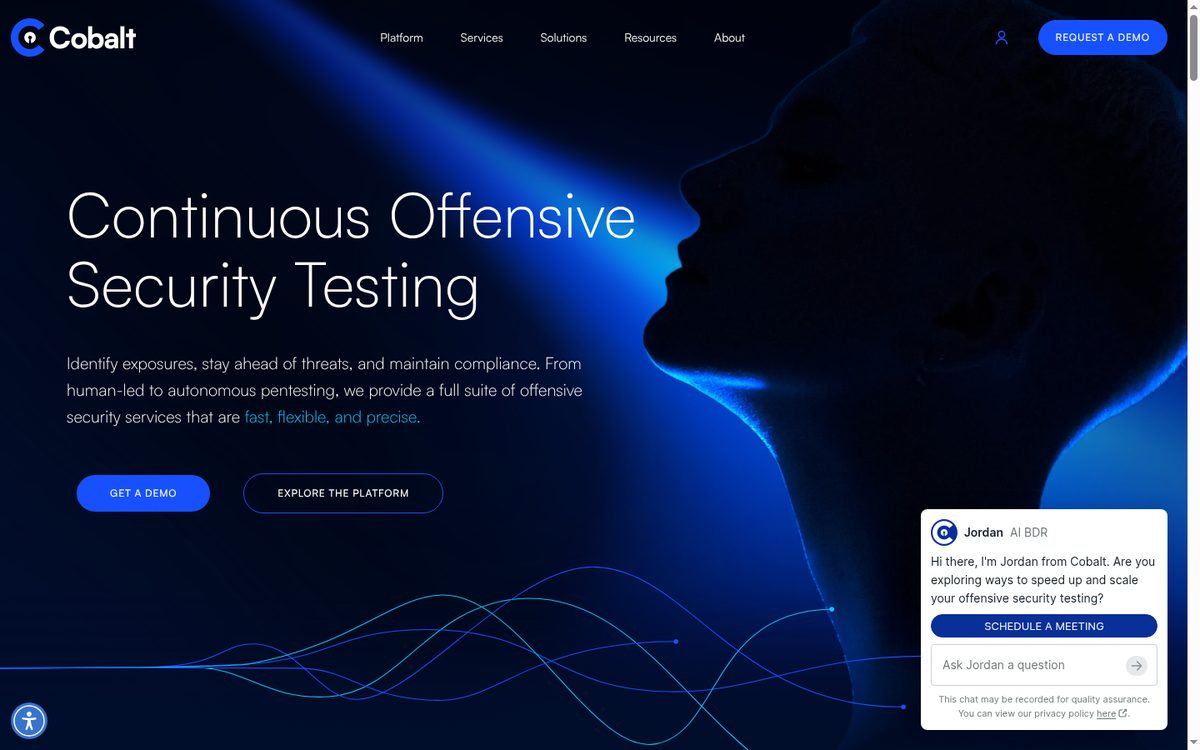
Cobalt runs Pentest-as-a-Service through a SaaS console with Cobalt Core pentesters, real-time findings, and credit-style packaging for recurring tests.
It now pairs human-led depth with autonomous pentest options overseen by the same core. Treat autonomous breadth and human depth as complementary, not identical.
Key features:
- In-platform scoping and recurring test cadences
- Real-time findings with workflow integrations they list
- Human-led and autonomous pentest paths under Core oversight
- Retest and compliance-oriented reporting packs
Why we like it:
Teams that want a programmatic pentest queue without rebuilding vendor procurement every quarter get a mature PTaaS operating model.
Limits:
Commercial credits. Confirm which assets and autonomous modules sit in year one. Autonomous speed does not erase the need for human logic testing on critical apps.
License or pricing: Commercial. Credit or subscription packaging; no universal public list price on 17 Sep 2026.
Synack
Best for vetted researcher access with AI-assisted triage
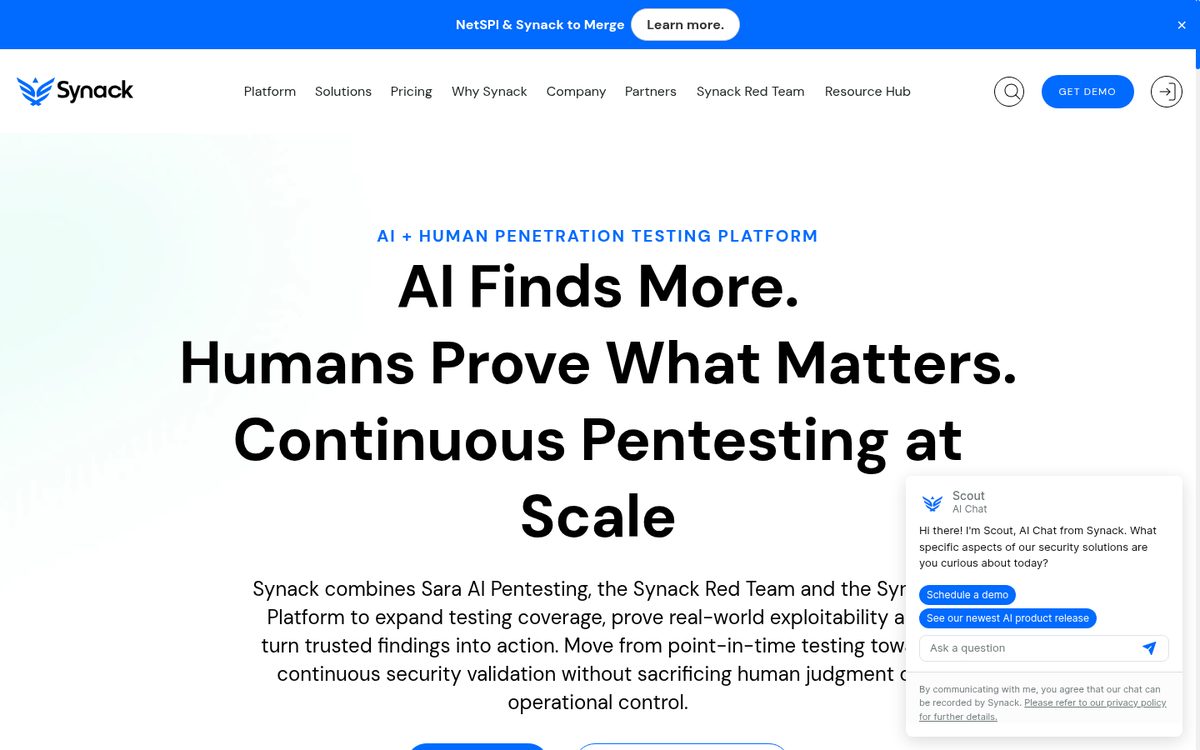
Synack combines a vetted researcher community with platform delivery and AI-assisted triage so enterprises can run continuous or on-demand testing without an open public program.
It fits regulated buyers who want crowd scale with heavier screening than a wide-open bounty tab.
Key features:
- Vetted Synack Red Team researcher access
- Platform-delivered findings and reporting
- AI-assisted triage in their product story
- Coverage across web, API, mobile, cloud, and network scopes they publish
Why we like it:
Security programs that need crowd creativity with enterprise onboarding controls get a managed middle path between private PTaaS and public bounty.
Limits:
Commercial managed pricing. Confirm researcher clearances and whether your scope needs always-on vs burst testing.
License or pricing: Commercial. Enterprise quotes; confirm on 17 Sep 2026.
HackerOne
Best for agentic PTaaS backed by a large researcher network
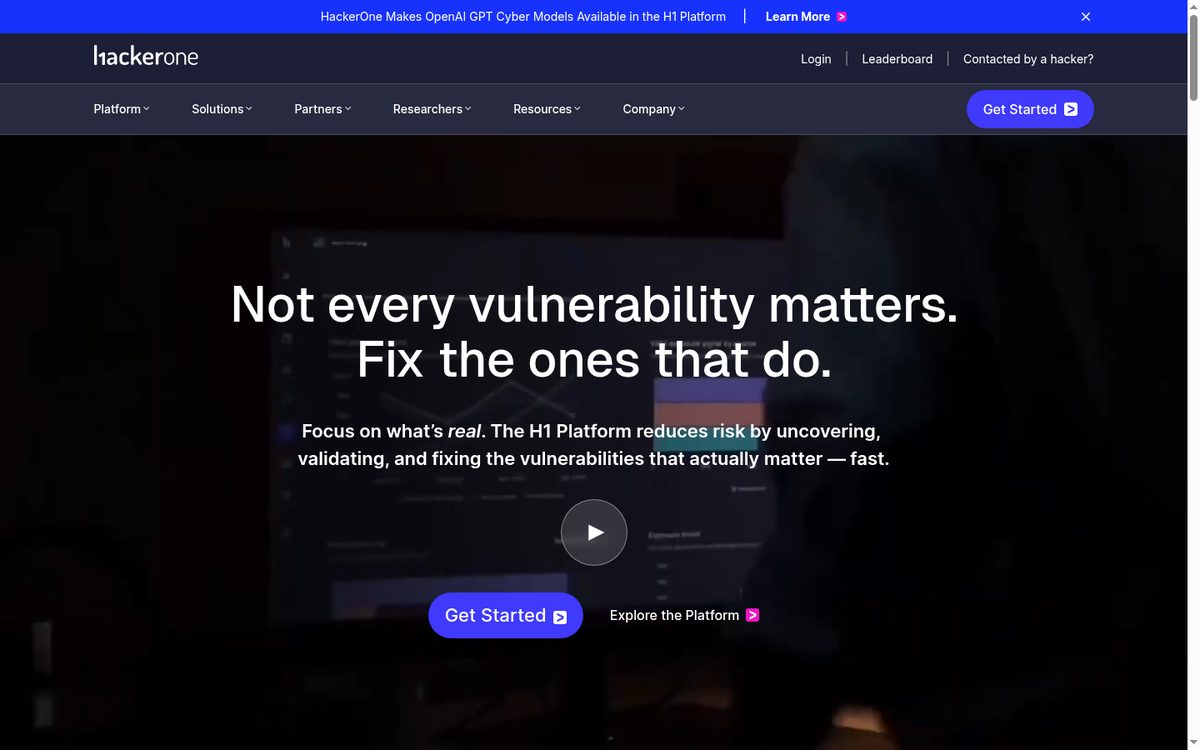
HackerOne’s Agentic PTaaS pairs autonomous agent execution with expert human verification on the same platform many teams already use for bounty and disclosure.
Pick it when you want continuous validation that still ends in human-confirmed, actionable risk rather than raw scanner noise.
Key features:
- Agentic PTaaS with human verification
- Shared platform with bounty and VDP programs
- Enterprise reporting and remediation workflows
- Optional code-aware testing paths they announce
Why we like it:
Organizations already living in HackerOne can extend from bounty into structured pentest delivery without a second console.
Limits:
Commercial. Agent automation still needs clear scope and human review gates. Confirm pentest SKUs separately from bounty spend.
License or pricing: Commercial. Platform packaging varies; confirm on 17 Sep 2026.
Bugcrowd
Best for CrowdMatch-curated PTaaS with subscription capacity
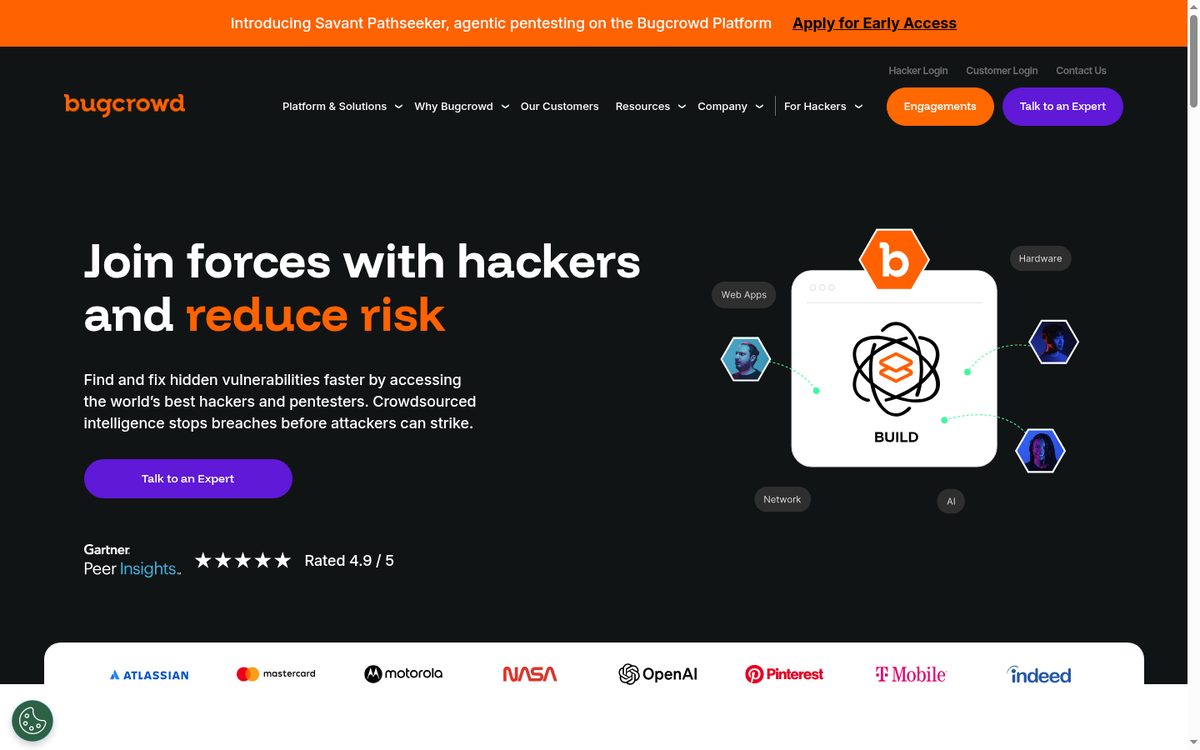
Bugcrowd PTaaS launches standard or custom tests quickly, matches pentesters with CrowdMatch, and streams prioritized findings into a dashboard built for remediation and compliance reporting.
It suits teams that want subscription capacity for repeated tests instead of one-off firm PDFs.
Key features:
- Launch windows measured in days, not months, on their PTaaS pages
- CrowdMatch curation of pentester teams
- Dashboard findings with compliance-oriented reporting
- Retesting windows they advertise for PTaaS customers
Why we like it:
Security and AppSec leads who need repeatable pentest throughput with crowd specialization get a clear subscription-shaped alternative to boutique scheduling.
Limits:
Commercial. Quality still depends on scope writing and matcher fit. Confirm CREST or other attestations your auditors require.
License or pricing: Commercial. Subscription and package quotes; confirm on 17 Sep 2026.
Horizon3 NodeZero
Best for autonomous, continuous attack-path validation
NodeZero autonomously discovers and safely exploits attack paths across internal networks, Active Directory, cloud, and newer web/API surfaces without staffing a human tester for every run.
It is offensive validation, not a drop-in replacement for a CREST human web logic pentest. Use it where continuous proof of exploitability matters.
Key features:
- Autonomous attack-path discovery and safe exploitation
- Strong coverage story for internal, AD, and cloud paths
- NodeZero WebApp expansion for web/API workflows they publish
- Continuous scheduling rather than annual PDF cycles
Why we like it:
Purple and vulnerability teams that need weekly proof that a chain still works get an autonomous loop scanners do not provide.
Limits:
Commercial. New web/API autonomous coverage should be proven on your apps in a PoC. Mobile and deep business-logic cases may still need human PTaaS.
License or pricing: Commercial. Confirm packaging on 17 Sep 2026.
NetSPI
Best for enterprise offensive security platform plus services depth
NetSPI blends an offensive security platform with deep services delivery for enterprises that want platform visibility without giving up seasoned consultant methodology.
It lands on this list as the services-heavy enterprise option beside pure SaaS PTaaS and autonomous NodeZero.
Key features:
- Platform plus expert-led pentest and attack-surface offerings
- Enterprise reporting and program management
- Broad offensive service catalog beyond a single web app test
- Integrations into enterprise remediation workflows they list
Why we like it:
Large programs that already buy consulting-grade offense and want a customer platform around it get a familiar enterprise shape.
Limits:
Commercial enterprise deals. Heavier services mix can mean longer scoping than credit-style PTaaS. Confirm what is platform self-serve vs delivered.
License or pricing: Commercial. Enterprise quotes; confirm on 17 Sep 2026.
How to choose a PTaaS tool
Four questions before the quote. Names are the shortlist, not a scored bake-off.
| Critical question | Why it matters | What to evaluate | Red flag |
|---|---|---|---|
| Do you need human business-logic depth? | Authz bugs and novel workflows still need people. | Cobalt / Synack / HackerOne / Bugcrowd / NetSPI for human-led scopes. | An autonomous-only pitch for a payments workflow. |
| Is continuous internal attack-path proof the goal? | AD and cloud chains change weekly. | Horizon3 NodeZero when safe exploitation loops matter more than a PDF. | Buying NodeZero then expecting a CREST letter for an app store review. |
| Who triages noisy findings? | Crowd volume without triage burns engineering. | Managed triage (Synack/HackerOne/Bugcrowd) vs private Cobalt Core style pools. | Unlimited researchers with no named triage owner. |
| What must auditors see? | Attestation letters and method statements still gate deals. | Confirm report packs and retest evidence for your frameworks. | A dashboard screenshot offered as the only artifact. |
What practitioners argue about PTaaS
Threads are about continuous testing cost and whether automation replaces judgment, not about logo heat maps.
Cobalt State of Pentesting
“Organizations that take a programmatic approach to security testing resolve 4.5x more critical findings in under three days than compliance-driven teams.”
From Cobalt’s 2026 statistics writeup (same report linked in the opener). Program design beats calendar compliance.
Horizon3 / Synack market split
“Autonomous attack-path tools and human PTaaS solve different failure modes: continuous internal proof versus novel business-logic abuse.”
Read both first-party comparison pages with that split in mind; do not treat them as identical SKUs.
If the next gap is crawler coverage between human tests, read DAST tools. If you are comparing two named platforms head to head, use the compare desk.
FAQs
Is PTaaS the same as DAST?
No. DAST crawls and probes applications continuously or on a schedule. PTaaS delivers expert-led or autonomous pentests through a platform with human methodology, collaboration, and reporting.
Can autonomous pentesting replace human PTaaS?
It can prove many attack paths quickly, especially inside networks and cloud. Business logic, novel abuse cases, and some compliance letters still need human-led work.
Is bug bounty the same as PTaaS?
Related but different. Bug bounty is ongoing researcher rewards on a scope. PTaaS is usually a scoped engagement or subscription with defined delivery and often a fixed researcher set.
Is this a scored bake-off?
No. Order is editorial.