Best Cloud Attack Path Prevention Tools in 2026: 7 Compared by Who Closes the Path
Seven tools for removing the access path that makes an unpatched cloud vulnerability exploitable.
An unpatched cloud vulnerability is only exploitable if an identity or a network path can actually reach the resource. Microsoft’s 2024 State of Multicloud Security Risk report found that 58% of organizations were exposed to at least one such attack path in 2023.
The tools below split on two questions: do they start from a CNAPP risk graph, or from entitlements and unused access; and do they change a cloud-native control or hand you a recommendation. That is a narrower buying decision than a full CNAPP, a CSPM posture scan, or a CIEM entitlement inventory.
Wiz, Orca, Cortex Cloud, and Microsoft Defender for Cloud are CNAPP platforms used here for toxic-combination paths. Veza and Sonrai start from identity and permissions. Act Security, which announced USD 60 million in funding on 28 Jul 2026, is the launch-stage tool built to close unused access through Infrastructure-as-Code.
How we evaluated
We read each vendor’s product pages, pricing pages, and public documentation on 12 Nov 2026, and asked the same questions: how it finds a path from an exposed or over-privileged identity to a valuable resource, whether it can change a cloud-native control or only recommend a fix, and how it is priced. Where public material does not cover a question, we write “not documented”.
| Tool | Best for | What to check |
|---|---|---|
| Wiz | A CNAPP Security Graph that maps identity attack paths and guides least privilege | USD 24,000 per 12-month contract for Essential, 100 cloud workloads, on AWS Marketplace |
| Orca | Attack path analysis with remediation from the graph, plus optional auto-remediation | Quote |
| Palo Alto Cortex Cloud | CNAPP posture and attack path analysis on Cortex, with guided fixes and automated remediation | Quote · formerly Prisma Cloud |
| Microsoft Defender for Cloud | Attack path analysis and recommendations in Microsoft Defender for Cloud | Microsoft plan licensing; no standalone unit price on the attack-path docs |
| Veza | Effective permissions and policy-based least privilege through identity workflows | Quote |
| Sonrai | A Cloud Permissions Firewall that blocks unused privileges in cloud-native policies | Quote |
| Act Security | Unused-access campaigns enforced as pull requests to your Infrastructure-as-Code | Quote |
Wiz
Orca
Cortex Cloud
Defender for Cloud
Veza
Sonrai
Act
Use-case matrix: a reachable workload, unused access, and a data path
Each cell reflects what the vendor publishes for that job. A gap means it is not documented, not that the product cannot help.
| Scenario | Wiz | Orca | Cortex Cloud | Defender for Cloud | Veza | Sonrai | Act |
|---|---|---|---|---|---|---|---|
| Exposed or vulnerable workload that can reach a valuable resource | Security Graph correlates entitlements with vulnerabilities and data to surface lateral-movement paths | Attack Path Analysis scores toxic combinations, including vulnerabilities and IAM, that lead to high-value assets | CNAPP posture and prioritization across code, cloud, and runtime, with documented attack path analysis that graphs combinations of exposures, identities, and vulnerabilities | Attack path analysis looks for externally reachable paths to critical targets and lists the recommendations that would break them | Effective permissions and toxic combinations are documented; a vulnerability-to-data path of the CNAPP kind is not documented | The Cloud Permissions Firewall is documented as blocking unused or high-risk privileges, not as a vulnerability graph | The access map includes configured reachability; a CVE-scored path is not documented |
| Unused or excessive standing permissions | Guided remediation and auto-generated least privilege policies, plus Workflows or Remediation and Response actions that can revoke some excessive permissions automatically or after approval | Identity and authorization context sit on the attack-path graph; unused-permission auto-remediation is not documented as a general campaign | Guided fixes and automated remediation are described for posture risks, including access-related findings when they appear in that model | Recommendations can include reducing permissions as a way to break a path | Unused entitlements, over-privileged roles, and dormant admin access are flagged, then remediated through policy and identity workflows | Unused privileges are restricted automatically, and dormant identities can be quarantined, in cloud-native organization policies | The gap between configured and observed access is the input to hardening campaigns, then to Infrastructure-as-Code pull requests |
| Path to sensitive data or a crown-jewel system | Attack paths to crown-jewel data and admin identities are a named CIEM use | Paths are scored with business impact, including sensitive data as a target | Exposure management and data context are named on the Cortex Cloud platform, with guided or automated remediation | Paths can be filtered to sensitive data, with recommendations to restrict access | Blast radius and effective access to resources are documented; a dedicated data-store attack-path view is not documented | Threat-vector views include data exposure, with remediation at a selected scope | Ring-fencing campaigns are named for applications, AI, and data boundaries |
Sources: Wiz CIEM, Wiz Remediation Playbook, Orca Attack Path Analysis and Orca auto-remediation, Cortex Cloud, Defender for Cloud attack path analysis, Veza CIEM, Sonrai Cloud Permissions Firewall, and Act Security.
Wiz
Best for mapping identity and vulnerability paths on a CNAPP Security Graph
Wiz, which Google completed the acquisition of on 11 Mar 2026 and still sells under the Wiz brand, builds a Security Graph of effective access across human and non-human identities, including IdP and SaaS permissions. It correlates those entitlements with vulnerabilities, misconfigurations, secrets, and data to surface attack paths, for example lateral movement toward admin identities or sensitive data.
Wiz can auto-generate least privilege policies and gives guided remediation to revoke unused or excessive permissions. It also documents Wiz Workflows, generally available as of 17 Aug 2026, which can auto-remediate some findings, for example by executing a response action to revoke excessive IAM permissions after approval, or by opening a pull request. Remediation and Response, the catalog of one-click and automated response actions those workflows can call, was still in public preview on that date. Wiz also sells a broader CNAPP, which is a different shortlist than this one.
Key features:
- Security Graph of effective access, including ACLs, SCPs, and RCPs
- Attack paths that correlate entitlements with vulnerabilities, misconfigurations, secrets, and data
- Auto-generated least privilege policies, guided remediation, and Workflows or Remediation and Response actions that can auto-remediate some findings
- Agentless scanning, with an optional Wiz Sensor for runtime
Why we like it:
The Security Graph can show an identity path to a valuable resource, which solves the problem of a vulnerability sitting in a backlog with no sense of reachability.
Limits:
Auto-remediation is documented in Workflows and in Remediation and Response, including some permission and misconfiguration fixes. That is not the same as an unused-access campaign enforced through the Terraform or CloudFormation you already use. Pricing on wiz.io is quote-based, with public dollars only on defined AWS Marketplace dimensions.
License or pricing: Wiz.io is quote-based (Wiz One, Wiz Go, and a la carte). On AWS Marketplace, Wiz Essential is USD 24,000 per 12-month contract for 100 cloud workloads, and Wiz Advanced is USD 38,000 per 12-month contract for 100 cloud workloads.
Orca
Best for breaking a scored toxic-combination path, including some auto-remediation
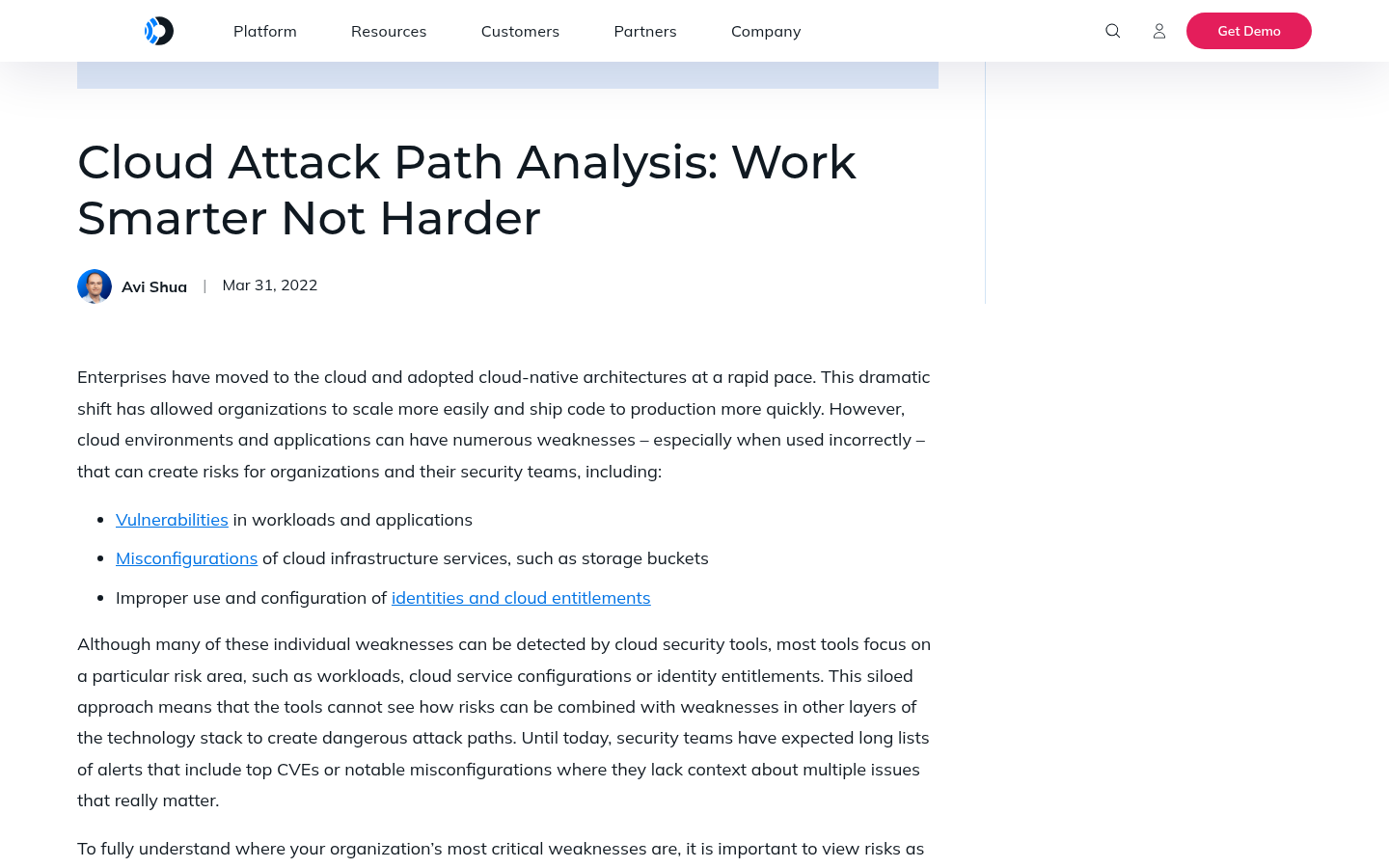
Orca’s Attack Path Analysis treats a path as a toxic combination of risks, not a single alert. It draws a graph of cloud assets and risks, scores each path on probability and impact, and points to the issues whose fix would break the chain, including choke points that appear in more than one path.
You can remediate from the graph or from a prioritized alert list. Orca also offers Automatic Remediation for selected alerts, such as closing public access on a bucket or removing global SSH on a security group. That auto-remediation runs as a CloudFormation stack and Lambda in your own AWS account, so Orca does not need write access to your cloud.
Key features:
- Attack path scoring on probability, impact, and business-critical assets
- Choke-point detection so one fix can break more than one path
- Remediation from the graph or a prioritized alert list
- Optional Automatic Remediation in the customer AWS account for selected alerts
Why we like it:
Orca can show which single fix breaks a scored path, and can auto-remediate some misconfigurations, which solves a backlog of alerts that are not equally exploitable.
Limits:
Auto-remediation is documented for selected configuration alerts, not as a general Infrastructure-as-Code campaign that closes unused access across identity, network, and AI. List pricing is not published.
License or pricing: Quote. Orca does not publish a list price for the platform or for Attack Path Analysis.
Palo Alto Cortex Cloud
Best for CNAPP posture, attack path analysis, and automated remediation on the Cortex platform
Cortex Cloud is the current purchasable name for what Palo Alto Networks previously sold as Prisma Cloud, merged with Cortex cloud detection and response. Existing Prisma Cloud customers are described as upgrading into Cortex Cloud. The platform brings application security, cloud posture, runtime security, and exposure management together, and Palo Alto says it offers AI-powered prioritization, guided fixes that can resolve more than one risk in a single action, and automated remediation. Cortex Cloud’s key features documentation also describes attack path analysis: discovering combinations of risk signals that form a path, prioritizing paths that enable lateral movement to high-value assets, and visualizing those paths on a graph.
That makes Cortex Cloud a CNAPP used to prioritize and fix toxic combinations, not an unused-access campaign tool in the sense Act or Sonrai describe. The public Cortex Cloud pages emphasize guided and automated remediation on the Cortex platform, rather than Infrastructure-as-Code pull requests.
Key features:
- CNAPP posture on the Cortex platform, formerly sold as Prisma Cloud
- Attack path analysis of combined exposures, identities, and vulnerabilities, as documented in Cortex Cloud key features
- AI-powered prioritization and guided fixes for multiple risks in one action
- Automated remediation, as Palo Alto describes on the Cortex Cloud pages
- Optional cloud runtime security and Cortex XSIAM workflows
Why we like it:
Guided and automated remediation on a CNAPP graph can close more than one risk in a single action, which solves a backlog of related findings that a CVE list will not rank for you.
Limits:
This is still a CNAPP and runtime platform, not a specialist in unused-access enforcement through Terraform or a permissions firewall. Pricing is not published as a unit price on the product pages.
License or pricing: Quote. Palo Alto Networks does not publish a list unit price for Cortex Cloud on the product pages.
Microsoft Defender for Cloud
Best for attack path analysis and recommendations inside Microsoft Defender for Cloud
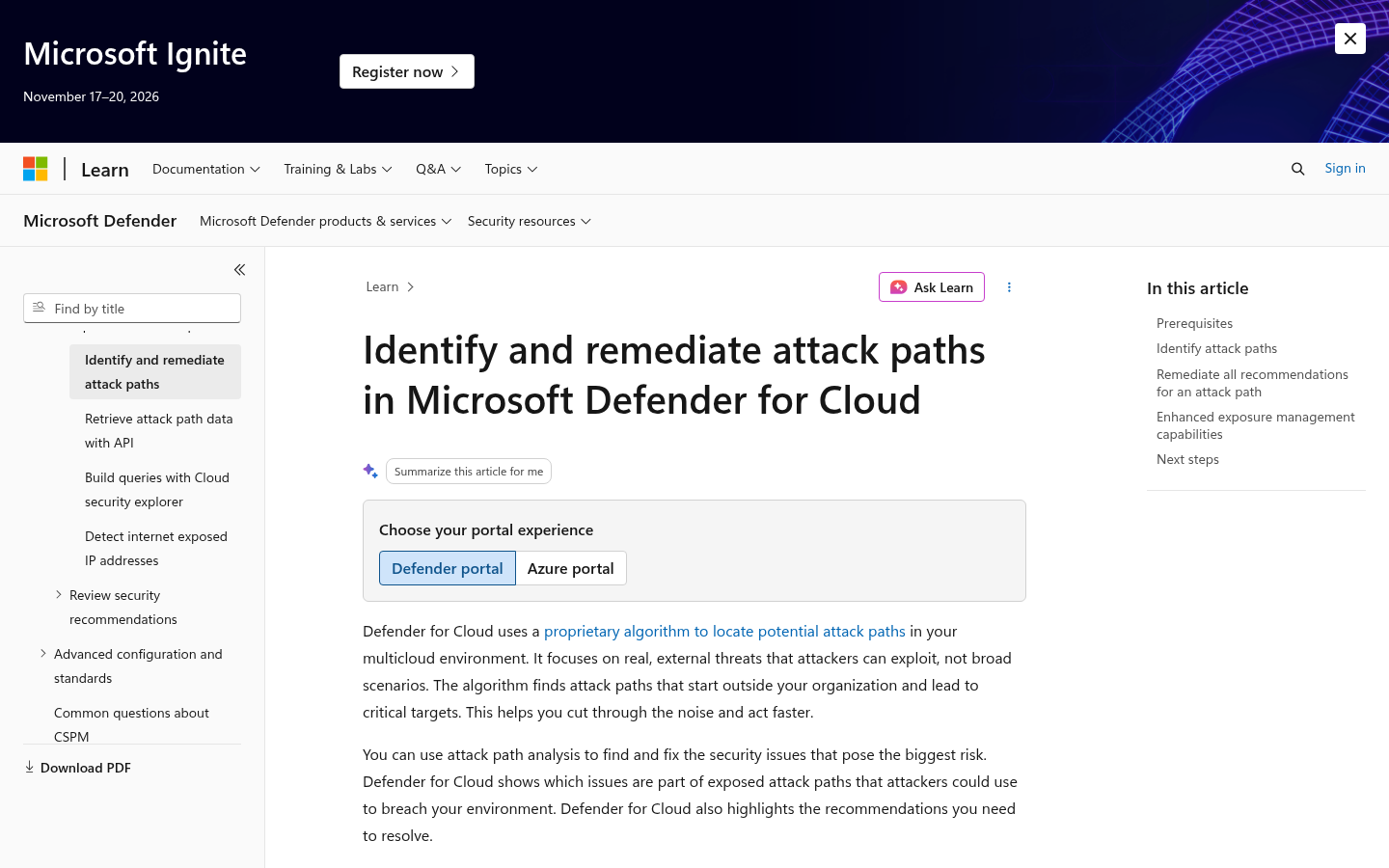
Microsoft Defender for Cloud runs attack path analysis on a cloud security graph. Microsoft says the algorithm looks for real, externally reachable paths that lead to critical targets, then ranks them with a risk engine and shows the recommendations that would break the path. In the Defender portal, the same idea also appears under Exposure Management, with choke points, entry points, and targets.
Remediation is recommendation-led. You select a path, open a recommendation, and apply the fix. Microsoft says a path can take up to 24 hours to leave the list after the recommendations are resolved. That is a guided workflow in a platform many Azure teams already run, not an unused-access campaign pushed as Infrastructure-as-Code.
Key features:
- Attack path analysis from an external entry point to a critical target
- Risk-ranked paths and recommendations that would break the path
- Choke-point, entry-point, and target views in the Defender portal
- Multicloud coverage in Defender for Cloud, with Azure portal and Defender portal workflows
Why we like it:
Attack path analysis tells you which recommendation actually sits on an externally reachable path, which solves a long Defender recommendation queue that is not equally exploitable.
Limits:
You apply the recommendation; the docs do not describe Defender for Cloud opening Terraform pull requests or installing a permissions firewall. A resolved path can take up to 24 hours to drop off the list. There is no standalone unit price on the attack-path documentation.
License or pricing: Microsoft licenses Defender for Cloud by plan and resource. The attack path documentation does not publish a standalone unit price for the feature.
Veza
Best for effective-permission visibility and least privilege through identity workflows
Veza is a CIEM and access-governance platform. It maps human and non-human identities across AWS, Azure, GCP, and IdP systems such as Okta, and it shows effective permissions: what an identity can actually do, not only whether it can log in. Veza flags over-privileged roles, toxic combinations, dormant admin access, and unused entitlements, then remediates through policy enforcement and integrations with IGA, IAM, and ticketing tools.
That is identity-first path work. Veza is on this list because unused or toxic entitlements are often the path that makes a cloud resource reachable. It is not a CNAPP vulnerability graph, and the public CIEM pages do not describe a digital-twin simulation that opens Terraform pull requests.
Key features:
- Effective permissions analysis across cloud and IdP systems
- Detection of over-privileged roles, toxic combinations, and unused entitlements
- Policy-based least privilege through IGA, IAM, and ticketing integrations
- Access reviews and audit-ready entitlement reporting
Why we like it:
Veza can show the effective permission that makes a resource reachable, which solves an access-sprawl problem that a vulnerability scanner will not rank for you.
Limits:
Remediation is described as policy and workflow enforcement, not a cloud-native permissions firewall or Infrastructure-as-Code pull requests. Vulnerability-to-data attack paths of the kind CNAPPs draw are not documented as a Veza graph finding. Pricing is not published.
License or pricing: Quote. Veza does not publish a list price for its CIEM or access-governance platform.
Sonrai
Best for blocking unused cloud privileges in native organization policies
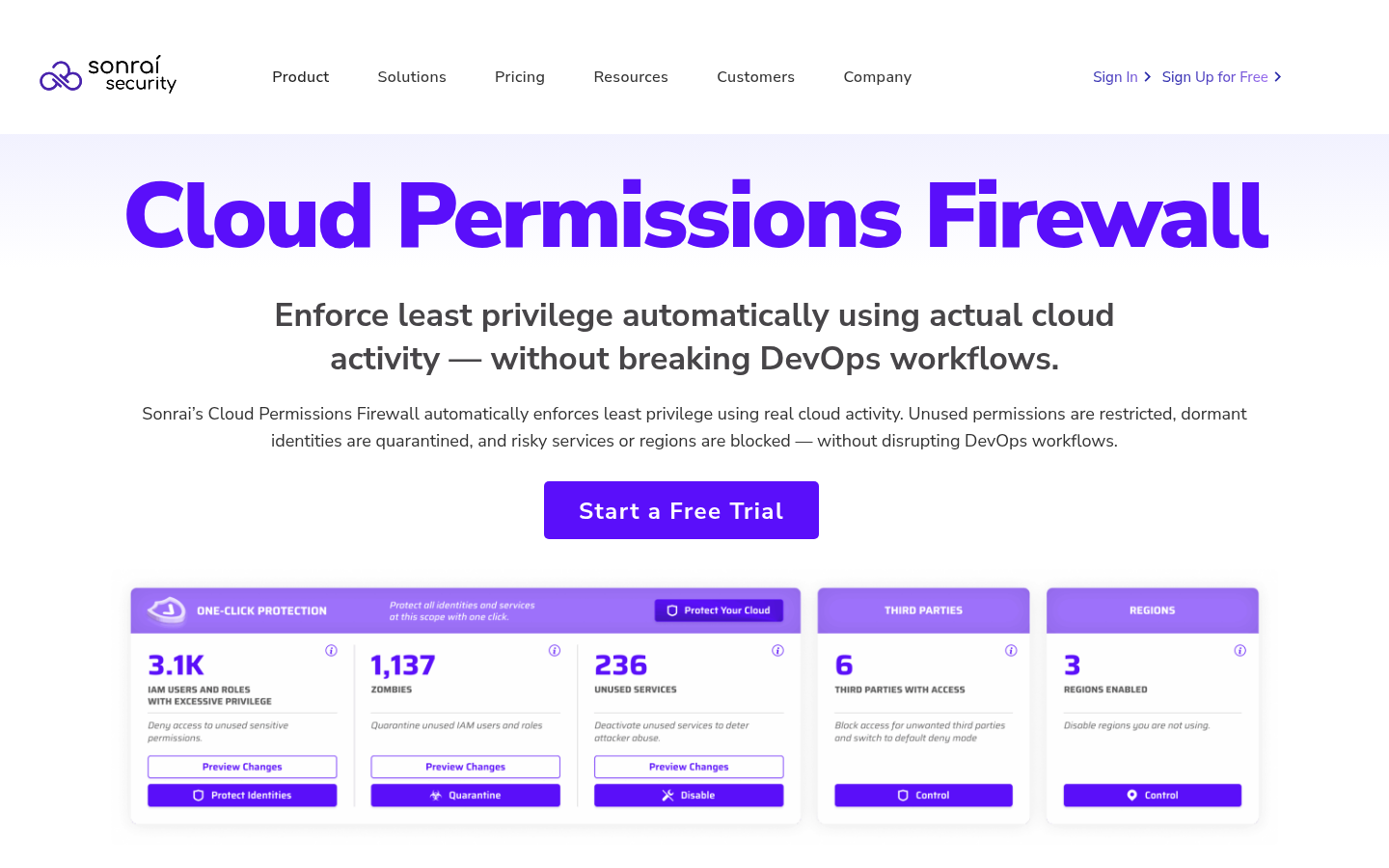
Sonrai’s Cloud Permissions Firewall is built to enforce least privilege from real permission usage, not only to report over-permissioning. Unused privileges are restricted, dormant identities can be quarantined, and risky services or regions can be blocked with cloud-native, organization-level policies. Sonrai also offers just-in-time access so a privileged permission is granted on demand and then expires.
Sonrai published a Software Secured test in which the Cloud Permissions Firewall blocked 16 of 16 AWS privilege-escalation paths in a lab, by requiring approval for high-risk API actions. That is vendor-commissioned testing, not a general guarantee for every environment. The product is an identity-and-permissions control, not a CNAPP vulnerability graph.
Key features:
- Cloud-native organization policies that block unused privileges
- Quarantine of dormant identities and restrictions on risky services or regions
- Just-in-time privileged access that expires automatically
- Permissions-on-demand for high-risk API actions
Why we like it:
The firewall can deny an unused or high-risk permission in a native policy, which solves standing privilege that would otherwise keep an escalation path open.
Limits:
This is not a CNAPP attack-path graph that starts from a CVE. The 16-of-16 figure is from a vendor-commissioned lab test. List pricing is not published.
License or pricing: Quote. Sonrai does not publish a list price for the Cloud Permissions Firewall.
Act Security
Best for closing unused access through pull requests to your Infrastructure-as-Code
Act maps intended, observed, and configured access across identity, network, and AI, then treats the gap between what is allowed and what is actually used as the risk. Hardening campaigns can apply explicit-deny guardrails or ring-fence crown-jewel systems across six boundaries, including external access, human identity, environment, application, AI, and data.
Before anything changes in production, Act simulates the change on a digital twin and can run it in audit mode, with exception recommendations based on observed access. Approved changes are opened as pull requests to the Terraform or CloudFormation you already use, through the cloud’s own controls, with no agent.
Key features:
- A single access map of intended, observed, and configured reachability
- Hardening campaigns for guardrails and ring-fencing across six boundaries
- Simulation on a digital twin, plus audit mode and exception recommendations
- Enforcement as pull requests to Terraform or CloudFormation, with no agent
Why we like it:
Act can close unused access in the Infrastructure-as-Code you already review, which solves a path that stays open after a CNAPP has only recommended a fix.
Limits:
Public technical documentation is thinner than the CNAPP incumbents on this list. Independent validation is not documented. An AWS Marketplace listing has a dollar figure with no defined unit, so that figure is omitted. Other commercial terms are quote-only.
License or pricing: Quote. Act’s marketing site does not publish a unit price, and a marketplace listing with an undefined unit is omitted here.
How to choose a cloud attack path tool
- Decide whether you need a graph or a closed path. If you want a CNAPP graph that maps a toxic combination and guides or auto-remediates a finding, start with Wiz, Orca, Cortex Cloud, or Defender for Cloud. If you want unused or excessive access closed in identity controls, start with Veza, Sonrai, or Act.
- Separate guidance from enforcement. Wiz, Orca, and Cortex Cloud can auto-remediate some findings. Defender for Cloud and Veza mainly guide a person or a workflow to apply the fix. Sonrai enforces in cloud-native organization policies, and Act enforces as Infrastructure-as-Code pull requests.
- Do not buy this list as a substitute for CIEM or CNAPP. Veza is still a CIEM platform, and Wiz, Orca, Cortex Cloud, and Defender for Cloud are still CNAPPs. Use the CIEM and CNAPP shortlists when the job is inventory or a full platform, not path elimination.
- Read the unit on any public price. Wiz Essential and Advanced have defined AWS Marketplace units. A quote for Orca, Cortex Cloud, Defender for Cloud, Veza, Sonrai, or Act still needs the same clarity: what is counted, and what enforcement is included.
What we left out
- XM Cyber is widely named for attack path management. It models hybrid paths across on-prem and cloud and highlights choke points on that mixed surface. We left it out because this shortlist is limited to cloud control-plane and CNAPP-graph path work, not hybrid exposure management.
- Tenable Cloud Security and Tenable One attack path analysis also map paths on a risk graph and help remediate them. They are not on this shortlist because that CNAPP-graph job is already covered by Wiz, Orca, Cortex Cloud, and Defender for Cloud; shortlist Tenable if that is the platform you already run.
- CrowdStrike appears next to Wiz in a broader platform comparison at Wiz vs CrowdStrike. It is not on this shortlist because that comparison is about a CNAPP and endpoint platform, not about who closes a cloud access path.
- ConductorOne sits next to Veza at ConductorOne vs Veza as an access-request and IGA workflow, not as cloud effective-permission or unused-access enforcement, which is why it is not on this shortlist.
What practitioners argue about attack paths
The recurring argument is not which logo draws the prettiest graph. It is whether a finding actually changes a control that an attacker would have used.
Hacker News, 1 Apr 2026
“Something like a vulnerability based on findings (Public Security Group with port 22 -> IMDSv1 -> IAM Roles on EC2 with high access), which individually might not seem dangerous, but when combined, they create a real opportunity for attackers.”
The comment, in a Show HN about chaining cloud findings, is about a reachable path rather than a single alert, which is the job this shortlist starts from, not a review of one vendor on the list.
If you want a CNAPP graph that maps a toxic combination, start with Defender for Cloud when the next step is a guided recommendation, and with Wiz, Orca, or Cortex Cloud when you also want some findings auto-remediated. If you want unused or excessive access closed in identity controls, Veza does that through identity workflows, Sonrai does it in cloud-native organization policies, and Act does it as pull requests to your Infrastructure-as-Code. Act is launch-stage, so run a pilot before you depend on it to close production paths.
FAQs
Is an attack path tool the same as a CNAPP?
No. A CNAPP is a broader cloud platform for posture, vulnerabilities, and often runtime. Wiz, Orca, Cortex Cloud, and Defender for Cloud are CNAPPs, and they appear here only for the narrower job of mapping or closing a reachable path. Veza, Sonrai, and Act are not sold as CNAPPs.
How is this different from CIEM?
CIEM inventories and rightsizes cloud entitlements. Attack path prevention asks whether a permission or network path that would make a resource exploitable actually gets removed. Veza sits close to CIEM; Sonrai and Act go further into enforcement; the CNAPPs on this list add identity into a risk graph rather than starting as an entitlement inventory.
If a tool shows me an attack path, has it prevented the exploit?
Not by itself. Defender for Cloud mainly guides a recommendation. Wiz, Orca, and Cortex Cloud can auto-remediate some findings. Sonrai can deny unused or high-risk privileges in a native policy, and Act can open an Infrastructure-as-Code pull request. Prevention, on this page, is the control change, not the graph.
If we already run a CNAPP, when do we add an enforcement tool?
Add one when the CNAPP graph or its auto-remediation still leaves unused or excessive access in place, and you want that access closed in an identity control. Sonrai does that in cloud-native organization policies, including unused-privilege restrictions and just-in-time access. Act does it by simulating a change and opening pull requests to the Terraform or CloudFormation you already use. Both can sit beside a CNAPP rather than replace it.