Cymulate vs AttackIQ: Exposure Validation vs Security Optimization
Choose Cymulate when continuous exposure validation and control updates are the product. Choose AttackIQ when MITRE-native Security Optimization and CTEM missions are the product.
Shortlists still score Cymulate and AttackIQ as the same Breach and Attack Simulation checkbox. Both simulate adversary behavior against live controls. Treating them as interchangeable BAS is the wrong assumption. Funding rounds are years old on both sides and do not settle the product fork.
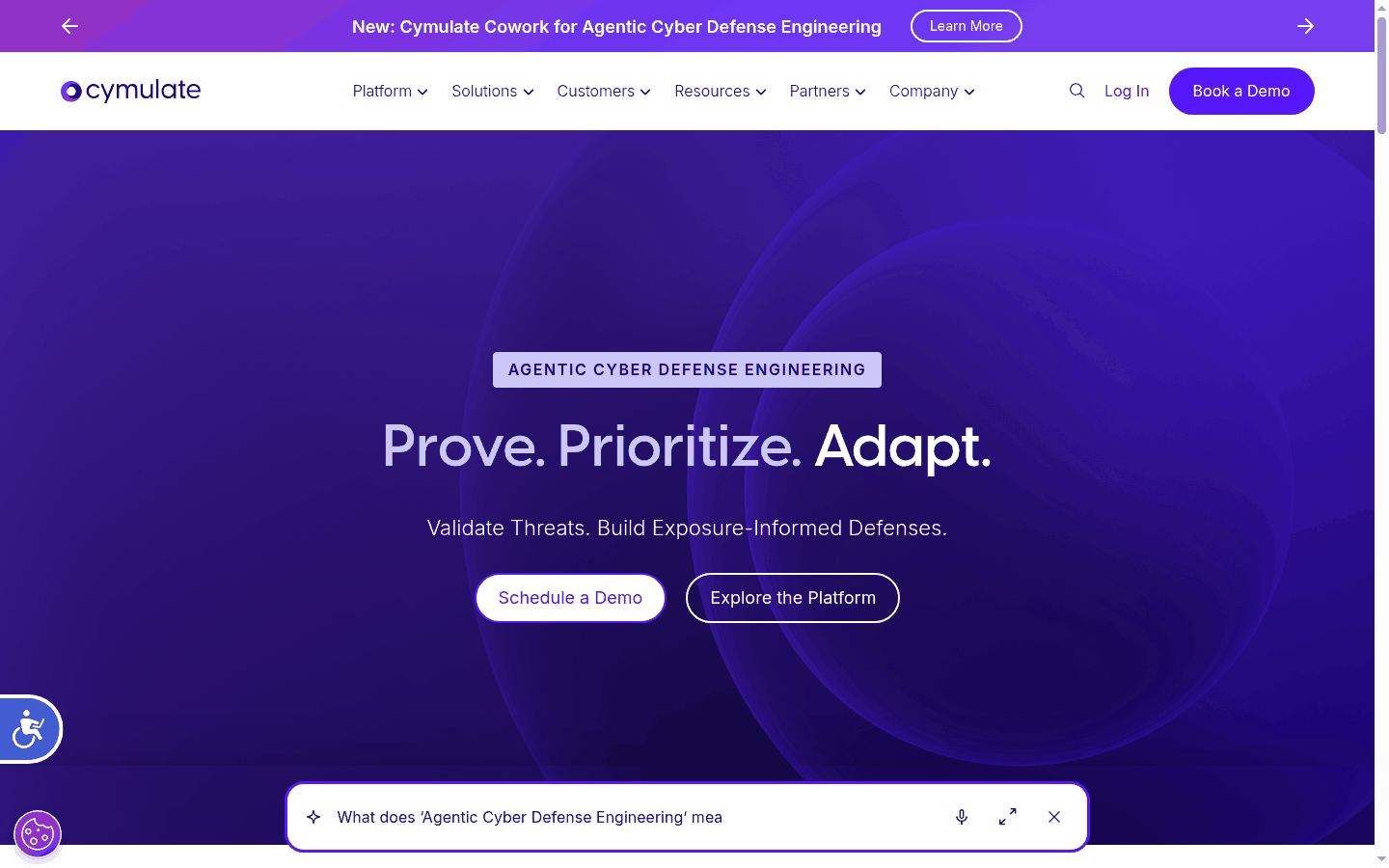
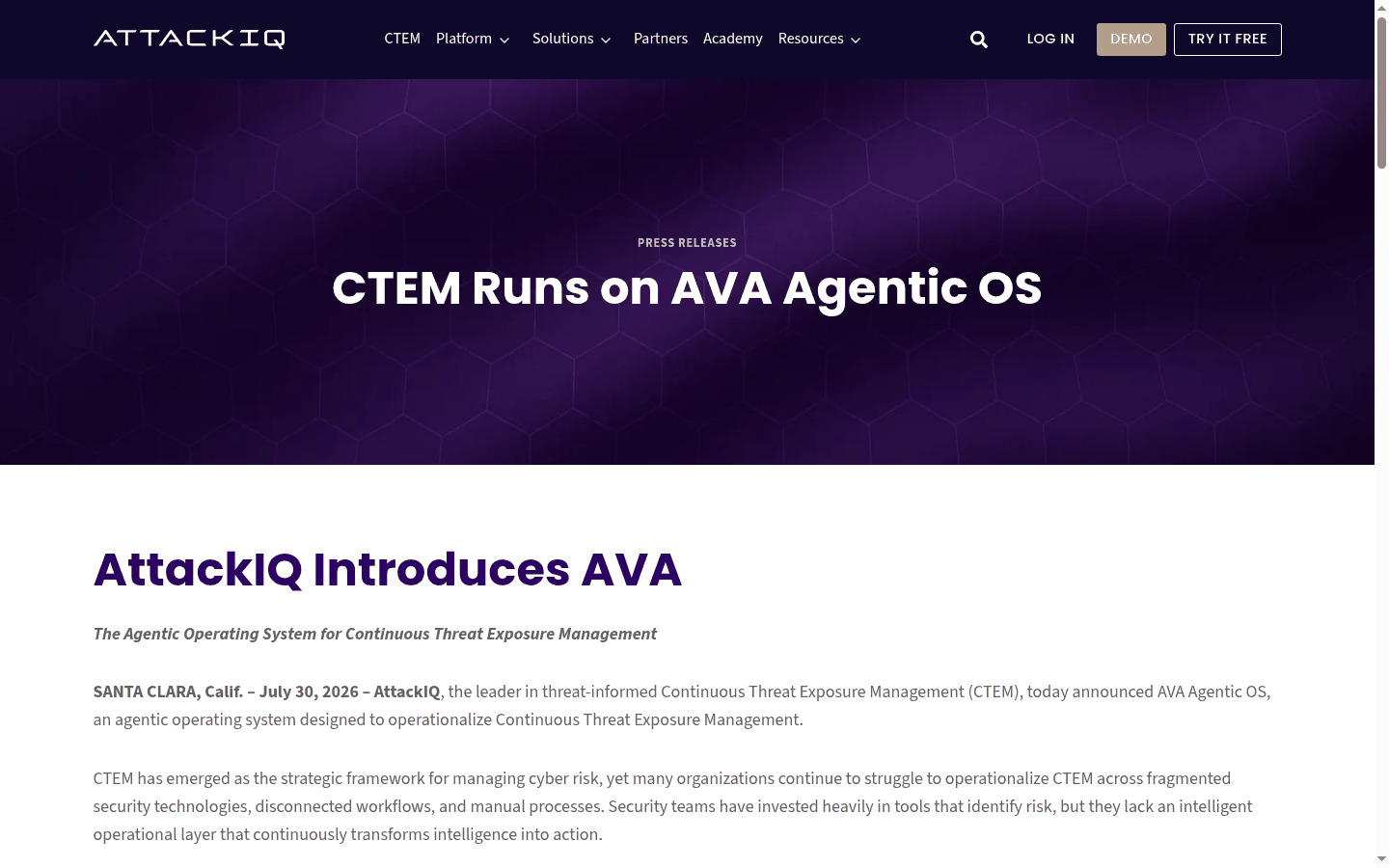
They are both continuous security validation platforms rooted in BAS and mapped to MITRE ATT&CK. Between these two, Cymulate productizes exposure validation plus a cyber defense control layer: Vero AI, Mitigation Hub, Detection Studio, and automated control updates. AttackIQ productizes Security Optimization: ATT&CK-native emulation, control effectiveness measurement, and AVA Agentic OS missions aimed at CTEM execution.
If your stack already has scanners and a SIEM that look green, the gap is not “another alert.” It is whether you need a validation layer that pushes control updates and detection tuning, or a MITRE-first optimization path that measures readiness and threat debt. Adjacent discovery work still lives on attack surface management; scanner shortlists stay on vulnerability management platforms.
| Job | Continuous exposure validation with a control layer for updates and detection engineering | Security Optimization / MITRE-native BAS with CTEM execution missions |
|---|---|---|
| How validation is framed | Prove, prioritize, adapt: Vero AI triggers on threat intel, scanner exposures, SIEM rule changes, and control drift | ATT&CK-mapped emulation, control effectiveness, detection coverage, and threat debt reduction |
| Deploy | SaaS exposure validation platform with production-safe assessments (agent details are a PoC check) | Security Optimization Platform with production-safe simulations (agent details are a PoC check) |
| MITRE gravity | ATT&CK-mapped scenarios and reporting inside a broader exposure-validation story | ATT&CK-first packaging; founding research partner of MITRE Engenuity CTID |
| 2026 AI layer | Vero AI, Mitigation Hub, Detection Studio (Jun 2026) | AVA Agentic OS missions for CTEM (Jul 2026) |
| License/pricing | Sales-quoted; no public dollar SKU verified on cymulate.com (5 Sep 2026) | Sales-quoted enterprise; confirm Flex / subscription packaging on a live quote |
| Who operates it | SecOps, detection engineering, purple team; CISO reporting for posture proof | Purple team, detection engineering, SecOps; program owners measuring readiness |
Recent launches have not collapsed that split. On 1 June 2026 Cymulate shipped agentic cyber defense engineering with Vero AI, Mitigation Hub, and Detection Studio so validation can trigger from threat intel, exposures, SIEM rule changes, and control drift, then push mitigation and detection work. On 30 July 2026 AttackIQ launched AVA Agentic OS to orchestrate CTEM missions (CTI-driven validation, detection coverage, control optimization, threat debt, AI security validation). One still leads with exposure validation and control updates. The other still leads with MITRE-native optimization missions.
Automated simulation in this category still mainly replays known techniques, closer to a scanner cadence than a novel red team. That shared limit applies to both vendors here. It does not make their 2026 products the same buy.
We reviewed first-party documentation, public pricing pages, release notes, and live community threads. We did not test the products in paid production environments, so this is not a hands-on benchmark.
Cymulate
AttackIQ
Editions and pricing
Neither first-party site handed us a spreadsheet-ready public dollar table on 5 Sep 2026. Packaging language still differs: Cymulate sells a platform story around exposure validation, control optimization, detection engineering, and CTEM. AttackIQ sells the Security Optimization Platform plus AVA missions and MITRE-aligned program tooling.
| Public price table | Request-demo / sales quote. No public dollar SKU verified on cymulate.com | Sales-quoted enterprise packaging; confirm any Flex or subscription lines in writing |
|---|---|---|
| Named lines | Exposure Validation, control optimization, Detection Studio, Mitigation Hub, Vero AI / Cowork (agentic SaaS extension) | Security Optimization Platform, AVA Agentic OS missions, MITRE / Academy / partner paths |
| What the quote usually meters | Environment scope, modules, and how far automated control updates / detection work are in scope | Simulation scope, environments covered, and which AVA / optimization missions are licensed |
| Free forever SKU | None on the public marketing site we checked | AttackIQ Academy is community training, not a free production BAS tenant |
If procurement needs a published monthly license price before a call, both vendors will stall that spreadsheet. Ask for environment counting rules, module uplift, and true-up language in the same quote.
What the validation loop closes
| Primary close | Findings become prioritized mitigation and automated control updates via Mitigation Hub / control layer | Findings become ATT&CK-aligned readiness and threat debt work via Security Optimization / AVA missions |
|---|---|---|
| Detection engineering | Detection Studio maps SIEM rules to attack scenarios and recommends tuning | Detection coverage analysis missions generate and validate detections in the AVA loop |
| Trigger shape | New threat intel, scanner exposures, SIEM rule changes, control configuration drift | CTI-driven scenarios, ATT&CK technique gaps, control effectiveness failures, AI risk missions |
| Operator morning unit | Exposure / assessment results tied to control owners and mitigation tasks | Mission outcomes, ATT&CK coverage, and prioritized threat debt |
Between these two, do not buy “continuous validation” as a unique checkbox. Both sell it. Buy the loop your operators will close every week: push control and SIEM updates from exposure evidence, or run MITRE-native optimization missions that score readiness and threat debt.
MITRE and purple-team depth
| ATT&CK role | Attack library and reporting mapped to ATT&CK inside exposure validation | ATT&CK is the spine of simulation, coverage, and program language |
|---|---|---|
| Partnership posture | Research Labs and daily threat updates power scenarios | Founding research partner of MITRE Engenuity Center for Threat-Informed Defense; INFORM support marketed |
| Purple-team fit | Strong when purple work must become control updates and SIEM rule validation quickly | Strong when purple work must prove ATT&CK technique coverage and control effectiveness |
| What teams argue about | Breadth of vectors and auto-mitigation quality vs how custom the campaigns stay | Emulation depth and MITRE fidelity vs how much program process the platform expects |
Shortlists often file Cymulate next to SafeBreach and SimSpace under one “simulation” heading. That grouping hides the split that matters. Both products on this page validate live controls rather than run a range exercise. Between these two, Cymulate ties validation to control and SIEM updates. AttackIQ ties it to ATT&CK coverage and readiness scoring.
Where they overlap
Both grew up in BAS and still sell production-safe adversary simulation against real controls. Both map work to MITRE ATT&CK. Both added agentic AI layers in 2026 (Vero AI vs AVA). Both are sales-quoted enterprise platforms aimed at proving controls rather than finding CVEs alone. If your RFP only says “BAS / continuous security validation,” both will tick the box.
When to use both
Running both is rare and usually wasteful. One validation system is enough for most SecOps and purple teams. Keep a second only during a time-boxed bake-off, or when a regulated environment forces a parallel MITRE reporting stream you cannot fold into one tenant.
Skip AttackIQ for this pair if the buying committee already wants exposure validation that closes into automated control updates and SIEM rule validation, and MITRE partnership depth is not the primary scorecard. Skip Cymulate for this pair if the team wants ATT&CK-native Security Optimization and AVA-style CTEM missions as the default operating model.
Decide the validation job first. If the product must be continuous exposure validation with a control layer for updates, that is Cymulate. If the product must be MITRE-native Security Optimization and CTEM missions, that is AttackIQ. Only then open the sales quotes.
FAQs
Are Cymulate and AttackIQ the same BAS product?
No. Both grew from Breach and Attack Simulation and map to MITRE ATT&CK, but between these two Cymulate leads with exposure validation and control updates, and AttackIQ leads with Security Optimization and MITRE-native CTEM missions.
Do I need both for CTEM?
Usually no. Pick the loop your team will operate weekly. Use a bake-off if procurement demands two parallel validation planes.
Is there a public list price?
Not a trustworthy self-serve dollar table on either first-party marketing surface we checked on 5 Sep 2026. Expect sales-quoted contracts.
Is this a scored bake-off?
No. Order is editorial.