Vulnerability Management
Best UVM Tools for Remediation Ownership in 2026
A critical finding with no owner is not a risk program.
Monday triage still starts with critical tickets and 0 confirmed owners. Scanners keep shipping CSV and console alerts; the failure is misrouted work, SLA drift, and the same CVE opened three times because three tools never merged.
Seemplicity states an average 57% reduction in scanner noise once findings are aggregated and deduplicated. That figure is a vendor claim, not a lab score. It points at the real job: unify findings, name an owner, and push a ticket that can actually close.
Unified vulnerability management platforms sit on top of the scanners you already run. They differ on ownership routing, risk-graph depth, and whether the remediation queue is independent or lives inside a larger cloud/exposure suite. For control validation, use BAS tools. For asset discovery, use attack surface management. For scanner peers and classic prioritization, see vulnerability management platforms.
How we evaluated
We read first-party UVM, exposure-management, and remediation-operations pages and packaging notes on 17 Sep 2026. We asked whether the product ingests multi-scanner findings, whether ownership and ticketing are first-class, whether SLAs and exceptions are tracked, and whether an open self-hosted path exists. Marketing noise-reduction percentages are claims, not bake-off proof. We did not sit in customer consoles.
| Tool | Best for | What to check |
|---|---|---|
| Seemplicity | Agentic ownership and Find the Fixer routing | Commercial · independent platform |
| Wiz UVM | UVM inside Wiz Exposure Management | Commercial · Dazz lineage |
| Nucleus | Vendor-neutral aggregation plus SLA ownership | Commercial · 200+ connectors |
| Brinqa | Enterprise risk graph and attribution | Commercial · heavier model |
| Strobes | AI exposure triage with ownership assignment | Commercial |
| DefectDojo | Open AppSec findings and engagement hub | Open source · you operate |
Seemplicity
Best for independent agentic exposure action and Find the Fixer ownership routing
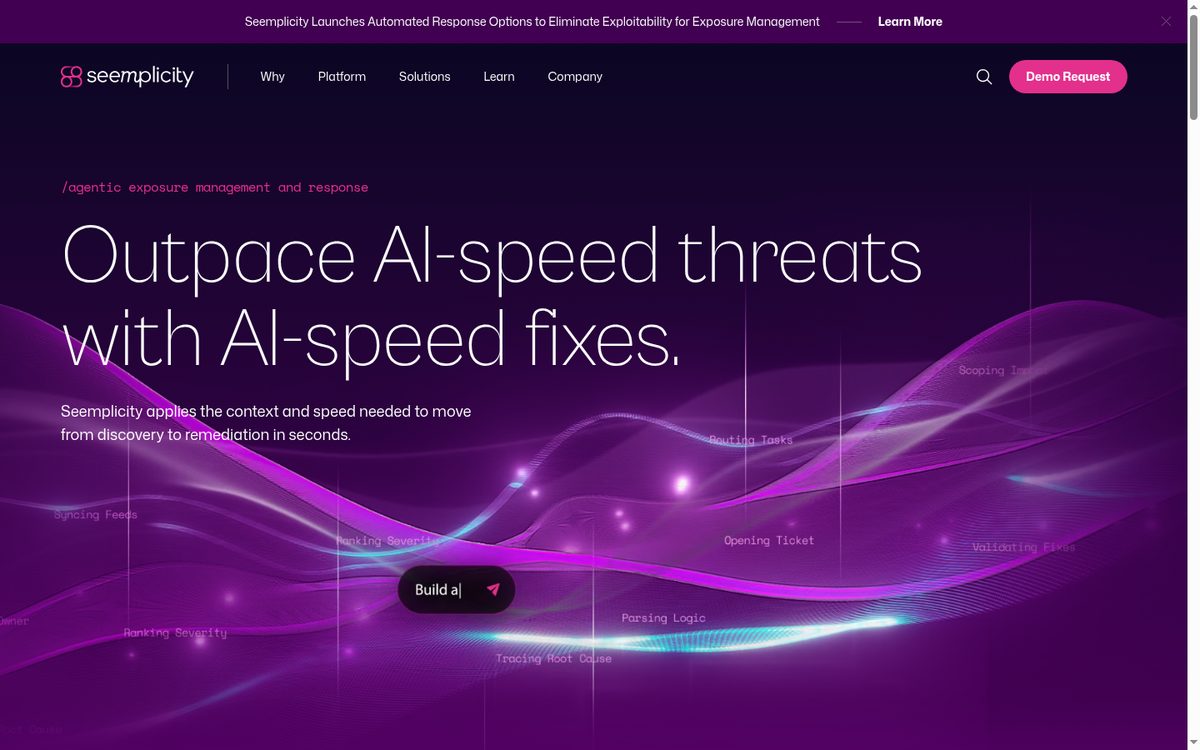
Seemplicity productizes remediation operations: ingest scanners across code, cloud, and infrastructure, dedupe noise, map owners, and drive tickets with SLA tracking.
April 2025 product notes describe Find the Fixer AI assignment and Automatic Scoping so findings route to likely owners instead of a shared inbox. Treat the 57% noise-reduction claim as marketing until your PoC reproduces it on your stack.
Key features:
- Multi-scanner ingest with aggregation and deduplication
- Find the Fixer ownership mapping and Automatic Scoping
- Ticketing into Jira, ServiceNow, Azure DevOps, and peers they list
- SLA tracking and audit-oriented remediation proof
Why we like it:
Teams that refuse another scanner console and need an independent ownership layer get a clear remediation-operations story without requiring a single CNAPP vendor first.
Limits:
Commercial quote. Agentic routing quality depends on SCM and CMDB quality. Confirm connector coverage for the scanners you will not retire in year one.
License or pricing: Commercial. No self-serve public list price on 17 Sep 2026; expect enterprise quote (AWS Marketplace listings have appeared for annual packages).
Wiz UVM
Best for unified vulnerability management inside Wiz Exposure Management
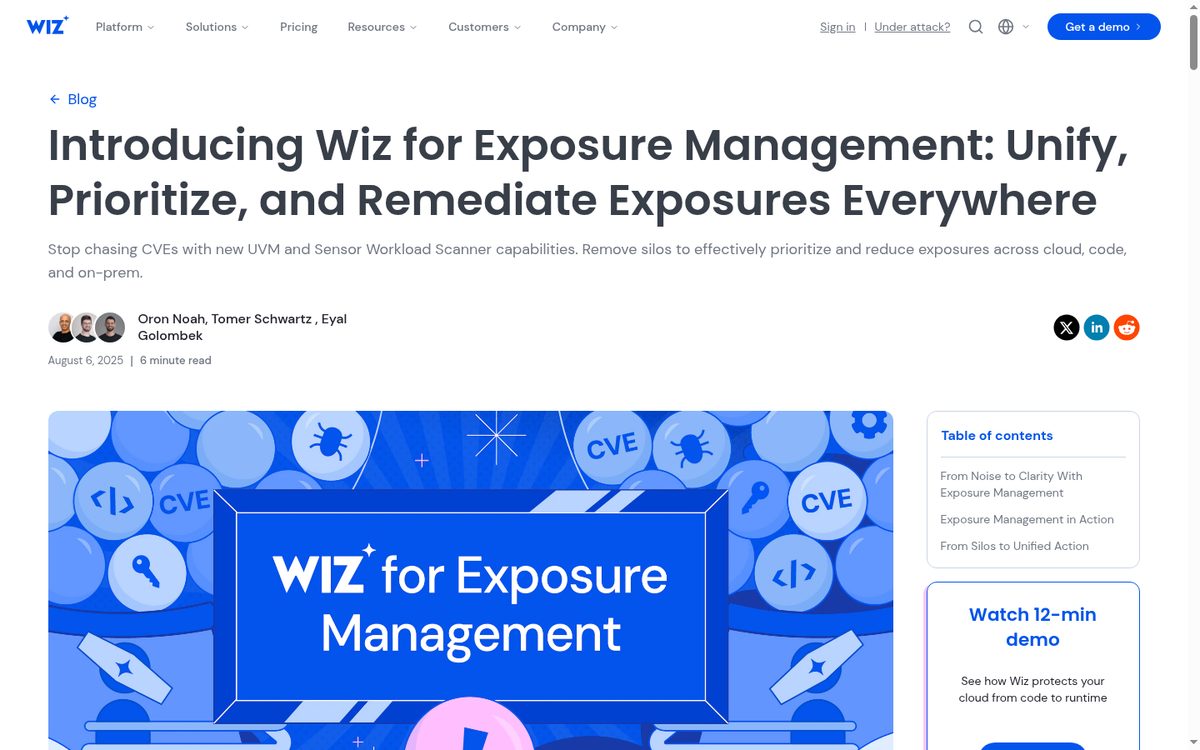
Wiz ships Unified Vulnerability Management as part of Exposure Management after acquiring Dazz. The live path is Wiz UVM and related Exposure Management workflows, not a standalone dazz.io SKU.
First-party packaging emphasizes ingesting external scanners, deduplicating with Security Graph context, assigning owners, and driving remediation with AI guidance. Pick it when Wiz is already the operating system for cloud risk and you want UVM in that same suite.
Key features:
- UVM ingest of third-party scanner findings into Wiz
- Dedup and prioritization with Security Graph context
- Ownership enrichment from CMDB-style metadata they describe
- Remediation workflows and AI guidance inside the Wiz suite
Why we like it:
Organizations already standardizing on Wiz avoid a second remediation SaaS when UVM is the missing ownership layer on top of scanners they keep.
Limits:
Commercial and suite-tied. Independent UVM buyers who will not adopt Wiz should evaluate Seemplicity or Nucleus instead. Confirm hybrid/on-prem scanner coverage for your estate.
License or pricing: Commercial. Sales-quoted inside Wiz packages. Checked 17 Sep 2026.
Nucleus
Best for scanner-agnostic aggregation with ownership, tickets, and SLA tracking
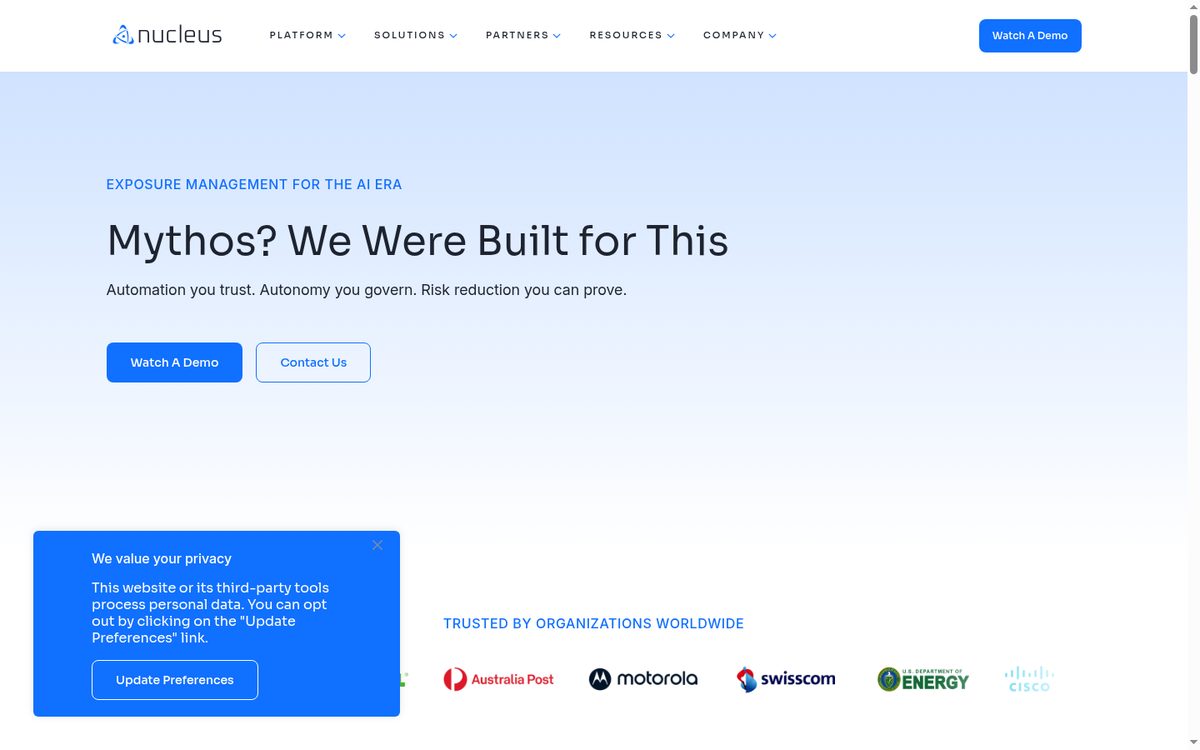
Nucleus positions as a unified system of record for exposures: ingest and normalize data from 200+ tools, prioritize with threat and business context, then automate ownership assignment and bi-directional ticketing.
It fits programs that will keep Qualys, Tenable, Wiz, CrowdStrike, and AppSec scanners side by side and need one remediation orchestration layer without rewriting custom ETL.
Key features:
- 200+ connectors plus FlexConnect-style universal adapter they advertise
- Automated ownership assignment and SLA tracking
- Bi-directional tickets with ServiceNow and Jira
- Helix AI agents for program automation on their Data Core
Why we like it:
Vulnerability management teams drowning in duplicate findings across infrastructure and AppSec get a practical aggregation engine without pretending one scanner will replace the rest.
Limits:
Commercial. Scoring quality tracks how well you configure asset criticality. FedRAMP and enterprise packaging may be more than a mid-market team needs on day one.
License or pricing: Commercial. Enterprise quote. Checked 17 Sep 2026.
Brinqa
Best for enterprise exposure programs that need a governed risk graph
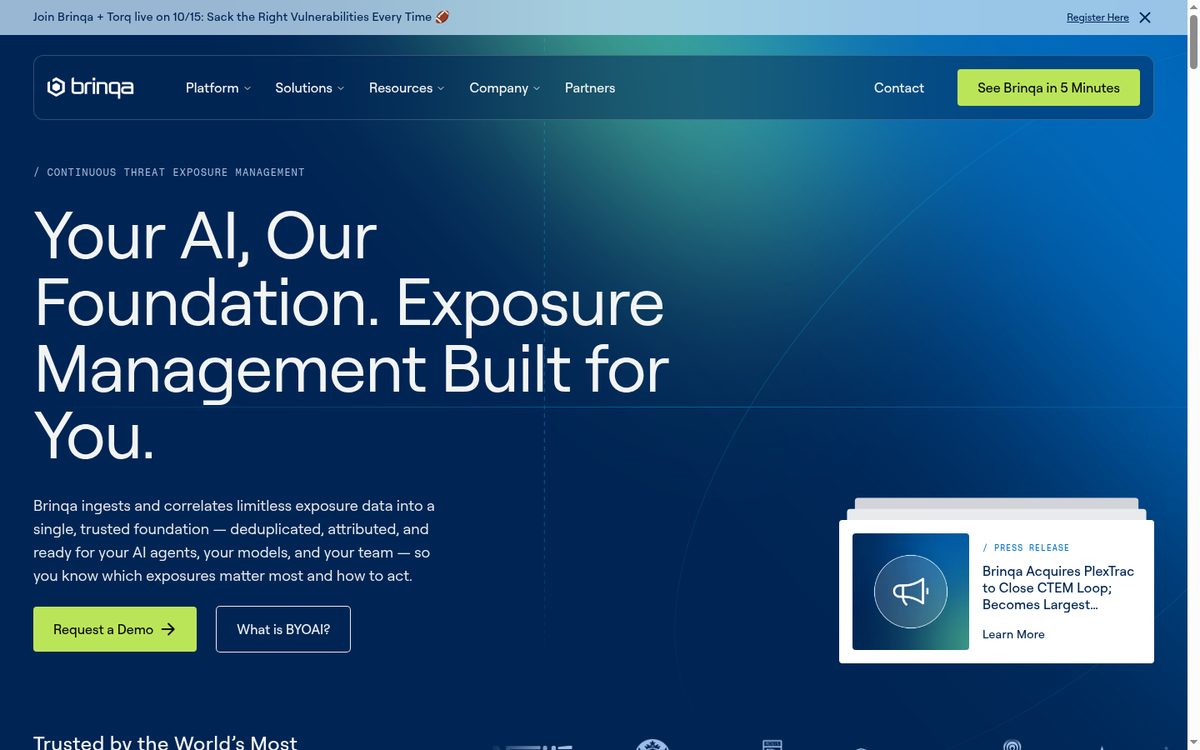
Brinqa builds a CyberRisk Graph that ties vulnerabilities, assets, cloud, application, and identity exposures to business context, then uses AI agents for deduplication and ownership attribution when fields are missing.
Choose it when the pain is not only ticket routing but proving which business services are exposed and which owners must close them. Implementation is heavier than a thin remediation ops layer.
Key features:
- Unified exposure model across vuln, cloud, AppSec, and identity signals
- AI Deduplicator and Attribution agents they describe
- Business-context prioritization and remediation orchestration
- Reporting aimed at MTTR and exposure-reduction proof
Why we like it:
Large enterprises with mature asset and service catalogs get a graph that can justify prioritization decisions beyond CVSS heat maps.
Limits:
Commercial and implementation-heavy. Teams without business-service mapping will spend months modeling before ownership feels automatic.
License or pricing: Commercial. Enterprise quote. Checked 17 Sep 2026.
Strobes
Best for focused AI exposure triage that still auto-assigns ownership
Strobes markets AI agents for continuous threat exposure management: ingest findings from many tools, reduce noise with exploitability context, auto-assign ownership, and drive remediation verification.
It sits between classic aggregation UVM and agentic remediation pitches. Useful when you want a specialist platform that still speaks ownership and ticketing, not only attack-surface discovery.
Key features:
- Ingest across 100+ tools they advertise
- AI triage with EPSS/KEV-style exploitability framing in their materials
- Auto-assignment of ownership into existing workflows
- Exposure validation and remediation verification stories on the product site
Why we like it:
Security teams that outgrew spreadsheets but are not ready for a multi-year risk-graph program get a concrete ownership and triage path.
Limits:
Commercial. Validate connector depth and noise-reduction claims in a PoC against Nucleus and Seemplicity before locking a multi-year contract.
License or pricing: Commercial. Packaging varies; confirm current plans on 17 Sep 2026.
DefectDojo
Best for an open-source AppSec findings hub you operate yourself
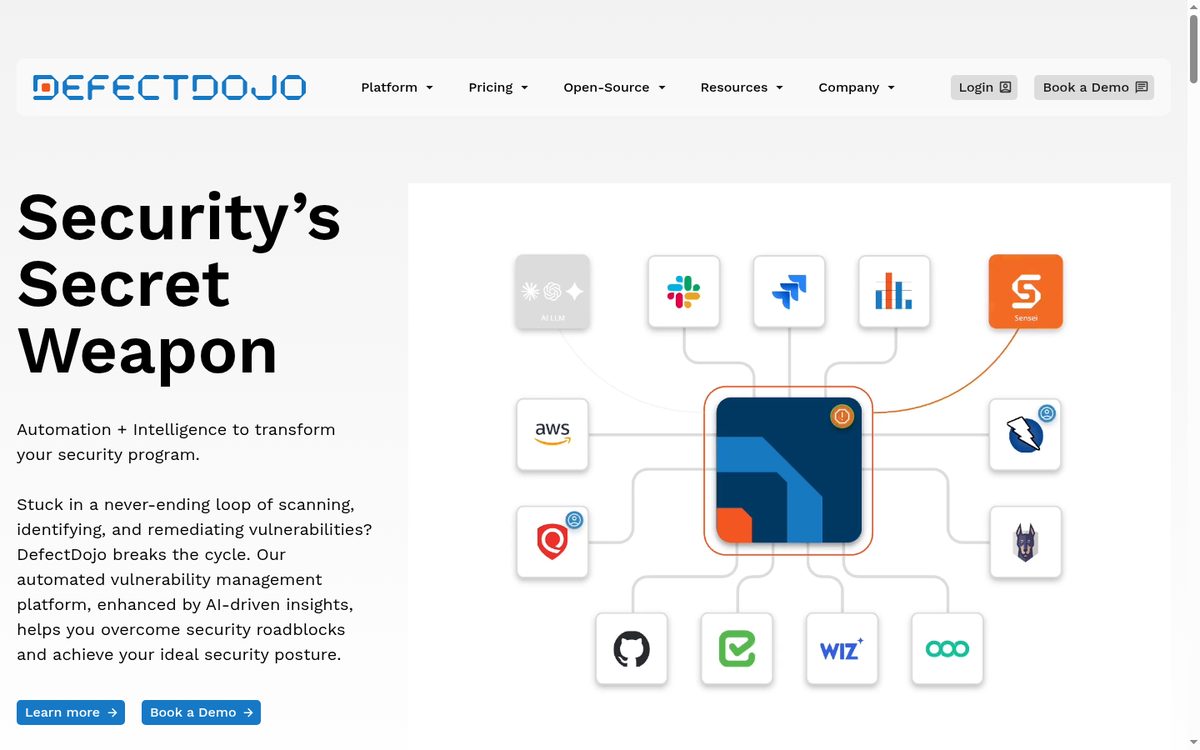
DefectDojo is an open-source platform for importing, deduplicating, and tracking findings across AppSec tools, with products, engagements, metrics, and ticket integrations you control.
It is not a SaaS agentic UVM. It is the open seat when engineering wants ownership of the findings database and is ready to run the platform. Scanner-centric peers also appear on the VM platforms shortlist; here the job is the open remediation queue.
Key features:
- Import parsers for a wide set of AppSec and scanner formats
- Deduplication, product and engagement structures, triage workflows
- Metrics and reporting you can host
- Integrations into ticketing and CI you configure
Why we like it:
AppSec teams that refuse another SaaS ownership tax and can staff platform operations get a real findings system of record under their license terms.
Limits:
You operate it. Enterprise SLA automation, FedRAMP packaging, and agentic fixer routing are on you or on commercial UVM peers above.
License or pricing: Open source (BSD-family terms on the project). Confirm current license on the project site (17 Sep 2026). Commercial support options may exist separately.
How to choose a UVM tool
Four questions before the quote. Names are the shortlist, not a scored bake-off.
| Critical question | Why it matters | What to evaluate | Red flag |
|---|---|---|---|
| Must the platform stay scanner-agnostic? | Suite-native UVM locks remediation to one cloud vendor. | Seemplicity or Nucleus if neutrality is non-negotiable; Wiz UVM if Wiz is already strategic. | A PoC that only demos one scanner feed. |
| Is ownership the bottleneck, or modeling? | Routing fixes Monday chaos; graphs fix prioritization politics. | Seemplicity / Strobes for fixer routing; Brinqa when business-service context is missing. | Buying a graph with empty CMDB fields. |
| Who closes the ticket? | UVM without named owners recreates the CSV. | Require bi-directional Jira/ServiceNow sync and SLA views in the PoC. | Export-only “integrations.” |
| Can you run open first? | Cheap signal before enterprise UVM. | DefectDojo under change control for AppSec findings. | Skipping operations staffing then blaming the OSS project. |
What practitioners argue about UVM
Threads are about fragmented scanners and missing owners, not about vendor ranking threads. Remediation fails when findings never become a named ticket.
Hacker News
“I’ve spent years in enterprise security wrestling with a dozen different tools that don’t talk to each other, dealing with insane licensing costs, and being completely locked into vendor ecosystems.”
November 2025 comment. The shape is consolidation pain: scanners without a shared ownership layer. That is the UVM job, whether or not the commenter ships a competing product.
Seemplicity product notes
“Unclear remediation ownership and scattered data often lead to misrouted tickets, delays, and accountability gaps.”
April 2025 Find the Fixer release notes (same Seemplicity domain as the opener). First-party framing of the ownership failure mode this shortlist is built around.
If you need the Seemplicity versus Dazz head-to-head, read Seemplicity vs Dazz. If the next gap is still control validation, use BAS tools. For scanner inventory, stay on vulnerability management platforms.
FAQs
Is UVM the same as a vulnerability scanner?
No. Scanners discover and score findings. UVM platforms unify those findings, assign owners, open tickets, and track remediation to closure.
Is Wiz UVM still Dazz?
Dazz was acquired by Wiz. The live product path described in first-party materials is Wiz UVM inside Exposure Management, not a separate dazz.io catalog SKU.
Can DefectDojo replace commercial UVM?
It can be an open findings and engagement hub if you staff operations. It does not replace enterprise SLA automation or suite-native exposure graphs out of the box.
Is this a scored bake-off?
No. Order is editorial.